Understanding Your Airedale Terrier's Coat: What Every Owner Should Know
Understanding Your Airedale Terrier's Coat: What Every Owner Should Know
The Airedale Terrier's coat is one of the most engineered in the dog world. It wasn't designed for beauty contests -- it was built to protect a working dog from cold water, thorny brush, and the unpredictable weather of northern England. Understanding how that coat works helps you care for it properly, whether your Airedale spends their days hunting or hogging the couch.
The Double Coat Architecture
Your Airedale's coat is a two-layer system, and each layer serves a distinct purpose:
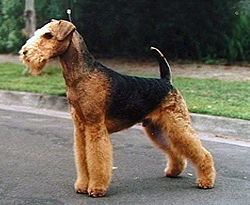
The outer coat (guard hairs): These are the hard, wiry, slightly crinkled hairs that give the Airedale its distinctive rough texture. They lie relatively flat against the body and are designed to repel water and resist dirt. When you run your hand over a properly maintained Airedale, the coat should feel crisp -- almost like touching dense, dry grass.
The undercoat: Beneath the guard hairs sits a softer, denser layer that provides insulation. This undercoat is shorter than the outer coat and has a different texture -- softer, more cotton-like. It traps air close to the skin, keeping the dog warm in cold conditions and providing some insulation from heat as well.
Here's a surprising detail about Airedale Terrier coat structure that even experienced owners sometimes miss: the wire guard hairs have a specific growth cycle that's different from most breeds. They grow, mature, die, and then stay anchored in the follicle until they're physically removed. On a shedding breed, dead hair falls out naturally. On an Airedale, it doesn't. This single difference drives almost every grooming decision for the breed.
The Color Pattern
Airedales have a distinctive color pattern called a "saddle" -- dark (black or dark grizzle) on the back and sides, with rich tan on the head, ears, legs, and undersides. This two-tone pattern is one of the breed's most recognizable features.
What's fascinating is how the Airedale Terrier coat color relates to grooming method:
Hand-stripped coats maintain deep, vibrant colors. Each new hair that grows from a stripped follicle comes in with full pigment. The black stays inky, the tan stays rich and warm.
Clipped coats gradually fade over time. Because the dead hair root stays in the follicle, new growth pushes through alongside it. The result is lighter, less defined color -- blacks soften to grey, tans lighten to pale gold. After several clippings, the saddle pattern becomes muted.
This isn't a deal-breaker for pet owners, but it's worth knowing. If you've ever wondered why show Airedales look so different from the Airedale at the dog park, coat management is usually the answer.
How the Wire Coat Functions
The Airedale's wire coat is essentially low-tech body armor. Here's what it does:
Water resistance. The wiry outer hairs don't absorb water the way soft hair does. Water beads and runs off, keeping the undercoat and skin drier. This was essential for a dog originally bred to hunt otters and rats along the River Aire.
Dirt resistance. Dried mud and debris tend to fall off a wire coat rather than embedding in it. A properly textured Airedale can roll in dirt and look relatively presentable once the mud dries and gets brushed out.
Temperature regulation. The double layer works in both directions -- insulating from cold and providing a barrier against heat. The air trapped in the undercoat acts as a temperature buffer.
Protection from abrasion. Those stiff guard hairs protect the skin from scratches, thorns, and brush. Working Airedales could push through dense undergrowth without the skin damage that a smooth-coated dog would sustain.
All of these functions depend on the coat being in proper condition. A neglected coat -- matted undercoat, dead guard hairs still in place, no structure -- loses these protective qualities.
The Beard and Furnishings
Airedales grow longer, softer hair in specific areas:
The beard: Dense, slightly wavy hair on the muzzle and chin. This is the Airedale's signature facial feature. It's also the highest-maintenance part of the coat because it gets into everything -- food, water, mud, whatever the dog investigates.
Leg furnishings: Longer hair on the legs that creates the breed's columnar, straight-legged appearance. These hairs are softer than the body coat and tangle more easily.
Eyebrows: The Airedale's expressive brows are actually longer hairs that grow forward over the eyes. They need trimming to maintain vision and the breed's characteristically keen expression.
These areas have a different texture from the body coat and need different care. The beard and furnishings don't get stripped -- they're scissored, combed, and shaped. A good groomer treats these areas as separate from the body coat, with different tools and techniques.
Common Airedale Terrier Coat Problems
Coat Softening
The most common complaint among Airedale owners: the coat loses its wiry texture and becomes soft and fluffy. This happens primarily from repeated clipping (as explained above) but can also result from:
- Hormonal changes (spaying/neutering can soften wire coats)
- Aging (senior Airedales often develop softer coats)
- Using softening shampoos and conditioners not designed for wire coats
Dead Coat Retention
When dead guard hairs aren't removed -- either through stripping or natural shedding (which barely happens in wire coats) -- they create problems:
- The coat looks dull and faded
- New growth can't push through properly
- The trapped dead hair matts with the undercoat
- Skin irritation develops underneath
Matted Undercoat
If the soft undercoat isn't regularly carded (thinned out), it compresses into a felt-like mat against the skin. This traps heat, moisture, and debris, creating conditions for bacterial and fungal skin infections. You often can't see matted undercoat from the outside because the guard hairs lie over it.
A professional groomer checks the undercoat density at every appointment and cards it as needed. This invisible maintenance is one of the most important parts of Airedale coat care.
Beard Funk
The Airedale beard stays damp. It gets into the water bowl, it catches food, and it drags through whatever the dog sniffs. Without regular cleaning, bacteria thrive in the warm, moist beard hair, producing that sour smell that some Airedale owners know too well.
Daily wiping and weekly washing keep the beard fresh. Your groomer does a thorough beard cleaning at every session, but daily home maintenance is what prevents the funk between visits.
Caring for Your Airedale's Coat at Home
Weekly Routine
- Brush the body coat weekly with a slicker brush to remove surface debris and check for mats
- Comb the beard and leg furnishings every 2-3 days with a steel comb
- Wipe the beard after meals and water with a dry cloth
- Check ears weekly -- the folded ear traps moisture and debris
What Products to Use (and Avoid)
- DO use: Shampoos formulated for wire or harsh coats -- they clean without softening
- DO use: Stripping knives or stripping stones for light maintenance between professional grooms
- AVOID: Softening conditioners -- they work against the coat's natural texture
- AVOID: Human grooming products -- wrong pH, wrong purpose
- AVOID: Silicone-based detanglers on the body coat -- they coat the wire hair and reduce its protective qualities
Between Professional Grooms
Learn to do light carding at home with a stripping knife or stone. Removing small amounts of loose undercoat weekly is easier than dealing with a packed undercoat every 8 weeks. Your groomer can teach you the technique in one session -- it's not complicated once you understand the direction and pressure.
The Coat Reflects the Dog
An Airedale in proper coat condition is something to see -- crisp, dark saddle; warm, rich tan; clean lines from the beard through the leg furnishings. That coat tells you the dog is healthy, well-cared-for, and comfortable.
A dull, soft, faded coat tells a different story. Not a judgment on the owner, but a signal that the coat needs professional attention.
Understanding your Airedale's coat gives you the knowledge to keep it in top shape. Whether you choose hand-stripping, clipping, or a hybrid approach, the key is consistency and working with a groomer who genuinely understands wire-coated breeds. The King of Terriers deserves nothing less.
---
Ready to streamline your grooming workflow? PawOps Board Manager helps salons track every Airedale Terrier from check-in to pickup with real-time visibility. Start your free 30-day trial →