Why Your Alaskan Malamute Needs Professional Grooming (Spoiler: It's About Survival, Not Style)
Why Your Alaskan Malamute Needs Professional Grooming (Spoiler: It's About Survival, Not Style)
You knew the coat was going to be a thing when you got an Alaskan Malamute. Maybe you saw videos of the dramatic shedding. Maybe someone warned you about the "fur tumbleweeds." Maybe you were fully prepared.
You weren't fully prepared.
The Alaskan Malamute coat is one of the most demanding in the entire dog world. It's dense, it's double-layered, it's relentless, and it does not care about your furniture. Alaskan Malamute professional grooming isn't a luxury or a vanity -- it's the single most impactful thing you can do to keep your dog comfortable and your sanity intact.
Here's why the professionals matter so much for this breed.
The Alaskan Malamute Coat Is an Engineering Masterpiece
Before we talk about grooming, you need to understand what you're dealing with.
The Malamute has a true Arctic double coat:
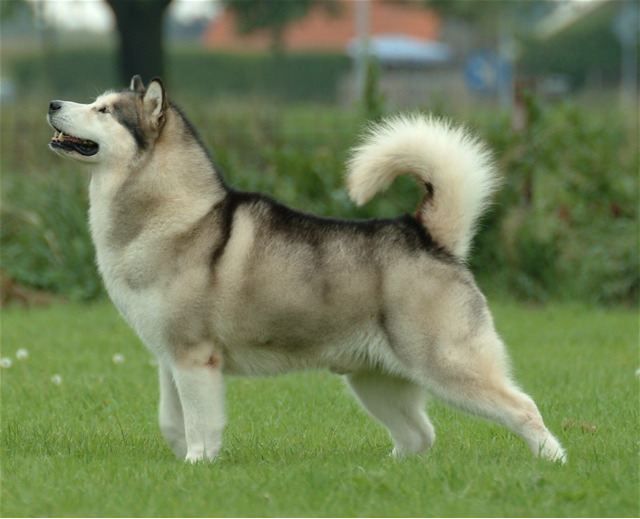
Guard hairs (outer coat): Long, coarse, and stand-off from the body. These hairs are the weather barrier -- they repel water, block wind, and protect against UV radiation. The texture is harsh by design, creating a surface that snow and ice can't adhere to. Around the neck and shoulders, the guard hairs form a pronounced ruff that provides extra protection.
Undercoat: Dense, woolly, and incredibly thick -- typically 1-2 inches deep. This is the insulation layer. In its full density, the Malamute undercoat is so thick that you can't see the skin when you part the coat. It traps body heat in cold temperatures and provides a buffer against external heat in warm weather.
Here's a surprising fact: the Alaskan Malamute's undercoat is so dense and fine that it can actually be spun into yarn. Known as "chiengora" (from the French "chien" for dog), Malamute undercoat fiber is warmer than sheep's wool by weight. Some Malamute owners save the shed undercoat and have it spun into wearable fiber. There are knitting communities dedicated to this.
The point is: you're managing a LOT of hair. And it requires professional-grade tools, techniques, and expertise.
The Seasonal Blow Is Real -- And It's Massive
Twice a year, the Alaskan Malamute blows their undercoat. "Blows" is the right word -- there's nothing subtle about it.
During a coat blow, the dense undercoat releases in sheets and clumps. It comes out in handfuls. It forms drifts in corners of your house. It clogs vacuum cleaners. It sticks to literally everything. A full Malamute coat blow can last 3-6 weeks, and the volume of hair that comes off a single dog is genuinely difficult to believe until you've witnessed it.
This is where Alaskan Malamute professional grooming becomes non-negotiable.
A professional groomer equipped with:
- High-velocity force dryers can blast dead undercoat out of the coat in quantities that no amount of home brushing can match. A single blow-out session removes more dead undercoat than a week of daily home brushing.
- Professional undercoat rakes and deshedding tools used with proper technique reach deep into the dense undercoat without damaging the guard hairs.
- Deshedding shampoos and conditioners loosen dead hair from the follicle before mechanical removal, making the entire process more effective.
Beyond Shedding: What Malamute Grooming Really Addresses
Deshedding gets all the attention, but there are critical grooming needs that go beyond coat management.
Skin Health Under the Dense Coat
The Malamute's incredibly dense undercoat creates a microclimate against the skin. In ideal conditions, this microclimate is warm and dry. But when moisture gets trapped -- from swimming, rain, humidity, or even a bath that wasn't fully dried -- the conditions become perfect for bacterial and fungal growth.
Hot spots on Malamutes escalate faster and more severely than on most breeds because the dense coat traps moisture and heat against the skin, creating an ideal infection incubator. By the time an owner notices a hot spot through all that coat, it's often already significant.
During a professional groom, the bathing and high-velocity drying process exposes every inch of skin. Groomers catch hot spots, fungal infections, parasite infestations, and skin irritation that are completely invisible under the full coat.
According to veterinary dermatology data, thick-coated northern breeds present with advanced skin infections approximately 50% more often than thin-coated breeds -- not because they get more infections, but because the infections aren't caught until they're further along. Professional grooming serves as your early warning system.
Matting in Non-Obvious Areas
Malamutes don't mat the way Poodles or doodles do, but they absolutely can mat in specific areas:
- Behind the ears where friction from head movement tangles the longer hair
- The armpits and groin where limb movement compresses and tangles undercoat
- Around the tail base where the thick plume meets the body
- Under the collar or harness where straps compress the coat
Nail Maintenance for a Heavy Breed
Malamutes are heavy dogs -- 75 to 100 pounds, sometimes more. That weight means their nails bear significant force with every step. Overgrown nails alter gait mechanics, and on a breed already predisposed to hip dysplasia and cruciate ligament issues, the additional joint stress from improper nail length is a genuine orthopedic concern.
Malamute nails tend to be thick and grow in a tight curve. Professional grooming ensures they're trimmed or ground to a proper length every 4-6 weeks, maintaining correct paw mechanics.
Ear and Paw Care
Malamutes have erect, triangular ears with good airflow -- an advantage for ear health. But the ear canals can still accumulate debris, especially in dusty or outdoor environments. Professional ear cleaning during grooming appointments keeps the canals clear.
The paw pads need attention too. The breed grows significant hair between the toes and paw pads. This hair serves a purpose in snow (creating a natural snowshoe effect), but in warmer environments it collects mud, debris, and moisture that can cause interdigital infections. Professional groomers trim this paw hair and inspect between the toes.
What a Professional Alaskan Malamute Groom Looks Like
A thorough professional grooming session for a Malamute is a production:
Total time: 2-4 hours. Yes, hours. A full Malamute groom during coat blow is one of the most time-intensive grooming appointments in the business. This is reflected in the pricing, and every minute is necessary. Use our free pricing calculator →
How Often Should a Malamute See a Groomer?
- Every 6-8 weeks during normal periods
- Every 3-4 weeks during spring and fall coat blows
- Monthly for Malamutes living in warm or humid climates where coat management is an ongoing challenge
Between Professional Visits
Professional grooming is essential but not sufficient on its own. Home maintenance is the other half:
- Brush at least twice a week with an undercoat rake and slicker brush. During shedding season, daily is better.
- Line brush the coat. This technique -- parting the coat in lines and brushing section by section from skin to tip -- is the most thorough method for home undercoat maintenance.
- Check for mats weekly in friction zones: behind ears, armpits, groin, tail base.
- Inspect paws for debris and excessive hair between pads.
- Never shave your Malamute. The double coat provides essential temperature regulation. Shaving disrupts the natural growth cycle and often results in coat that grows back with altered texture, sometimes permanently.
Finding a Groomer Who Knows Malamutes
Not every grooming salon is equipped for an Alaskan Malamute. The breed requires:
- A groomer experienced with thick double-coated breeds (Malamutes, Huskies, Samoyeds, Newfoundlands)
- Professional-grade high-velocity dryers capable of sustained use
- Adequate time scheduled for the appointment -- a groomer who books 45 minutes for a Malamute is setting up for a rushed, incomplete groom
- A tub and workspace that can accommodate a large, thick-coated dog
- Patience. Malamutes are friendly and generally cooperative, but they have opinions, and a 90-pound dog with opinions requires a groomer who can work with that personality
Your Alaskan Malamute's coat is their heritage -- a remarkable adaptation to some of the harshest conditions on earth. Professional grooming doesn't change the coat; it maintains it. And a well-maintained Malamute coat is a beautiful, functional, comfortable thing. Your dog deserves that, and so does your vacuum cleaner.