Understanding Your Australian Cattle Dog's Coat: Built for the Outback, Shedding on Your Floor
Understanding Your Australian Cattle Dog's Coat: Built for the Outback, Shedding on Your Floor
The Australian Cattle Dog's coat is a masterpiece of functional breeding. Every feature -- the dense undercoat, the hard outer layer, the water resistance, the dirt-repelling texture -- evolved to protect a working dog in the harsh Australian outback. Understanding this coat helps you appreciate why it behaves the way it does and how to keep it functioning as designed.
The Coat Structure
The Outer Coat
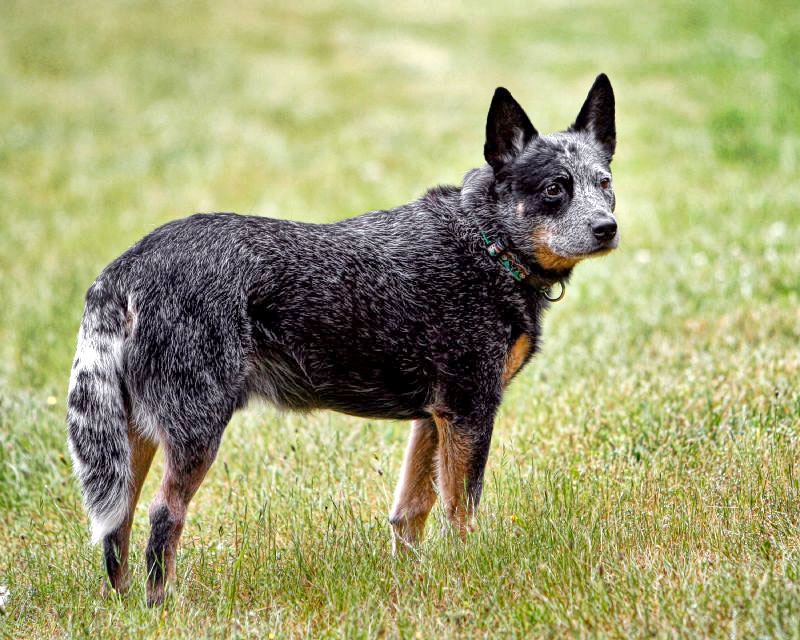
The ACD's outer coat is short, hard, straight, and lies flat against the body. The texture is dense and somewhat coarse -- not soft or silky. This hardness is functional: it repels water, sheds dirt, and provides a physical barrier against thorns, insect bites, and sun exposure.
The outer coat is slightly longer around the neck (a modest ruff) and on the underside of the tail. It is shortest on the face and front of the legs.
The Undercoat
Short, dense, and remarkably thick for the overall coat length. The ACD's undercoat varies seasonally -- heavier in cold weather, lighter in warm weather. This adaptability is a direct heritage from working in extreme Australian climate variations.
The Color System
The Australian Cattle Dog's distinctive blue or red coloring is not what it appears at first glance. Here is how it actually works:
Blue Cattle Dogs: The blue appearance is created by an even mixture of white hairs and black (or dark blue-black) hairs. No individual hair is blue -- it is an optical illusion created by white and dark hairs sitting next to each other. Some blue ACDs have black patches, tan points, or blue mottling, but the base color is always this white-and-black hair mixture.
Red Cattle Dogs: Similarly, red speckle is created by white hairs interspersed with red hairs. The effect is a warm, even color that is actually two distinct hair colors working together.
This means the ACD coat is denser than it appears -- you are looking at two complete populations of hairs creating one visual effect. This partly explains why the breed sheds more than most people expect from a short-coated dog.
Shedding Patterns
Australian Cattle Dogs shed year-round with two significant seasonal coat blows.
Year-round baseline: Consistent moderate shedding. Short, fine hairs that embed in clothing and upholstery. Not dramatic on a daily basis but cumulative over a week.
Spring coat blow: The winter undercoat loosens and comes out over two to three weeks. This is the heavier of the two annual sheds. The volume surprises most ACD owners -- there is substantially more undercoat packed against this dog's body than the short outer coat suggests.
Fall coat blow: A moderate shed as the lighter summer undercoat transitions to the heavier winter version. Less dramatic than spring.
A data point that puts ACD shedding in context: breed-specific grooming surveys consistently rank the Australian Cattle Dog in the top 15 heaviest shedding breeds when measured by undercoat volume relative to body size. The coat LOOKS like a 3 out of 10 on shedding difficulty but PERFORMS like a 6 or 7.
The Self-Cleaning Coat
One of the ACD's most practical coat features is its self-cleaning ability. The hard, flat-lying outer coat has a natural resistance to holding dirt and debris. Mud dries and falls off. Dust shakes out. The coat returns to its natural state without intervention for most everyday dirt.
This does not eliminate the need for bathing -- odor buildup, stuck-on debris, and allergens still require periodic washing. But it means you can bathe an ACD less frequently than many breeds. Every six to ten weeks is typically sufficient unless the dog has gotten into something specific.
Weather Resistance
The ACD coat was designed for the Australian outback, which means it handles extremes:
- Rain: The hard outer coat repels water effectively. Light rain barely reaches the skin. Heavy rain will eventually penetrate, but the undercoat provides a moisture buffer.
- Sun: The coat provides significant UV protection. This matters because the ACD's dark coloring absorbs heat, making sun protection important.
- Cold: The dense undercoat provides insulation. ACDs handle cold weather better than their short coat suggests.
- Heat: The double coat system insulates against external heat (the same principle as desert robes). Removing the coat through shaving actually makes the dog hotter and removes UV protection.
Common Coat Issues
Hot Spots
The most common coat-related health issue in ACDs. Hot spots develop when moisture gets trapped under the dense undercoat -- typically after swimming, rain, or bathing without thorough drying. The combination of trapped moisture, dense coat, and the dog's tendency to scratch or lick creates perfect conditions for acute moist dermatitis.
Prevention: thorough drying after any water exposure, regular undercoat removal so moisture can evaporate, and prompt treatment of any itchy patches.
Allergies
ACDs have moderate susceptibility to environmental allergies that manifest as skin irritation -- redness, itching, bumps, and excessive scratching. The dense coat can hide early signs, making regular skin checks important.
Compacted Undercoat
Dead undercoat that is not removed compresses against the skin over time, creating a felt-like layer. This traps heat, prevents air circulation, and creates an environment where bacteria thrive. Regular professional deshedding prevents this.
Home Care Routine
- Weekly brushing with a rubber curry comb or grooming mitt -- quick and effective for the short coat
- Undercoat rake use once or twice weekly during shedding season
- Post-swim drying -- at minimum towel dry thoroughly, ideally use a high-velocity dryer
- Tick checks after outdoor adventures in tall grass or brush
- Paw checks -- remove debris from between pads after working or hiking
Tools for the ACD Coat
- Rubber curry comb -- the single best daily tool. Lifts dead hair efficiently.
- Undercoat rake -- essential during shedding season for reaching the dense undercoat
- Bristle brush -- for finishing and distributing natural coat oils
- Steel comb -- occasional use to check for hidden tangles in the ruff or tail
Respecting the Working Coat
The ACD coat is a working tool, not a fashion statement. It was built to protect a dog that works cattle in extreme conditions. The best thing you can do is maintain it as designed:
- Never shave it (removes UV protection and temperature regulation)
- Keep the undercoat clear so the system can breathe
- Let the self-cleaning outer coat do its job between baths
- Respect the seasonal cycles -- the coat knows what it needs to do
PawOps helps grooming salons assess working breed coats using condition-based scoring that recognizes the difference between a coat that LOOKS simple and one that IS simple -- because your Australian Cattle Dog deserves grooming that matches the coat's true complexity.