Understanding Your Australian Terrier's Coat: What Every Owner Should Know
Understanding Your Australian Terrier's Coat: What Every Owner Should Know
The Australian Terrier was developed in the 1800s to work in some of the harshest conditions on Earth -- the Australian bush. Snakes, rodents, extreme heat, sudden downpours, and rough scrubland were all in a day's work. The coat that evolved to handle those conditions is a masterpiece of functional design, and understanding how it works is the first step to caring for it properly.
Two Layers With Two Jobs
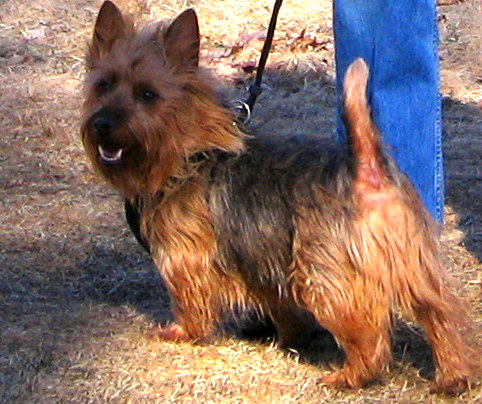
The Australian Terrier has a classic double coat. The outer coat is harsh, straight, and approximately 2-3 inches long across the body. Underneath lies a soft, short, dense undercoat. Each layer serves a distinct purpose.
The outer coat is the armor. Its harsh, almost wiry texture repels water, sheds dirt, and provides UV protection. When you touch a properly maintained Aussie Terrier coat, it should feel rough and springy -- not soft or silky. That texture is not a grooming failure. It is the coat working exactly as intended.
The undercoat is the insulation. It keeps the dog warm in cool weather and, counterintuitively, helps regulate temperature in heat by creating an air buffer between the environment and the skin. According to veterinary dermatology research, double-coated breeds with intact undercoats maintain a skin surface temperature approximately 5-8 degrees cooler than shaved dogs in ambient temperatures above 85 degrees Fahrenheit.
The Hair Growth Cycle
Understanding the Australian Terrier's hair growth cycle explains why this breed handles grooming differently from Poodles, Shih Tzus, or other continuously growing coat types.
Australian Terrier outer coat hairs grow in a predetermined cycle. Each hair grows to its full length (the anagen phase), rests (catagen phase), and then dies but remains in the follicle (telogen phase). The dead hair stays put until it is manually removed through hand-stripping or eventually pushed out by a new hair growing beneath it.
This growth cycle takes roughly 4-6 months. At any given time, hairs across the body are at different stages, which is why the coat does not blow all at once like a Husky or German Shepherd. Instead, dead hairs accumulate gradually, and the coat starts to look dull and flat when too many dead hairs are present.
The undercoat has a faster growth cycle and sheds more noticeably during seasonal transitions, particularly in spring and fall. This is when extra brushing and professional undercoat removal become most important.
Coat Colors and What to Expect
The Australian Terrier comes in three accepted color patterns, and each has slightly different coat characteristics:
Blue and Tan: The most common coloration. The body coat is blue or steel-blue (actually a diluted black), with rich tan markings on the face, ears, legs, and underbody. The blue body coat tends to be the harshest in texture and most responsive to hand-stripping.
Sandy/Red: A solid sandy or red color throughout. Sandy coats tend to be slightly softer in texture than the blue and tan variety, though they should still feel distinctly harsh. Sandy coats may require more frequent maintenance to prevent softening.
All-Black (with or without tan points): Less common but recognized. These coats behave similarly to the blue and tan variety in terms of texture and maintenance.
Color can fade or shift slightly with age, sun exposure, and grooming method. Clipped coats tend to lighten over time, while hand-stripped coats maintain deeper, truer color because each new hair grows in with full pigmentation.
What Destroys Coat Texture (And How to Avoid It)
The number one coat texture killer for Australian Terriers is inappropriate grooming. Specifically, repeated clipping.
When you clip a wire-coated terrier, you cut the hair midway through its shaft. The cut end is soft -- you have exposed the inner cortex of the hair rather than the hard outer cuticle. Over multiple clipping cycles, the entire coat becomes soft, flat, and cottony. It loses its weatherproof properties, collects dirt more readily, and can start to mat -- something a properly textured coat almost never does.
Hand-stripping removes the entire dead hair from the follicle, allowing a new hair to grow in with its full hard outer cuticle intact. This is why hand-stripped terriers maintain that distinctive harsh coat for their entire lives, while clipped terriers gradually develop a softer, less functional coat.
For pet owners who choose clipping for practical reasons, there is a compromise: have the groomer use a stripping knife or carding tool to remove as much dead coat as possible before clipping. This will not fully preserve the texture, but it slows the softening process.
The Topknot, Ruff, and Furnishings
Not all Australian Terrier hair is the same texture. The breed has several distinct areas with softer hair:
The Topknot: Softer, finer hair on top of the skull that forms a distinctive fluffy cap. This hair is a different texture from the body coat by design and should not be stripped -- it is trimmed with scissors.
The Ruff: Longer, slightly softer hair around the neck and chest that frames the face. This adds to the breed's characteristic expression and is maintained through brushing and light trimming.
Leg Furnishings: The hair on the legs is slightly longer and softer than the body coat. Regular brushing prevents tangling in these areas.
These softer areas require different care than the body coat. They benefit from conditioning products that would weigh down the harsh body coat, and they tangle more readily so need more frequent attention.
Home Maintenance Between Professional Visits
Australian Terriers are relatively low-maintenance between professional grooming sessions compared to many breeds. Here is what your weekly routine should look like:
Brush once or twice weekly: Use a slicker brush to work through the coat, paying extra attention to the furnishings, ruff, and behind the ears. Follow with a metal comb to check for tangles.
Check ears weekly: Although erect ears are less infection-prone than floppy ones, they still accumulate debris. Wipe the inside of the ear flap with a damp cloth.
Monitor coat texture: Run your hand over the body coat regularly. If it feels soft and flat instead of harsh and springy, dead coat is building up and it is time for professional stripping or carding.
Spot-clean as needed: The harsh outer coat naturally sheds dirt when dry. After muddy outings, let the coat dry and then brush -- most dirt will release on its own.
Seasonal Coat Changes
Expect increased undercoat shedding in spring and fall. During these transitions, you may need to brush every other day instead of once or twice weekly. A professional de-shedding treatment during these periods removes the loose undercoat efficiently and prevents it from matting against the skin.
The outer coat does not change seasonally, but growth rate may slow slightly in winter and increase in spring. This does not affect your maintenance routine significantly.
A Coat Worth Understanding
The Australian Terrier's coat is a working tool refined over more than a century of selective breeding. When properly maintained, it is low-shedding, naturally dirt-repelling, weatherproof, and beautiful. It does not need elaborate styling or frequent baths -- it needs understanding. Know the growth cycle. Respect the texture. Maintain it with the right techniques. Your Aussie's coat will reward you with minimal fuss and maximum function.
---
Ready to streamline your grooming workflow? PawOps Board Manager helps salons track every Australian Terrier from check-in to pickup with real-time visibility. Start your free 30-day trial →
Related Reading: