Understanding Your Bergamasco's Coat: The Most Unique Coat in the Dog World
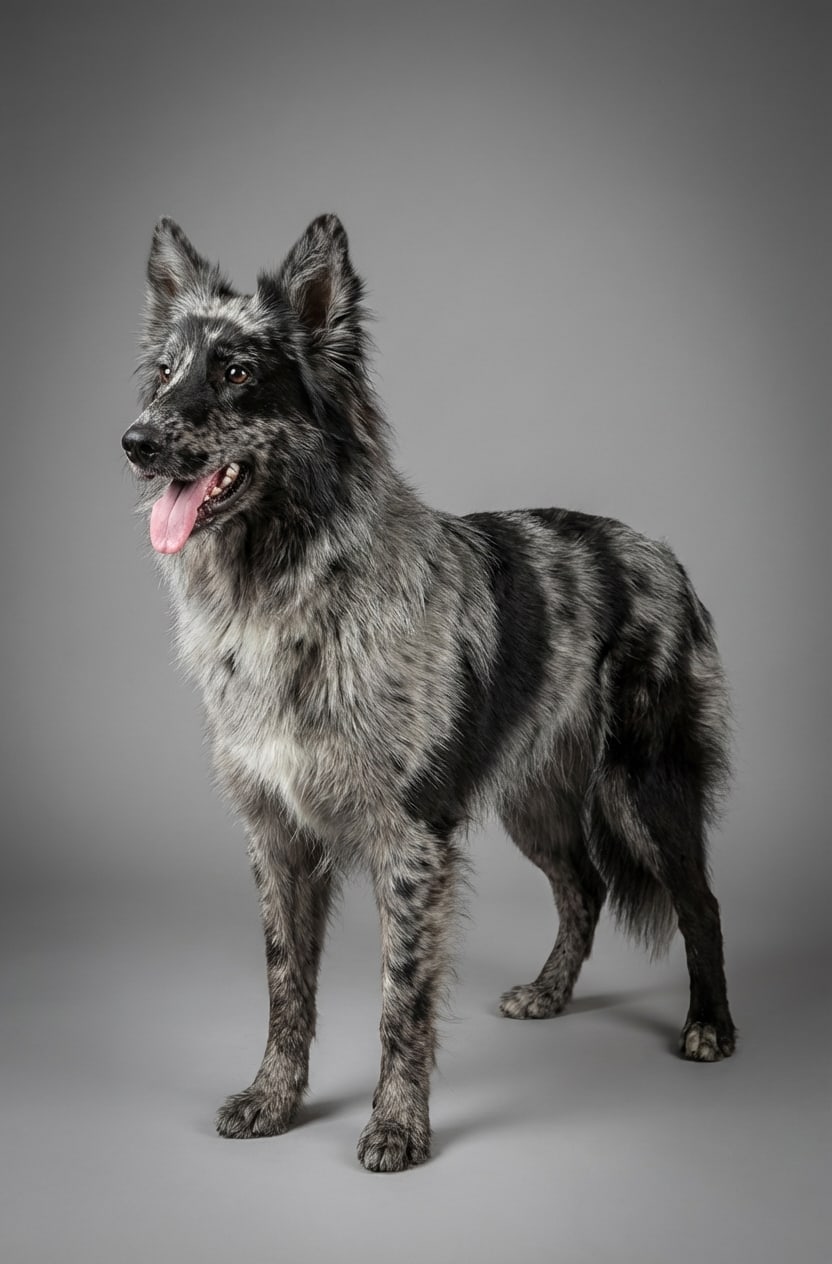
Understanding Your Bergamasco's Coat: The Most Unique Coat in the Dog World
If you have ever seen a Bergamasco Sheepdog, you remember it. That distinctive flocked coat -- flat mats cascading from the body in overlapping layers -- looks like nothing else in the dog world. It is dramatic, it is functional, and it confuses the heck out of almost everyone who sees it for the first time.
The most common reaction: "Does your dog have dreadlocks?" The second most common: "Is that on purpose?"
Yes. It is very much on purpose. And understanding how it works is the single most important thing you can do as a Bergamasco owner.
Three Types of Hair, One Incredible System
The Bergamasco coat is not just long hair that mats. It is an engineered system made of three distinct hair types that work together:
The Undercoat
Fine, soft, and slightly oily. This is the insulating base layer closest to the skin. The oiliness serves a dual purpose: it waterproofs the underlayer and provides some natural antimicrobial protection. In the Italian Alps where the breed originated, this layer kept the dog warm during harsh mountain winters while repelling snow and rain.
The "Goat Hair"
Long, straight, somewhat coarse strands that grow through and past the undercoat. This is the structural backbone of the coat. Goat hair provides the framework that the third hair type wraps around. Without it, the flocks would not have the internal structure to form properly.
The Woolly Hair
This is where the magic happens. Fine, crimped, fuzzy hair that begins growing in when the dog is roughly one to three years old. The woolly hair tangles around the goat hair and binds with the undercoat to form flat, felt-like mats called flocks. The crimped texture acts like natural Velcro -- once it wraps around the other hair types, it locks in place.
The Bergamasco Sheepdog Club of America notes that properly formed flocks are flat, roughly one to three inches wide, and fan out from the skin in overlapping layers that resemble loose shingles on a roof. This structure is critical because it allows air circulation while providing protection.
How Flocks Form: The Timeline
This is where many new owners get confused or anxious. Here is what to expect:
Birth to 8-10 months: The puppy coat is soft, fluffy, and looks nothing like the adult coat. It can be brushed normally. Enjoy this phase -- it is the only time in your dog's life that a standard brush will be useful.
10-18 months: The woolly hair starts growing in. The coat begins to tangle. This is where the work begins. The tangles need to be manually separated into flat sections by hand. If left alone, they form round, cylindrical mats that pull on the skin and trap moisture. This is NOT what you want.
18 months to 3 years: Flocks continue forming and extending. New woolly growth needs ongoing separation. The flocks gradually lengthen and thicken. By year three, the basic flock structure is established.
3 years onward: The flocks grow slowly in length for the rest of the dog's life. Some Bergamascos develop flocks that reach the ground, though many owners keep them shorter for practical reasons. Maintenance shifts from active formation to monitoring and hygiene.
The Crucial Difference: Flocks vs Mats
This distinction is everything:
Proper flocks are flat, even in width, and lie against the body in overlapping layers. They allow air to circulate between them. The base of each flock sits comfortably against the skin without creating tension or pressure. They are structured.
Improper mats are round, irregular, and clump together in unpredictable shapes. They pull on the skin, trap moisture at the base, and create a breeding ground for bacteria and fungus. They are chaos.
The only difference between the two is human intervention during the formation period. A Bergamasco left entirely to its own devices will develop a coat, but it will be an uncomfortable mess rather than a functional system. Guided flock formation is not optional.
Climate Considerations
The Bergamasco was designed for Alpine conditions: cold winters, mild summers, moderate humidity. If you live somewhere different, here is how it affects the coat:
- Hot, humid climates are the biggest challenge. Moisture gets trapped at the base of the flocks more easily, increasing the risk of skin infections and mildew. Bergamascos in Houston, Miami, or similar climates need more frequent professional skin checks and careful drying after any water exposure. The flocks may also develop odor faster in high humidity.
- Dry climates are generally easier on the coat. Less moisture means less risk of fungal issues. The oily undercoat provides natural moisture, so the coat does not typically dry out even in arid conditions.
- Cold climates are where the coat thrives. The insulation properties are at their best, and the low humidity minimizes skin issues.
Bathing a Bergamasco
Let us clear this up once and for all: you can bathe a Bergamasco. The breed is not too delicate for water. The challenge is entirely about drying.
A Bergamasco's flocked coat acts like a series of thick felt pads. Each flock absorbs and holds water deep in its layers. Air-drying a fully flocked Bergamasco can take 24 to 48 hours, and during that time, the damp base of the flocks becomes a perfect environment for bacterial and fungal growth.
Professional grooming dryers cut this down to a couple of hours. Some owners invest in high-velocity dryers for home use, which is a reasonable approach if you bathe your dog between professional visits.
Bathing frequency for a Bergamasco is lower than most breeds -- every two to three months is typical for a dog that is not getting unusually dirty. The natural oils in the undercoat provide some self-cleaning properties.
Daily Care and Monitoring
Once the flocks are formed, daily care is surprisingly minimal:
- Check the flock bases weekly. Part a few flocks and look at the skin. It should be clean and healthy-looking. Any redness, flaking, or unusual smell warrants a professional check.
- Keep the sanitary areas trimmed. The flocks around the rear and belly need to be kept clean for hygiene.
- Monitor for debris. Bergamascos that spend time outdoors can collect leaves, twigs, and burrs in their flocks. Remove these before they work their way deeper.
- Watch for splitting. Occasionally a flock will begin to split into thinner sections. This is normal but should be monitored to prevent the thinner sections from breaking off.
A Fact That Surprises Everyone
Here is something that catches every new Bergamasco owner off guard: properly maintained Bergamascos are actually lower-shedding than most herding breeds. The flocked coat traps shed hair within its structure rather than releasing it. You will not find tumbleweeds of fur around your house the way you would with a German Shepherd or Border Collie. The trade-off is that all that trapped hair stays in the flocks, which is part of what makes them grow over time.
A study published in the Journal of Veterinary Dermatology found that breeds with corded or flocked coats shed roughly 60-70% less loose hair into the environment compared to standard double-coated breeds of similar size.
The Emotional Part
Owning a Bergamasco's coat means accepting a different relationship with dog grooming than most owners have. You are not going to have a dog that looks "just groomed" in the traditional sense. There is no blow-out, no fluffy finish, no sculpted look. Your dog is going to look like a walking carpet, and strangers are going to have opinions about it.
But that coat is doing exactly what it was designed to do. It is protecting your dog, regulating temperature, and working as one of the most sophisticated natural insulation systems in the animal kingdom. Understanding it, respecting it, and maintaining it properly is one of the most rewarding parts of owning this extraordinary breed.
PawOps helps grooming salons handle specialty breeds like the Bergamasco with condition-based assessment that recognizes the unique nature of the flocked coat -- because pricing a Bergamasco the same as a Standard Poodle makes zero sense for either the groomer or the owner. Use our free pricing calculator →