Understanding Your Bernese Mountain Dog's Coat: What Every Owner Should Know
Understanding Your Bernese Mountain Dog's Coat: What Every Owner Should Know
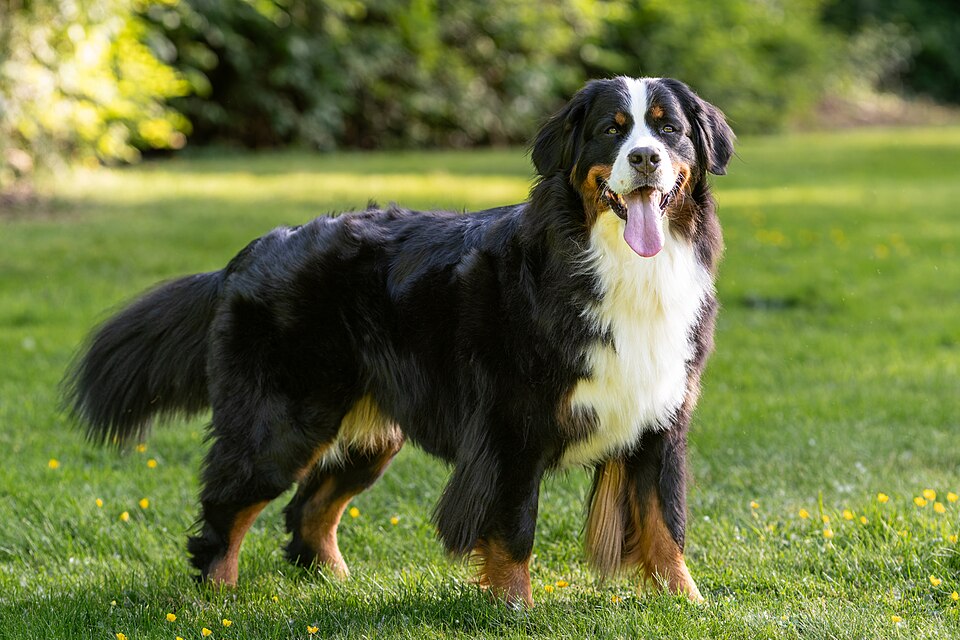
That stunning tricolor coat is one of the first things people notice about your Bernese Mountain Dog. The jet black, bright white, and warm rust markings make Berners one of the most visually striking breeds around. But that beauty comes with complexity.
Understanding how your Berner's coat works will help you keep it healthy, reduce shedding chaos in your home, and ensure your dog stays comfortable year-round.
Bernese Mountain Dog Coat Anatomy
Berners have a classic double coat with two distinct layers that serve different purposes:
The undercoat is dense, woolly, and soft. It sits close to the skin and acts as insulation. In winter, it thickens dramatically to protect against cold. In summer, it thins out (through shedding) to allow better airflow. This layer is your primary shedding culprit.
The outer coat (guard hairs) is longer, slightly wavy to straight, and has a natural sheen. It repels water and protects the undercoat and skin from UV rays, dirt, and debris. This is the layer that gives Berners their handsome appearance.
Here is something most people do not realize: the outer coat has a specific texture that serves a functional purpose. Those guard hairs are slightly coarse compared to the undercoat, which creates a natural separation between layers. This separation allows air to circulate between the coats, creating an insulating air pocket. When you shave a Berner, you destroy this architecture, and it may never fully recover.
The Tricolor Pattern
The Bernese Mountain Dog's color pattern is genetically fixed and remarkably consistent across the breed:
- Jet black covers most of the body as the base color.
- Rich rust (sometimes called tan) appears above the eyes, on the cheeks, on all four legs, and on each side of the chest.
- Bright white marks the blaze on the face, the chest (forming an inverted cross or "Swiss cross"), the feet, and the tip of the tail.
The color does not significantly affect coat texture, but it does influence how visible shedding is. Black guard hairs show prominently on light furniture and clothing, while the white undercoat shows on dark surfaces. Berner owners quickly learn that no outfit color is safe.
The Shedding Cycle Explained
Berner shedding happens in three modes:
Baseline shedding occurs year-round. Every day, your Berner loses some hair as part of the natural growth cycle. This is manageable with regular brushing.
Seasonal coat blow happens twice a year, typically in spring (March through May) and fall (September through November). During these periods, the undercoat comes out in volume. We are talking clumps of fur you can pull out by the handful. The spring blow is usually more dramatic as the thick winter undercoat sheds out.
Stress or hormonal shedding can happen outside of normal cycles. Spaying or neutering, illness, dietary changes, or environmental stress can trigger abnormal shedding. If your Berner is shedding heavily outside of normal seasons, it is worth a vet check.
During a coat blow, you can expect 4 to 6 weeks of intense shedding. Professional deshedding treatments during this period remove the bulk of the loose undercoat in one session, dramatically reducing what ends up on your floors.
Coat Growth and Regrowth
Berner coat grows at a moderate pace. The full growth cycle from follicle to shedding takes approximately 4 to 6 months for the undercoat and 6 to 8 months for the guard hairs.
This growth timeline matters for two reasons:
Common Bernese Mountain Dog Coat Issues
Hot Spots (Acute Moist Dermatitis)
Berners are particularly prone to hot spots, especially in warm, humid weather. The dense undercoat traps moisture against the skin, creating ideal conditions for bacterial growth. Hot spots appear suddenly as red, oozing, painful patches.Prevention: Thorough drying after swimming or baths, regular undercoat removal, and keeping feathering trimmed in humid months.
Matting
While Berners do not mat as severely as some long-coated breeds, mats form in predictable areas: behind the ears, in the "armpits" where the front legs meet the chest, and in the feathering on the backs of the legs.Prevention: Brush these friction areas every 2 to 3 days with a slicker brush, using a steel comb to verify you are reaching all the way to the skin.
Dry, Flaky Skin
Berners can develop dry skin, especially in winter when indoor heating reduces humidity. Signs include visible flaking (dandruff), excessive scratching, and a dull coat.Management: Omega-3 fatty acid supplements, humidifiers in the home, and moisturizing shampoos during professional grooming all help.
Color Fading
Some Berners experience a slight fading or "rusting" of the black coat, where black areas take on a brownish tinge. This can be caused by sun exposure, nutritional deficiencies, or simply genetics.Season-by-Season Coat Care
Spring:
- Begin daily brushing as the coat blow starts.
- Schedule professional deshedding treatments every 3 to 4 weeks.
- Watch for hot spots as temperatures rise.
- Never shave. Instead, thin the undercoat through professional deshedding.
- Provide shade and water. The coat protects against sunburn but your dog still overheats faster than short-coated breeds.
- Rinse after swimming to remove chlorine or lake bacteria.
- Trim paw pad fur to prevent slipping on smooth surfaces.
- Second coat blow begins. Resume daily brushing.
- Schedule deshedding treatments as the winter coat starts growing in.
- Check for foxtails and burrs in the feathering after outdoor time.
- The coat is at peak density. Brush 3 to 4 times per week.
- Remove ice balls from between toes and paw pads after walks.
- Professional grooming every 6 to 8 weeks to maintain coat health.
- Use a moisturizing conditioner to combat dry indoor air.
Your Berner Coat Care Toolkit
Essential tools for home maintenance:
The Never-Shave Rule
This bears repeating because it comes up constantly: do not shave your Bernese Mountain Dog. Not in summer. Not ever, unless medically necessary.
Shaving destroys the coat's layered architecture. The undercoat and guard hairs grow back at different rates, and the undercoat often comes in first, creating a dense, matted layer that the guard hairs struggle to penetrate. The result is a coat that is thicker, hotter, more mat-prone, and less weather-resistant than before.
Some Berners' coats never fully recover from shaving. The texture changes permanently. What was once a smooth, shiny outer coat becomes fuzzy and dull.
If your Berner seems hot, the answer is professional undercoat removal, shade, water, cooling mats, and limiting exercise during peak heat. Not clippers.
Working With Your Groomer on Coat Health
Your groomer sees your Berner's coat from a perspective you cannot: up close, all over, regularly. Build that relationship and communicate openly about what you are seeing at home between visits.
Grooming salons with coat condition assessment tools can track your Berner's coat health over time, scoring density, texture, and condition at each visit to spot trends before they become problems.
Your Berner's coat is genuinely remarkable, a piece of evolutionary engineering refined over centuries in the Swiss Alps. Treat it with respect, invest in proper care, and enjoy the fact that you own one of the most beautiful dogs on the planet.
Frequently Asked Questions
How much do Bernese Mountain Dogs shed?
A lot. They shed moderately year-round and heavily during spring and fall coat blows. During peak shedding, expect to brush out handful-sized clumps of undercoat daily for 4 to 6 weeks.Why should I never shave my Bernese Mountain Dog?
Shaving destroys the double coat's layered architecture. The undercoat grows back faster than guard hairs, creating a dense, matted layer. The coat may never fully recover its original texture and loses its insulating and UV-protective properties.What is a Bernese Mountain Dog "spay coat"?
After spaying or neutering, many Berners develop a softer, thicker, more cottony coat texture due to hormonal changes. This spay coat mats more easily and requires more frequent grooming than the original coat.How do I know if my Berner's coat is healthy?
A healthy Berner coat has a natural sheen on the guard hairs, lies flat to slightly wavy, and the skin underneath is clean and free of flaking or redness. The coat should move freely when you run your hands through it without catching on tangles.Can I use human shampoo on my Bernese Mountain Dog?
No. Human shampoo has a different pH balance that strips the natural oils from the coat and can irritate the skin. Use a dog-specific shampoo, ideally one formulated for double-coated breeds.---
Ready to streamline your grooming workflow? PawOps Board Manager helps salons track every Bernese Mountain Dog from check-in to pickup with real-time visibility. Start your free 30-day trial →