Understanding Your Bluetick Coonhound's Coat: The Science Behind Those Blue Ticks
Understanding Your Bluetick Coonhound's Coat: The Science Behind Those Blue Ticks
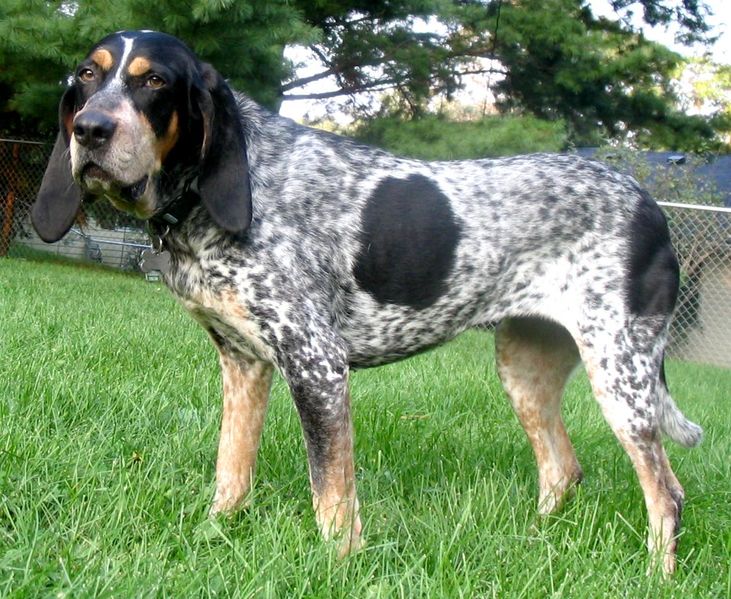
The Bluetick Coonhound's coat is one of the most visually distinctive in the dog world. That blue-mottled ticking -- small dark spots on a white background that create the illusion of blue -- gives the breed its name and makes every Bluetick instantly recognizable. But beyond the aesthetics, this coat has functional characteristics that every owner should understand.
What Creates the "Blue" Look
Let us start with what makes a Bluetick blue. The breed is not actually blue -- the effect is an optical illusion created by coat pattern genetics.
The base coat is white. Overlaid on that white are dense, small spots of black (called "ticking"). When these black spots are close enough together against the white background, the human eye blends them into what appears to be a blue-gray color. It is the same principle as pointillism in painting -- individual dots creating the perception of a continuous color at a distance.
Additional markings include:
- Solid black patches on the body, head, and ears
- Tan points above the eyes, on the cheeks, and on the legs
- The ticking can vary in density from light (more visibly spotted) to heavy (appearing almost solid blue)
Coat Structure: Denser Than Most Coonhounds
The Bluetick Coonhound has a medium-length, moderately coarse double coat that is notably denser than some other coonhound varieties.
Guard hairs (outer coat): Coarser and slightly longer than a Treeing Walker or Redbone -- approximately 3/4 to 1 inch in length. The AKC standard specifically notes the coat should be "moderately coarse" in texture. These guard hairs are straight, lie relatively flat, and have a glossy appearance when healthy.
Undercoat: Dense and soft, providing significant insulation. The Bluetick's undercoat is typically denser than the Redbone's, which affects both shedding volume and grooming time. This density was developed for a dog that worked in varied climates across the American South and needed weather protection without a heavy coat.
The coat density difference between Blueticks and thinner-coated hounds is measurable. Groomers report that Bluetick de-shedding sessions consistently take 10-15% longer than Treeing Walkers of similar size, solely due to undercoat density.
Oil Production and the Hound Signature
Like all coonhounds, Blueticks produce above-average skin oil. Among the coonhound varieties, Blueticks are frequently noted by grooming professionals as having particularly strong sebaceous output.
The oil production cycle:
The denser the undercoat, the more oil gets trapped, and the stronger the odor becomes between baths. This is why Blueticks tend to smell stronger than thinner-coated hound breeds -- they have more coat surface area trapping more oil.
Oil production rates are estimated at 35-50% higher than non-scent breeds, based on veterinary dermatology research on hound breed skin characteristics.
Shedding Patterns
Bluetick Coonhounds shed moderately to heavily year-round, with significant seasonal increases:
| Period | Shedding Level | Duration | What Happens | |--------|---------------|----------|---------------| | Spring blow | Heavy | 3-5 weeks | Dense winter undercoat releases | | Summer | Moderate | Ongoing | Steady maintenance shedding | | Fall transition | Heavy | 2-4 weeks | Summer coat replaced by winter density | | Winter | Low-moderate | Ongoing | Minimal shedding, coat at maximum density |
Bluetick shed hairs have two characteristics that make them particularly noticeable:
Between the two colors, there is no fabric color that completely hides Bluetick shedding. You will find both dark and light hairs regardless of your home decor choices.
Climate Adaptation
The Bluetick's coat system responds to climate:
In warm climates:
- Undercoat thins but never disappears completely
- Oil production increases (higher temperatures stimulate sebaceous glands)
- Odor management becomes more frequent
- The coat provides UV protection -- the ticked areas actually offer better sun protection than the white base areas
- Undercoat thickens substantially (up to 40% denser than summer coat)
- Oil production decreases slightly
- The coat provides insulation effective to approximately 25-30 degrees Fahrenheit for active dogs
- Below that temperature, protection is needed for extended outdoor time
- Odor intensifies significantly (moisture + oil + bacteria = amplified smell)
- Skin infections become more likely in fold areas
- Ear infections increase
- More frequent bathing becomes necessary (every 2-3 weeks vs. 4-6 weeks in dry climates)
Coat Health Indicators
Healthy Bluetick coat:
- Glossy appearance with visible sheen on the guard hairs
- Smooth, flat-lying coat without raised areas or puffiness
- Ticking pattern clear and defined (not washed out)
- Skin underneath pale pink to light colored
- Moderate oil level (coat feels slightly slick, not greasy)
- No flaking, redness, or bald patches
- Dull, dry coat -- nutritional deficiency, dehydration, or early illness. The Bluetick's coat loses its gloss quickly when health declines.
- Excessive oiliness with strong odor -- potential seborrhea, allergies, or fungal infection. Normal hound oil is different from pathological overproduction.
- Ticking areas losing definition -- can indicate fungal infection affecting pigmentation or nutritional issues impacting melanin production.
- Patchy hair loss -- allergies (food or environmental), demodectic mange, or hormonal imbalance. Most common on the flanks and belly in Blueticks.
- Red, inflamed skin -- contact allergies, bacterial infection, or environmental irritation. Check particularly in skin fold areas.
- Excessive dandruff -- zinc deficiency, over-bathing with harsh products, or dry environmental conditions.
Nutrition for Coat Health
The Bluetick coat responds to diet quality within 4-6 weeks:
Key nutrients:
- Omega-3 fatty acids: regulate oil production, reduce inflammation
- Omega-6 fatty acids: maintain skin barrier integrity
- Zinc: essential for skin cell turnover and coat quality
- Biotin: strengthens keratin structure in hair
- High-quality protein: provides building blocks for coat growth
Home Maintenance Protocol
Between professional grooming appointments:
Daily (3 minutes):
- Ear check: lift both flaps, look for redness or discharge, sniff for unusual odor
- Quick body scan after outdoor activity: check for ticks, burrs, scratches
- Brush with a rubber curry brush or bristle brush -- removes loose coat and distributes oil
- Wipe facial folds and jowls with a damp cloth
- Inner ear flap wipe with vet-approved ear cleaner
- Paw pad check for cracks, debris, or irritation
- Spot cleaning with waterless shampoo for odor management between baths
- Post-swim full drying (especially ears)
What Not to Do
- Never shave a Bluetick. The double coat insulates against heat and cold. Shaving disrupts the growth cycle and can permanently alter coat texture.
- Do not over-bathe. More than every 2 weeks strips natural oils faster than they replenish, causing rebound overproduction and worsening the odor cycle.
- Avoid human shampoo. The pH is wrong for dog skin and will dry the coat while irritating the skin.
- Do not ignore the undercoat. Surface brushing that only touches guard hairs accomplishes nothing. Use tools that reach the undercoat layer.