Understanding Your Briard's Coat: The Most Beautiful High-Maintenance Coat in the Working Group
Understanding Your Briard's Coat: The Most Beautiful High-Maintenance Coat in the Working Group
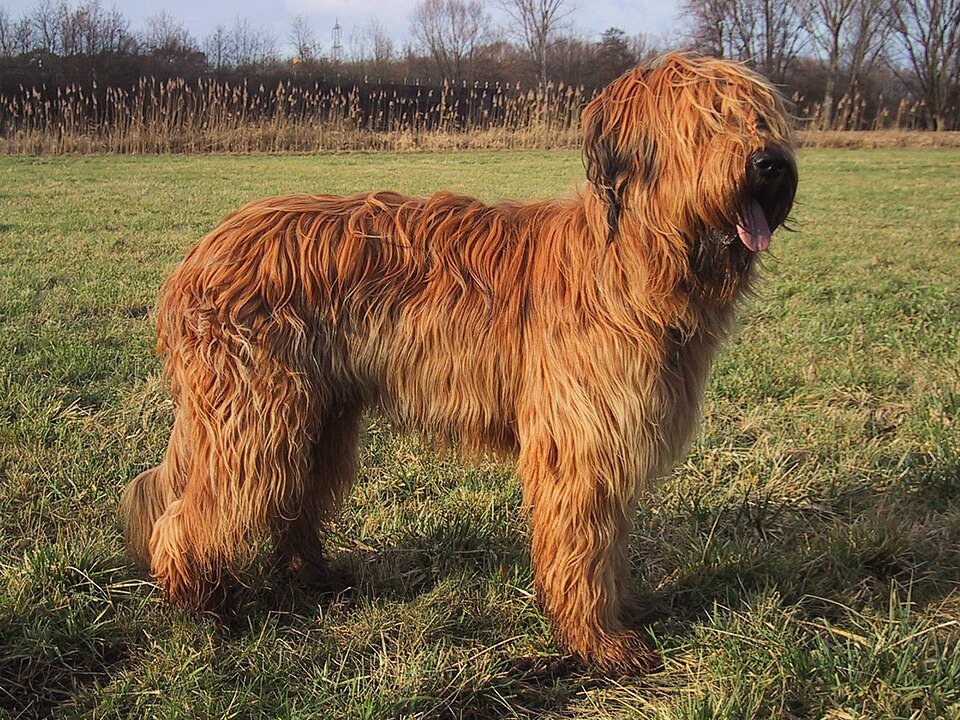
The Briard's coat is one of the most distinctive in the entire dog world. Long, slightly wavy, with a dry texture that moves beautifully when the dog runs -- it is the kind of coat that makes people stop and stare. It is also the kind of coat that makes groomers take a deep breath before starting. Understanding what you are working with is the first step to keeping your Briard comfortable and looking their best.
The Structure of the Briard Coat
The Briard has a double coat with two layers that work together but behave very differently.
The Outer Coat
The outer coat is long, typically six inches or more at full length, and has a distinctive dry, slightly coarse texture. The breed standard describes it as "dry and supple, making a dry rasping sound between the fingers." This texture is unique among long-coated breeds and is often compared to goat hair.
The outer coat is slightly wavy -- not curly, not straight, but with a gentle wave that gives it body and movement. Individual hairs are thick and strong, which contributes to the coat's impressive appearance when properly maintained. The coat naturally parts along the back and falls in a curtain on either side of the body.
The Undercoat
Beneath the outer coat lies a fine, tight undercoat. It is shorter than the outer coat, much softer in texture, and lies close to the skin. This layer provides insulation and was essential for the breed's original work as a French herding and farm dog in variable weather.
The undercoat sheds seasonally, and when it does, the dead undercoat tangles into the outer coat if not removed. This is the primary mechanism behind most Briard matting -- it is not the outer coat tangling with itself as much as the undercoat shedding into the outer coat and creating composite tangles.
The Beard and Eyebrows
Briards have prominent facial furnishings -- a full beard, pronounced eyebrows (sometimes called a "peek-a-boo" look), and long ear hair. These areas require their own maintenance because they get wet from drinking, collect food particles, and tangle differently than the body coat.
Why This Coat Mats So Aggressively
The Briard coat mats faster and more thoroughly than most long-coated breeds. Here is why:
- Texture: The dry, slightly rough texture means hairs grip each other rather than sliding past. Silky coats resist tangling because the hairs are slippery. The Briard's coat is the opposite.
- Density: The combination of a long outer coat over a dense undercoat creates multiple layers where tangles can form and tighten.
- Length: More length means more surface area for hairs to cross, tangle, and lock together.
- Movement: Briards are active dogs. Running, playing, and working create friction in the coat -- especially in the armpits, between the legs, behind the ears, and under the chest.
| Location | Why It Mats Here | |----------|------------------| | Behind the ears | Friction from head movement, collar contact | | Armpits | Constant movement friction from walking and running | | Inside the hind legs | Leg movement creates rubbing between coat surfaces | | Under the chest | Contact with the ground when lying down | | Around the collar | Collar rubs and compresses the coat | | Beard and muzzle | Moisture from eating and drinking |
The Puppy Coat Transition
If you are raising a Briard puppy, prepare yourself for the coat transition between approximately 8 and 14 months of age. This is the period when the soft, relatively easy-to-manage puppy coat gives way to the adult coat.
During this transition, both coats exist simultaneously. The puppy coat sheds while the adult coat grows in, and they interweave into tangles at a rate that makes most owners question their life choices. A Briard puppy that was easy to brush at five months can become a matting machine at ten months.
This is the most critical period for grooming consistency. Puppies who are groomed regularly through the transition learn to accept the process, develop coats that start their adult life well-maintained, and avoid the traumatic experience of a full shave-down caused by months of neglected transition matting.
Here is a fact that surprises many new Briard owners: the adult coat texture can be quite different from the puppy coat. A puppy with soft, wavy fur may develop the coarser, drier adult coat that is breed-typical. Or a puppy with fairly straight fur may develop more wave as an adult. You will not know your Briard's final coat texture until they are about two years old.
Coat Color and Its Quirks
Briards come in several colors -- black, tawny (ranging from light gold to deep red), and gray. A few coat color observations:
- Black Briards tend to show dust, dander, and dry skin flakes more visibly
- Tawny Briards show dirt and staining more obviously, particularly around the beard and feet
- Gray Briards can darken or lighten as they mature; the adult color may be quite different from the puppy color
- All colors can develop a reddish or yellowish tinge from sun exposure, saliva staining, or tear staining around the face
Essential Home Care
Between professional grooming appointments, your home routine should include:
- Line brushing -- the only effective technique for the Briard coat. Work through the coat in horizontal sections, brushing from skin to tip. Surface brushing that only hits the outer layer misses the undercoat where mats form.
- Steel comb check -- after brushing, run a steel comb through the coat. If the comb catches, there is a tangle the brush missed. Do this especially behind the ears, in the armpits, and along the hind legs.
- Beard care -- wipe the beard after meals, check for tangles, and keep the area around the mouth clean
- Detangling spray -- apply before each brushing session. It reduces friction and makes the process easier on both of you.
- Paw checks -- trim fur between paw pads when it gets long enough to collect mud and debris
Tools You Need
- Pin brush or slicker brush -- for initial detangling (a quality slicker works well on the Briard texture)
- Steel greyhound comb -- for checking for hidden tangles and finishing
- Undercoat rake -- for removing dead undercoat during seasonal shedding
- Detangling spray -- essential, not optional, for this coat type
- Mat splitter -- for working through small mats without cutting them out
When to See a Professional
Beyond your regular grooming schedule, see your groomer if:
- You find mats you cannot work through with a comb and mat splitter
- Your puppy is entering the coat transition and you need guidance on managing it
- The coat has changed texture (softer, coarser, thinner) -- could indicate a health issue
- You want to discuss changing the coat length for easier maintenance
Respecting the Coat
The Briard coat is challenging, but it is also extraordinary. When properly maintained, it moves like a curtain of textured silk, catching light and flowing with the dog's movement. It is a coat that evolved to protect a working dog in the fields of France, and it carries a dignity that rewards the effort you put into it.
The commitment is real -- daily brushing, regular professional grooming, and constant vigilance against matting. But the result is one of the most striking dogs you will ever share your life with.
PawOps helps grooming salons assess long, textured coats using condition scoring that accounts for mat severity, undercoat density, and coat length -- ensuring your Briard gets the time and attention their remarkable coat deserves.