Understanding Your Brussels Griffon's Coat: Rough, Smooth, and Everything Between
Understanding Your Brussels Griffon's Coat: Rough, Smooth, and Everything Between
The Brussels Griffon is one of those breeds where coat type changes everything. Two Griffons can stand side by side and look like completely different breeds -- one scruffy and bearded with wiry fur standing every direction, the other sleek and glossy with a coat like velvet. Same breed, same personality, radically different coats. If you own a Griffon (or are thinking about getting one), understanding which coat you are dealing with -- and how it works -- is genuinely important information.
The Two Brussels Griffon Coat Types
The Brussels Griffon comes in two distinct coat varieties, and they are not just cosmetically different. They are structurally different at the follicle level.
Rough Coat (Griffon Bruxellois)
The rough coat is a double coat with a harsh, wiry outer layer and a shorter, denser undercoat. The texture should feel rough to the touch -- coarse like a doormat, not soft like a pillow. If your rough-coated Griffon feels soft, it has likely been clipped rather than hand-stripped at some point, which permanently alters the texture.
Key characteristics of the rough coat:
- Wiry outer coat that stands slightly away from the body
- Dense undercoat for insulation
- Pronounced facial furnishings -- the bushy beard, mustache, and eyebrows that give the Griffon its iconic monkey-like expression
- Leg furnishings -- longer hair on the legs that gives them a "stocky" appearance
- Minimal shedding when properly maintained through hand-stripping
Smooth Coat (Petit Brabancon)
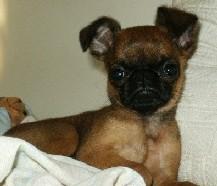
The smooth coat is a single coat -- short, glossy, and flat against the body. There is no undercoat to speak of, and the facial area has short hair like the rest of the body (no beard or pronounced eyebrows).
Key characteristics of the smooth coat:
- Short, glossy hair lying close to the body
- No facial furnishings -- the face is clean and expressive without the beard
- Moderate shedding -- more shedding than the rough coat, surprisingly
- Lower maintenance overall but still needs regular care
A Surprising Coat Fact
Here is one that catches almost everyone off guard: the rough-coated Brussels Griffon, despite having significantly more fur, actually sheds less than the smooth-coated variety. This seems backward, but there is a logical explanation.
The rough coat's wiry outer hairs have a longer growth cycle and do not fall out on their own -- they need to be manually removed through hand-stripping. Dead hairs stay in the coat until removed, which means minimal hair on your furniture. The smooth coat, by contrast, has a normal shedding cycle where dead hairs release freely and end up everywhere.
Brussels Griffon breed clubs report that rough-coated owners list "low shedding" as one of their top breed benefits, while smooth-coated owners frequently mention shedding as their primary maintenance complaint. Same breed, opposite shedding experiences.
How the Brussels Griffon Coat Grows
Rough Coat Growth Cycle
The rough coat grows in a predictable cycle:
When a groomer hand-strips a rough coat, they are removing hairs in the dead phase, which stimulates the follicle to begin a new growth cycle. This is why hand-stripping produces a better coat over time -- each cycle reinforces the correct wire texture.
Clipping interrupts this cycle by cutting the hair at an arbitrary point, leaving the dead root in the follicle. The new hair grows around the dead root and comes in softer and often lighter in color.
Smooth Coat Growth Cycle
The smooth coat follows a more conventional growth pattern:
This cycle runs continuously, producing the light year-round shedding that smooth Griffon owners notice.
Coat Color and How It Changes
Brussels Griffons come in four accepted colors:
- Red -- ranging from light reddish-gold to deep rust
- Belge -- a mix of red and black, often with a black mask
- Black -- solid black
- Black and tan -- black with tan markings on the face, chest, and legs
Puppies often look different from their adult coloring. Belge puppies may appear almost black at birth and develop their red-and-black pattern over several months.
Home Care for Each Coat Type
Caring for a Rough Brussels Griffon Coat
Weekly brushing with a slicker brush followed by a greyhound comb keeps the coat manageable between professional sessions. Focus on:
- The beard -- this collects food, water, and debris constantly. Wipe it after meals and brush through it gently to prevent knots.
- Under the front legs -- friction matting happens here
- The chest and neck area -- where the coat is densest
- Leg furnishings -- brush from the tips upward, then smooth down
Caring for a Smooth Brussels Griffon Coat
Weekly brushing with a rubber curry brush or a bristle brush removes loose hair and distributes oils. The smooth coat is straightforward:
- Brush the entire body in the direction of hair growth
- Pay attention to the chest and rear where shedding is heaviest
- A grooming mitt works well for quick daily touch-ups
Both Coat Types: Face Care
Regardless of coat type, Brussels Griffons need daily facial care:
- Wipe the face wrinkles with a soft, dry cloth -- moisture in folds breeds bacteria
- Clean around the eyes -- tear staining is common due to the flat face and large, prominent eyes
- Check the nose fold -- the crease above the muzzle traps debris
Common Brussels Griffon Coat Issues
Clipper Alopecia (Rough Coat)
Some rough-coated Griffons develop patchy or slow regrowth after being clipped. This condition, sometimes called post-clipping alopecia, occurs when the follicle does not properly regrow after the hair is cut rather than stripped. It is not universal, but it is common enough that groomers who know the breed recommend hand-stripping whenever possible.
Beard Hygiene (Rough Coat)
The rough Griffon's beard is a debris magnet. Food particles, water, drool, and environmental matter all collect in the wiry facial hair. Without regular cleaning, the beard develops odor and can cause chin acne or bacterial dermatitis. Keep a clean cloth near the food bowl and wipe after every meal.
Skin Allergies (Both Coat Types)
Brussels Griffons are moderately prone to skin allergies, which can manifest as itching, redness, and coat thinning. Environmental allergies (pollen, dust mites) and food sensitivities are both common. If your Griffon is scratching excessively or developing bald patches, see your vet before assuming it is a grooming issue.
Puppy Coat Transition
Rough-coated Griffon puppies have a softer, fluffier coat that does not look much like the adult wire texture. The transition to adult coat typically begins around four to six months and may take until 12 to 18 months to complete. During this transition, the coat can look patchy and inconsistent -- this is normal and not a sign of a problem.
Smooth-coated puppies transition more subtly -- the coat simply thickens and develops its adult gloss over the first year.
Diet and Coat Health
What your Griffon eats directly affects coat quality. For both coat types:
- Omega-3 fatty acids (fish oil) promote skin health and coat sheen
- High-quality protein supports strong hair growth
- Zinc -- deficiency can cause a dull, brittle coat (more common than you might think)
- Avoid fillers and artificial additives -- poor nutrition shows in the coat before it shows anywhere else
PawOps tracks coat type, grooming technique preferences, and condition history for every pet -- giving salons the data to deliver the right grooming approach for every Brussels Griffon that walks through the door.