Understanding Your Cavalier King Charles Spaniel's Coat: What Every Owner Should Know
Understanding Your Cavalier King Charles Spaniel's Coat: What Every Owner Should Know
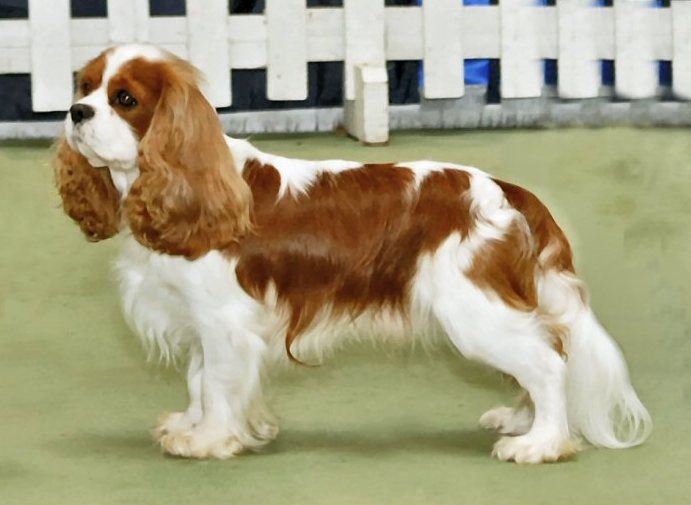
The cavalier king charles spaniel coat is a breed-defining feature — silky, flowing, and expressive. Each of the four recognized color patterns tells its own visual story. But understanding what this coat needs, how it changes, and how to maintain it requires looking past the beauty to the biology.
Coat Structure
Cavaliers have a single coat of medium-length, silky hair. There's no dense undercoat like Labs or German Shepherds. The hair is fine-textured, smooth, and lies flat or with a gentle wave.
The breed standard specifically states the coat should be "free from curl, though a slight wave is permissible." This matters because coat texture affects care:
- Straight, silky coat: The ideal. Tangles moderately, responds well to conditioning, holds feathering shape.
- Slightly wavy coat: Common in pet lines. Tangles more readily than straight coats, particularly in feathering.
- Excessively wavy or curly coat: A deviation from breed standard. Mats more aggressively and requires more frequent maintenance.
The Four Color Patterns
Cavalier King Charles Spaniels come in four officially recognized colors, each with its own aesthetic and — in some cases — care nuances.
Blenheim (Chestnut and White)
Rich chestnut markings on a pearly white base. The most popular color. Named after Blenheim Palace, home of the Dukes of Marlborough who bred the original Cavaliers.
The white areas show tear staining and food staining more visibly. Owners of Blenheim Cavaliers spend more time on facial cleaning and sometimes add tear stain treatments to their grooming routine.
A surprising fact: the "Blenheim spot" — a small chestnut mark centered on the top of the skull between the ears — is considered a breed hallmark. Legend says the Duchess of Marlborough pressed her thumb on the head of a pregnant Cavalier during an anxious wait for the Duke to return from battle. The puppies were born with the mark. Whether or not you believe the legend, the spot is prized in breeding.
Tricolor (Black, White, and Tan)
Black and white with tan markings above the eyes, on the cheeks, inside the ears, and under the tail. The tan points add warmth to what would otherwise be a stark black-and-white pattern.
Similar care needs to Blenheim — white areas show staining.
Black and Tan
Solid black with rich tan markings on the face, chest, legs, and under the tail. A striking, less common pattern.
The dark coat hides dirt well but shows dandruff and dry skin flakes more visibly.
Ruby
Solid rich red throughout. No white markings. The warmest of the four colors.
Ruby Cavaliers show dirt less than particolors but can show sun bleaching — exposure to direct sunlight can lighten the red coat over time.
Shedding: What to Expect
Cavaliers shed moderately year-round with seasonal increases in spring and fall. The shedding is noticeable but not extreme — nothing like a double-coated breed.
The fine, silky hair doesn't cling to clothing as stubbornly as coarse or short hair, but it does accumulate on furniture and carpet. Regular brushing captures loose hair before it reaches your sofa.
Factors that increase shedding:
- Seasonal transitions
- Stress or anxiety
- Hormonal changes (spaying/neutering temporarily increases shedding)
- Nutritional deficiency
- Skin conditions
Feathering: The High-Maintenance Zones
Cavalier feathering — the longer hair on ears, chest, legs, and tail — is the breed's glory and its grooming challenge.
Ear feathering: The longest and most mat-prone. The weight of the ear presses this hair against the head and body. Every time your Cavalier eats, drinks, or puts their head down, the ear feathering contacts surfaces that create friction.
Chest feathering: Catches debris and tangles from collar friction.
Leg feathering: Contact with grass, ground, and each other creates friction tangles, especially on the inner thighs.
Tail feathering: A flag of flowing hair that's prone to burrs, debris, and general tangling.
Each feathered zone needs specific brushing attention. Ignoring any one zone for even a week can result in tangles that take significant effort to resolve.
Brushing Technique
Tools
- Pin brush: Primary tool. Glides through silky coat without catching.
- Slicker brush: For working through tangles. Use gently — Cavalier skin is sensitive.
- Metal comb (wide and fine teeth): For checking after brushing and for face work.
- Detangling spray: Always spray before brushing. Dry brushing damages fine hair.
Method
Time: 10-15 minutes for a well-maintained coat, 3-4 times per week.
Puppy to Adult Coat Development
Cavalier puppies have shorter, softer coats that gradually lengthen. The feathering fills in over the first 2 years:
- 3-6 months: Short, manageable, minimal feathering. Easy maintenance.
- 6-12 months: Feathering begins to develop. Ear hair lengthens noticeably.
- 12-18 months: Full feathering is filling in. Grooming demand increases.
- 2+ years: Mature coat is fully established. Regular maintenance routine settles.
What to Tell Your Groomer
Heart Disease and Grooming
This section may seem unexpected in a coat guide, but it's critical.
Cavalier King Charles Spaniels have the highest rate of mitral valve disease of any breed. As heart disease progresses, it can affect coat quality — the coat may become dull, thin, or grow more slowly.
If your groomer notices coat quality decline in a middle-aged or older Cavalier, it's worth a veterinary checkup. The coat is sometimes the first visible sign of systemic health changes.
Your Cavalier's coat is one of the breed's finest features. Understanding its structure, caring for the feathering, and communicating with your groomer keeps it beautiful and functional. And because this coat sits atop a breed with known health vulnerabilities, treating coat changes as potential health signals could make a life-saving difference.
---
Ready to streamline your grooming workflow? PawOps Board Manager helps salons track every Cavalier King Charles Spaniel from check-in to pickup with real-time visibility. Start your free 30-day trial →
Related Reading: