Understanding Your Chow Chow's Coat: What Every Owner Should Know
Understanding Your Chow Chow's Coat: What Every Owner Should Know
The Chow Chow's coat is a feat of natural engineering. Developed over thousands of years in the harsh climates of northern China, it's one of the most dense, insulating, and visually striking coats in the entire canine world. But that impressive exterior comes with a maintenance profile that every owner needs to understand.
As a prospective Chow owner evaluating the commitment or a current owner looking to level up your coat care knowledge, here's everything that matters about the Chow Chow coat.
The Double Coat Deep Dive
Every Chow Chow has a double coat, regardless of whether they're the rough or smooth variety. Understanding these two layers is fundamental to proper care.
The undercoat is the layer closest to the skin. It's incredibly dense, soft, and woolly. This is the insulation layer -- it traps warm air against the body in cold weather and creates a buffer against heat in warm weather. The undercoat is also the layer responsible for most shedding.
The density of the Chow's undercoat is genuinely remarkable. If you part the coat on a Chow and look at the skin, you'll see a packed mass of fine, woolly fibers so tight that the skin beneath is barely visible. This density is what makes thorough drying so critical -- moisture trapped in that undercoat sits against the skin for hours without anyone knowing.
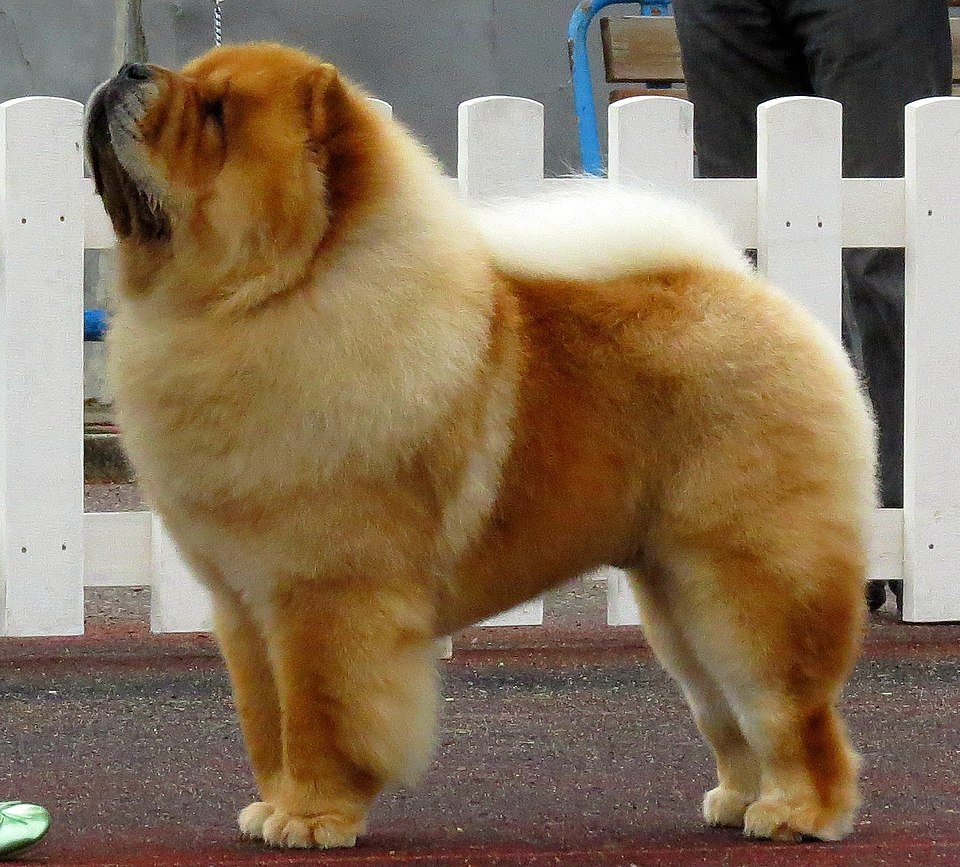
The outer coat (guard hairs) is longer, coarser, and stands away from the body. In rough-coated Chows, these guard hairs are notably thick and can be 3-5 inches long, giving the breed its signature puffy appearance. In smooth-coated Chows, the guard hairs are shorter and lie closer to the body, but they're still noticeably dense compared to most smooth-coated breeds.
The two layers work as a system. The outer coat deflects rain, wind, and debris while the undercoat provides thermal regulation. When both layers are clean, dry, and free of mats, air circulates between them -- keeping the dog comfortable across a wide temperature range.
When the coat mats, that circulation stops. A matted Chow coat is worse than no coat at all.
Rough Coat vs. Smooth Coat
Chow Chows come in two distinct coat varieties, and the difference is more significant than most people realize.
Rough coat -- This is the classic Chow Chow look. Key characteristics:
- Abundant, dense, straight guard hairs that stand off the body
- Dramatic ruff (mane) around the head and neck
- Feathering on the legs and tail
- Profuse coat through the britches (rear legs)
- Requires the most intensive grooming of any variety
- Short, dense guard hairs lying close to the body
- No dramatic ruff, feathering, or britches
- Still has a thick, woolly undercoat
- Coat feels plush and hard rather than fluffy
- Easier to groom but still needs professional attention
A surprising detail about Chow coat genetics: rough and smooth are determined by a single gene. Two rough-coated Chows can produce smooth-coated puppies if both carry the recessive smooth gene. Smooth coat is not a defect -- it's the recessive form of a naturally variable trait.
The Shedding Reality
Chow Chows shed. A lot. And the shedding follows a pattern that every owner should understand.
Year-round baseline shedding: Chows shed moderately throughout the year. You'll find fur on your clothes, furniture, and floors consistently. Regular brushing (3-4 times per week) manages this baseline.
Seasonal coat blows (spring and fall): Twice a year, the undercoat sheds massively over a 2-4 week period. This is the coat blow, and it's dramatic. Clumps of woolly undercoat come out in handfuls. Your house will look like a cotton factory exploded unless you stay on top of it.
During a coat blow, daily brushing becomes essential. Professional deshedding sessions every 2-3 weeks during this period make a transformative difference in how much fur ends up on your couch.
The "surprise" shed: Female Chows that aren't spayed often blow their coat after a heat cycle, regardless of season. This catches some owners off guard because it doesn't align with the usual spring/fall pattern.
Chow Chow Coat Colors
Chows come in five recognized colors, each with its own visual characteristics:
- Red -- The most iconic and common color. Ranges from deep mahogany to light golden-red. May darken or lighten with age.
- Black -- Solid and striking. Can develop a rusty tinge if the dog spends extensive time in sunlight.
- Blue -- A diluted black that appears grey with a slightly silvery sheen. The blue Chow's nose and lips are blue-grey rather than black.
- Cinnamon -- A diluted red, ranging from light beige to warm fawn. Often confused with light red but has a distinctly different genetic basis.
- Cream -- The lightest color, nearly white. Beautiful but shows dirt and staining the most easily.
The coat color can change somewhat throughout a Chow's life. Red Chows often lighten as they age. Black Chows may develop grey muzzle hairs. Blue and cinnamon coats tend to be the most stable over time.
The Puppy Coat Transition
Chow puppies have a softer, fluffier coat than adults. The transition to adult coat begins around 6-8 months and usually completes by 14-18 months.
During the transition:
- The coat texture changes from soft puppy fuzz to the coarser adult coat
- Shedding increases as puppy coat gives way to adult growth
- The color may shift (puppies are often darker than their eventual adult shade)
- The ruff begins to develop in rough-coated Chows
Common Chow Chow Coat Problems
Hot Spots
The dense coat traps moisture, creating ideal conditions for acute moist dermatitis (hot spots). These painful, inflamed patches spread rapidly if not caught early. Signs: sudden licking or scratching at one spot, damp or smelly area in the coat. Prevention: thorough drying and regular coat inspection.Matting
Chow mats form deep in the coat, often invisible from the surface. They compress against the skin and pull with every movement. The ruff, behind the ears, and the britches are the most common matting sites. Regular brushing with an undercoat rake prevents most matting.Alopecia X
Some Chows develop Alopecia X, a condition causing symmetrical hair loss on the trunk. The exact cause isn't fully understood, but it's thought to be hormonal. The condition is cosmetic (not painful or itchy) but can be concerning. If your Chow develops symmetrical bald patches, see your vet.Seasonal Flank Alopecia
Different from Alopecia X, this is a seasonal thinning on the flanks that resolves on its own as the seasons change. More common in northern climates with dramatic daylight changes.Skin Fold Issues
Chows with particularly wrinkled faces (especially around the muzzle and eyes) can develop skin fold dermatitis. Keeping these areas clean and dry is essential.Building Your Chow Chow Coat Care Routine
3-4 times per week (daily during shedding season):
- Use a slicker brush for the outer coat, working in sections
- Follow with an undercoat rake to remove loose undercoat -- work gently, the tool does the work
- Use a steel comb to check behind ears, ruff, and britches for hidden tangles
- Inspect skin in 2-3 areas each session (rotate through the body over the week)
- Check ears for redness, odor, or debris
- Inspect paw pads for hair overgrowth
- Wipe face folds if your Chow has prominent wrinkles
- Full bath with proper shampoo and conditioner
- Complete blow-dry to the skin (the most critical step)
- Deshedding treatment
- Full brush-out and undercoat removal
- Ear cleaning, nail trim, sanitary trim
- Paw pad trim
- Skin health check
- Extra professional deshedding sessions
- Increased home brushing to daily
- More frequent coat inspection for trapped undercoat
The Golden Rules of Chow Chow Coat Care
The Chow Chow coat is a serious commitment, and there's no way around that. But understanding what you're working with -- the structure, the shedding cycles, the vulnerabilities -- makes that commitment manageable. And when that coat is clean, properly groomed, and flowing like the lion's mane it was designed to be, there's nothing else quite like it in the dog world.
---
Ready to streamline your grooming workflow? PawOps Board Manager helps salons track every Chow Chow from check-in to pickup with real-time visibility. Start your free 30-day trial →