Understanding Your Dandie Dinmont Terrier's Coat: What Every Owner Should Know
Understanding Your Dandie Dinmont Terrier's Coat: What Every Owner Should Know
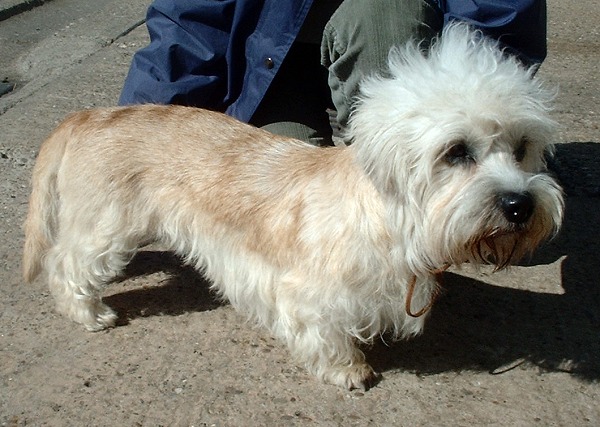
If you own a Dandie Dinmont Terrier, you own one of the most unusual coats in the entire dog world. No other breed combines a pencilled body coat with a silky topknot in quite the same way. The Dandie's coat is its visual signature -- the thing that makes people stop on the street and ask what kind of dog that is. Understanding it is not just about aesthetics; it is about keeping your dog healthy and comfortable.
The Pencilled Coat Explained
The Dandie Dinmont coat is described as "pencilled" -- a term that confuses many new owners. It refers to the blend of hard and soft hairs in the body coat.
The Mix
Approximately two-thirds of the body coat consists of hard, crisp hairs. The remaining one-third is softer, liner hair. This mix creates a texture that is firm to the touch but not as harshly wiry as breeds like Wire Fox Terriers. The overall feel is what groomers describe as "crisp" -- springy with some give, like touching a firm pillow.
This blend is not random. The hard hairs provide weather resistance and protection, while the soft hairs fill in the coat and contribute to the breed's full, slightly rounded body outline. When the proportions are correct and the coat is well-maintained, the result is a coat that looks and feels like nothing else.
Why the Blend Matters for Care
The two-thirds/one-third ratio needs maintenance to stay correct. Without hand-stripping or proper coat management:
- The hard hairs die and soften, shifting the ratio toward soft
- New growth may be predominantly soft if the dead hard hairs are not removed from the follicle
- The crisp texture gradually becomes uniformly soft and wooly
The Topknot: A Crown of Silk
The topknot is the Dandie's most recognizable feature. It is a dome of soft, silky hair growing from the top of the skull, distinctly different in texture from the body coat. On a pepper Dandie, the topknot is silver-white. On a mustard Dandie, it is a creamy white.
How It Works
The topknot hair grows differently from the body coat. It is finer, silkier, and grows continuously rather than reaching a set length and stopping. Left untrimmed, it would grow well past the eyes. Properly groomed, it forms a rounded, fluffy cap that is proportionate to the head.
The contrast between the crisp body and the silky topknot is one of the breed's most appealing features. Maintaining that contrast requires treating the two areas differently during grooming -- different shampoos, different tools, different handling.
Topknot Care at Home
The topknot needs daily attention between grooming appointments:
- Comb through gently with a wide-toothed comb every day. This prevents the fine hairs from matting.
- Check for debris, especially after outdoor play. Grass seeds, leaves, and small twigs lodge in the silky hair.
- Keep it dry. Wet topknot hair tangles quickly. Dry it thoroughly after baths or rain.
- Do not use heavy products. The topknot should look light and fluffy, not weighed down.
The Two Colors: Pepper and Mustard
Pepper Dandies
Pepper Dandies range from dark bluish-black to light silvery gray. The darkest peppers have nearly black body coats with silver topknots. The lightest may appear almost entirely silver-gray. The leg furnishings are tan or fawn, creating a three-color effect: dark body, silver topknot, tan legs.
Pepper puppies are born dark -- often solid black -- and lighten gradually as they mature. The silver topknot typically appears between 3 and 8 months of age.
Mustard Dandies
Mustard Dandies range from reddish-brown to pale fawn. The topknot is creamy white to pale gold. The leg furnishings are lighter than the body, similar to the pepper's lighter furnishings.
Mustard puppies often start darker than their adult color, with a richer brown that fades to the final mustard shade over the first year or two.
Color Changes Over Time
Both pepper and mustard Dandies undergo significant color changes from birth to adulthood. A puppy's color at 8 weeks is not a reliable predictor of its adult shade. According to the Dandie Dinmont Terrier Club of America, puppies should be evaluated for adult color no earlier than 12 months, with some not reaching their final shade until 2 to 3 years of age.
This gradual color evolution means that grooming technique -- particularly whether the coat is stripped or clipped -- can influence how the mature color develops. Hand-stripping tends to preserve deeper, more vibrant tones. Clipping may result in slightly lighter or less distinct coloring over time.
The Ears: Feathered and Functional
Dandie ears deserve their own section because they have a unique grooming requirement. The pendant ears have a tassel of hair at the tips that is trimmed to a slight point -- one of the breed's distinctive styling touches. The ear leather itself grows longer feathering that needs to be managed to prevent the ear canal from being blocked.
The combination of pendant ears (which trap moisture and warmth) and ear feathering (which can restrict airflow) makes Dandies predisposed to ear infections. The Veterinary Record has noted that breeds with pendant ears and ear feathering rank among the highest for recurrent otitis, with an incidence rate approximately 40% higher than prick-eared breeds. Regular ear cleaning is not a grooming luxury; it is healthcare.
The Body Silhouette
One of the most challenging aspects of Dandie grooming is maintaining the breed's distinctive silhouette. The Dandie is supposed to look like it flows in one continuous curve from head to tail. The head is large and domed, the body is long and low, and the topline follows a gentle downward curve before rising slightly over the loin.
This flowing appearance is achieved through careful coat shaping. The groomer adjusts coat length along the body to create the illusion of smoothly curving lines. It is part sculpture, part grooming, and it requires understanding how coat length affects visual proportions on a long, low body.
Coat Through the Lifecycle
Puppy Coat (Birth to 6 Months)
Soft, darker than the adult color, easy to manage. The topknot begins to appear as a slightly lighter, softer area on the skull. This phase is deceptively low-maintenance.
Transition (6-18 Months)
The adult coat grows in over the puppy coat. Color lightens progressively. The topknot becomes more defined. Matting increases as the two coat types overlap. Professional grooming should start during this phase if it has not already.
Adult Coat (18 Months to 8 Years)
The pencilled texture is fully established. Colors have settled to their adult shade. Regular maintenance keeps the coat in proper condition. This is the breed's prime coat period.
Senior Coat (8+ Years)
Some softening of the hard coat may occur. Colors may lighten further. The topknot may thin slightly. These changes are cosmetic and normal.
A Surprising Coat Fact
Here is something that surprises many Dandie owners: the pencilled coat, when properly maintained, is remarkably self-cleaning. The hard outer hairs do not absorb oils and dirt the way softer coats do. A Dandie who gets muddy can often be dried and brushed clean without a full bath. Experienced Dandie breeders report bathing as infrequently as every four to six weeks between grooming appointments without odor issues -- as long as the topknot is spot-cleaned separately.
This self-cleaning property only works when the coat texture is correct. A coat that has gone soft from lack of stripping loses its dirt-resistant quality and needs more frequent bathing.
Essential Home Care Tools
- Wide-toothed comb -- daily topknot maintenance
- Slicker brush -- body coat and furnishing care
- Steel comb (fine/medium) -- checking for hidden mats
- Ear cleaning solution -- weekly ear hygiene
- Leave-in conditioner spray -- light formula for the topknot only
- Stripping knife -- if you learn basic body coat maintenance