Understanding Your English Foxhound's Coat: What Every Owner Should Know
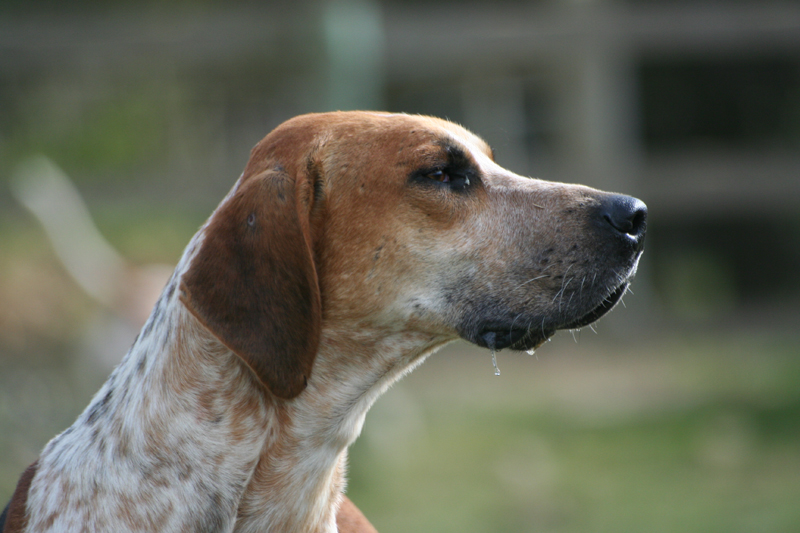
Understanding Your English Foxhound's Coat: What Every Owner Should Know
The English Foxhound's coat is a product of 250 years of careful breeding by English hunt kennels that kept some of the most meticulous breeding records in canine history. Every aspect of this coat -- its density, its texture, its length -- was selected because it helped the dog perform in the wet, cold, thorny English countryside. Understanding the coat helps you understand the breed.
Coat Structure: The Heaviest Hound Coat
The English Foxhound has arguably the densest coat of any smooth-coated hound breed. While it looks similar to an American Foxhound or a large Beagle from across the room, the difference becomes obvious the moment you touch it.
The Outer Coat
The guard hairs are short (2-3 centimeters), straight, and lie flat against the body. The texture is distinctly hard -- firmer than an American Foxhound and noticeably coarser than a Beagle. This hardness is not accidental. English hunters needed a coat that could:
- Shed the near-constant rain of the English hunting season
- Deflect the thorns and brambles of English hedgerows
- Resist the cold wind that sweeps across open English countryside
- Dry rapidly during brief stops in hours-long hunts
The Undercoat
This is where the English Foxhound diverges most from its American cousin. The undercoat is substantially denser -- a thick, fine, soft layer that provides serious insulation. English Foxhounds were bred to hunt through English winters, which are not extremely cold but are persistently damp and windy. The undercoat traps a layer of warm, dry air against the skin.
This dense undercoat is the primary grooming challenge. It sheds continuously and compacts against the skin if not regularly removed. It is also the reason professional deshedding is not optional -- home brushing simply cannot penetrate to the deepest layers of this coat.
How the Coat Compares
Understanding the English Foxhound coat becomes easier in comparison:
| Feature | English Foxhound | American Foxhound | Beagle | |---------|-----------------|-------------------|--------| | Outer coat texture | Very hard | Hard | Medium-soft | | Undercoat density | Heavy | Moderate | Moderate | | Overall coat density | Very dense | Dense | Medium | | Shedding level | Heavy | Moderate | Moderate-heavy | | Weather resistance | Excellent | Good | Moderate | | Grooming difficulty | Moderate | Low-moderate | Low |
The English Foxhound essentially has a Labrador-level undercoat packed beneath a hound-textured outer coat. This combination demands more grooming attention than its appearance suggests.
Color and Markings
The English Foxhound traditionally comes in hound colors, with the most recognized patterns being:
Tri-Color: The classic foxhound look -- black, white, and tan in a saddle pattern. English Foxhounds tend to have more balanced color distribution than American Foxhounds, with substantial white areas.
Bi-Color: Lemon and white or red and white. Less common in English Foxhounds than tri-color.
Badger-Pied: A mix of black and white hairs creating a grey-speckled appearance. A traditional pattern that is quite striking.
Hare-Pied: Similar to badger-pied but with tan mixed in. Another traditional English pattern.
The pied patterns (badger and hare) are more commonly seen in English Foxhounds than in American Foxhounds and give the breed a distinctive look.
Shedding: Expect More Than You Think
The English Foxhound is a heavy shedder -- more so than most owners of "short-coated" breeds anticipate. That dense undercoat is the culprit.
Daily Shedding
Consistent and noticeable. Short, straight hairs appear on furniture, clothing, car seats, and bedding every day. On a 1-10 shedding scale, daily English Foxhound shedding rates about a 6 -- heavier than the American Foxhound's 5 and comparable to a Labrador Retriever.
The hairs are short and straight, which means they embed in upholstery fabric. Lint rollers, quality vacuum cleaners, and strategic furniture covers become household necessities.
Seasonal Coat Blows
The spring coat blow is significant. The heavy winter undercoat releases over 3-4 weeks, and the volume of loose hair is remarkable for a short-coated breed. During this period, daily brushing with an undercoat rake is necessary. A professional deshedding treatment at the beginning of the transition can remove a substantial portion of the dead undercoat in one session.
Fall transition is less dramatic but still noticeable as the lighter summer undercoat gives way to denser winter growth.
Managing Shedding Realistically
You will not eliminate English Foxhound shedding. You can only manage it. The three most effective strategies:
The Hound Scent
Like all foxhounds, the English variety produces more skin oil than many breeds. This creates the characteristic hound scent that is stronger than typical pet dogs.
The English Foxhound's scent may be slightly less intense than a Bloodhound's or Basset Hound's, but it is noticeably stronger than non-hound breeds. Contributing factors:
- Higher sebaceous gland activity
- Dense undercoat that holds oil and scent
- Pendant ears that trap warmth and produce their own oils
- Active metabolism that increases oil production
Common Coat Issues
Compacted Undercoat
The most common issue. When the dense undercoat is not regularly removed, it packs against the skin like felt. This reduces airflow, traps moisture, and creates conditions for skin infection. Professional deshedding is the prevention and the cure.
Hot Spots
The combination of dense coat, skin oil, and active lifestyle makes the English Foxhound moderately prone to hot spots, especially in warm, humid climates. They develop rapidly -- a normal patch of skin can become an inflamed, weeping hot spot within 24 hours.
Prevention: thorough drying after rain or swimming, regular deshedding, and keeping the coat clean and well-ventilated.
Ear Problems
The pendant ears are the breed's Achilles heel for health. Without regular cleaning, wax, moisture, and debris accumulate in the warm, dark environment under the ear leather. Chronic ear infections are the most common veterinary complaint for this breed.
Home Care Calendar
3-4 Times Weekly: Brush with rubber curry brush to remove surface loose hair and distribute oils Weekly: Check ears -- look for redness, smell for odor, wipe with vet-approved cleaner Every 6-8 Weeks: Professional grooming session (non-negotiable for this coat density) Spring/Fall: Daily brushing during coat blow, extra professional deshedding session Year-Round: Monitor skin health, particularly in damp weather
The Right Tools
- Rubber curry brush: Daily maintenance tool. Removes surface hair, stimulates skin
- Undercoat rake: For seasonal heavy shedding. Use with moderate pressure
- Hound glove: Quick daily wipe-down and bonding time
- Metal comb: Checking ears and finding debris
- Chamois cloth: Quick shine and surface clean
Appreciating What You Have
The English Foxhound's coat is a testament to centuries of purposeful breeding. It is one of the most functional coats in the dog world -- dense, hard, weather-resistant, and protective. In a companion setting, that coat still needs the systematic care it received in the hunt kennel. Professional grooming replaces the kennel management that the breed was designed to receive. Give it that care, and the coat will be exactly what 250 years of English breeders intended: a sleek, dense, hard-textured shield that protects an extraordinary dog.
---
Ready to streamline your grooming workflow? PawOps Board Manager helps salons track every English Foxhound from check-in to pickup with real-time visibility. Start your free 30-day trial →
Related Reading: