Why Your English Springer Spaniel Needs Professional Grooming (That Feathering Will Not Manage Itself)
Why Your English Springer Spaniel Needs Professional Grooming (That Feathering Will Not Manage Itself)
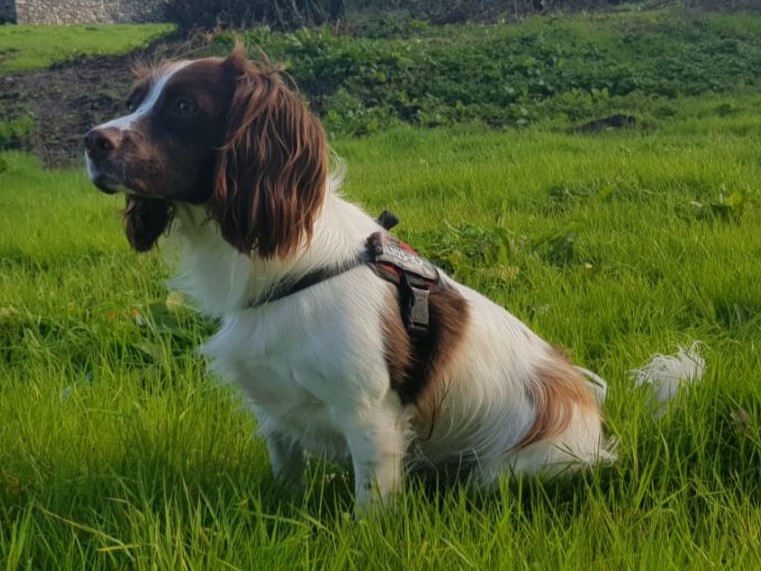
English Springer Spaniels are gorgeous, athletic dogs with one of the most high-maintenance coats in the sporting group. That flowing feathering on the ears, chest, legs, and belly looks effortlessly beautiful, but there is nothing effortless about maintaining it. If you have ever pulled a burr out of your Springer's ear fringe or spent twenty minutes trying to untangle a mat behind their front legs, you already know this.
Professional grooming is not optional for an English Springer Spaniel. It is a core part of responsible ownership.
The English Springer Spaniel Coat Is Built for Trouble
Springers were developed as flushing dogs -- bred to crash through underbrush, splash through streams, and barrel across fields to flush game birds for hunters. Their coat was designed to protect them during this work: a medium-length, weather-resistant outer coat with enough density to guard against thorns and cold water, plus feathering that provides additional protection on the vulnerable areas (ears, belly, legs).
The problem is that most Springers today live as family companions, not working gun dogs. That coat still does what it was designed to do -- collect burrs, trap moisture, and grow enthusiastically in every direction -- but without the regular maintenance that working dog handlers provided as a matter of course.
Here is a number that puts it in perspective: according to a survey by the English Springer Spaniel Field Trial Association, over 70% of Springer owners report that coat maintenance takes more time than they expected when they got the breed.
What Professional Grooming Handles That Home Care Cannot
Feathering Management
The feathering on a Springer's ears, chest, belly, and legs is where most grooming challenges live. This longer, silkier hair tangles readily, mats quickly when wet, and collects every piece of plant material your dog walks past. Professional groomers trim, thin, and shape this feathering to keep it manageable while preserving the breed's characteristic look.
The ear feathering deserves special mention. Springers have long, pendulous ears with heavy feathering that traps moisture and restricts airflow to the ear canal. Groomers thin the ear fringe, clean the inner ear, and remove excess hair that contributes to the warm, damp conditions that ear infections love. Springers are one of the breeds most prone to chronic ear problems, and proper ear grooming is a major part of prevention.
Hand Stripping or Clipping the Body Coat
Springers have a double coat on the body -- a weather-resistant outer coat over a softer undercoat. In show grooming, the body coat is hand stripped to maintain proper texture. Most pet Springers are clipped instead, which is faster and more practical for companion dogs.
Either way, the body coat needs professional attention every six to eight weeks to prevent it from becoming too thick, trapping heat, and creating skin irritation underneath. A professional groomer knows how to maintain the right length and density for your dog's activity level and your climate.
Targeted Trimming
Springers need targeted trimming in several areas beyond the feathering:
- Feet -- hair grows between the pads and around the toes, collecting mud, ice, and debris. Groomers trim this for comfort and traction.
- Hock area -- the fur on the back of the rear legs tends to collect mats.
- Tail -- the tail feathering can become long and tangled.
- Head and throat -- these areas are trimmed shorter for a clean appearance and to reduce heat retention.
Thorough Skin and Ear Assessment
Springers are prone to several skin conditions, including seborrhea and allergic dermatitis. Their dense coat hides early signs of trouble. A groomer who works with the breed regularly will part the coat, check the skin section by section, and flag anything concerning before it becomes a veterinary emergency.
What Happens When Springer Grooming Is Neglected
The consequences are breed-specific and predictable:
- Matting becomes severe. Springer feathering mats faster than almost any other sporting breed. Once mats form behind the ears, under the legs, and on the belly, they tighten against the skin and cause pain. Severe matting requires a full shave-down, which removes the coat's protective function entirely.
- Ear infections become chronic. The combination of heavy ear leather, dense feathering, and restricted airflow makes Springers one of the top breeds for ear infections. The Veterinary Information Network reports that spaniels account for a disproportionate share of ear infection cases, with English Springer Spaniels specifically identified as high-risk.
- Hot spots develop quickly. Trapped moisture under the dense coat creates ideal conditions for bacterial hot spots, which can go from small to serious within 24 hours.
- Burrs and foxtails cause injuries. Plant material trapped in feathering can work its way to the skin and even penetrate it. Foxtail grass awns are particularly dangerous -- they migrate through tissue and can cause abscesses.
How Often Does a Springer Spaniel Need Professional Grooming
The ideal schedule depends on your Springer's lifestyle:
| Lifestyle | Grooming Frequency | Notes | |-----------|-------------------|-------| | Active outdoor dog (hiking, swimming, field work) | Every 4-5 weeks | More exposure to debris, moisture, and matting triggers | | Moderate activity (daily walks, yard play) | Every 6 weeks | Standard maintenance schedule | | Lower activity (primarily indoor, leash walks) | Every 6-8 weeks | Feathering still mats but accumulates less debris |
Between professional appointments, plan on brushing three to four times per week, with particular attention to the feathered areas. A quick ear check should happen after every outdoor adventure.
A Surprising Fact About Springer Coats
Many people do not realize that there are actually two distinct types of English Springer Spaniel -- field-bred and show-bred -- and their coats are noticeably different. Field-bred Springers have a shorter, tighter coat with less feathering, designed for practical work. Show-bred Springers have a longer, more profuse coat with heavier feathering for ring presentation. The grooming needs differ significantly between the two types. If you adopted a Springer without knowing their background, a professional groomer can tell you which type you have within about thirty seconds of looking at the coat.
Choosing a Groomer for Your English Springer Spaniel
Look for a groomer who:
- Has specific experience with sporting breeds and understands spaniel coat structure
- Knows the difference between hand stripping and clipping and can explain which is appropriate for your dog
- Pays serious attention to ear care as part of every groom
- Can maintain the Springer's characteristic silhouette while keeping the coat practical
- Uses condition-based assessment rather than flat pricing
The Professional Grooming Payoff
A well-groomed Springer is a healthier, more comfortable Springer. Professional grooming catches skin issues before they become infections, prevents matting from reaching painful levels, and keeps those beautiful but troublesome ears clean and healthy. Your Springer was built to run through fields looking magnificent -- regular grooming is what keeps that possible.
PawOps helps grooming salons assess feathered sporting breeds using condition scoring that accounts for coat density, mat severity, and ear health -- ensuring your Springer gets the attention their specific coat actually needs.