Why Your Entlebucher Mountain Dog Needs Professional Grooming (Short Coat, Big Shedding)
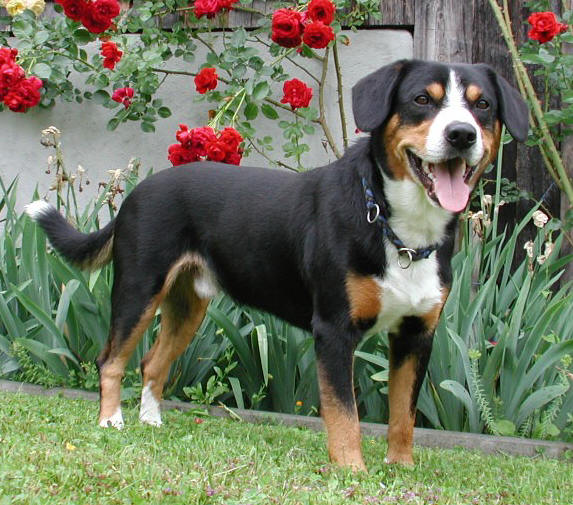
Why Your Entlebucher Mountain Dog Needs Professional Grooming (Short Coat, Big Shedding)
The Entlebucher Mountain Dog -- the smallest of the four Swiss Mountain Dog breeds -- looks like a dog that should be easy to groom. Short coat. Sleek lines. No feathering, no fluff, no long hair to tangle. How hard could it be?
Harder than you think. The Entlebucher's coat is deceptively dense, and what it lacks in length it makes up for in shedding volume. This is a breed that benefits significantly from professional grooming, even though first-time owners often assume they can handle everything with a quick brush at home.
The Entlebucher Coat: Short But Dense
The Entlebucher Mountain Dog has a short, close-fitting double coat:
- Outer coat: Hard, glossy, and close-lying. It fits the body like a fitted jacket.
- Undercoat: Dense and surprisingly thick for such a short-coated breed. The undercoat is most prominent on the neck, back, and thighs.
The result is a coat that looks minimal but performs like a heavy-duty winter jacket with a thick liner.
Why Professional Grooming Matters
The Shedding Surprise
Entlebuchers shed. A lot. Owners who expect a low-shedding experience based on the coat's short appearance are consistently surprised by the volume of hair this breed produces.
The undercoat sheds year-round at a moderate rate and blows out significantly twice per year in spring and fall. During these shedding events, the undercoat comes out in fine, dense quantities that embed themselves in clothing, furniture, and car upholstery in ways that longer dog hair does not. Short undercoat hairs have a way of weaving into fabric that makes them stubbornly difficult to remove.
According to the American Kennel Club, Entlebuchers are classified as "frequent" shedders despite their short coat. Professional deshedding treatments using high-velocity dryers and specialized tools remove dead undercoat more efficiently than home brushing, reducing the amount of loose hair in your living space by up to 80% per session.
Skin Health Is Easier to Check But Still Needs Checking
The short coat makes skin issues more visible than in long-coated breeds, but that does not mean they do not happen. Entlebuchers are prone to:
- Allergic dermatitis -- seasonal and environmental allergies can cause skin reactions
- Hot spots -- particularly in the dense undercoat areas where moisture gets trapped
- Contact irritation -- the short coat means the skin is closer to environmental irritants
Nail Care Is Critical
Entlebuchers are active, muscular dogs that put significant force through their feet. Proper nail length is essential for correct gait mechanics. Overgrown nails cause the toes to splay and the foot to flatten, which stresses the joints in a breed that is already prone to hip and knee issues.
Professional nail trimming every 4-6 weeks keeps the nails at an appropriate length. The Entlebucher's dark nails make it difficult to see the quick, which is why many owners prefer to have a professional handle this.
Ear Cleaning
Entlebuchers have medium-sized, pendant ears that fold forward. This ear type creates a warm, enclosed environment that is prone to wax buildup and infection. Regular professional ear cleaning is an important part of the grooming routine.
The Bath Difference
You can bathe an Entlebucher at home, and many owners do. But a professional bath with breed-appropriate shampoo, followed by a high-velocity blow-dry, accomplishes something home bathing does not: it blasts out the dead undercoat from the root. A professional bath-and-dry for an Entlebucher is essentially a deshedding treatment built into the bathing process.
What Happens Without Regular Grooming
- Undercoat compaction. Dead undercoat that is not removed packs down against the skin, trapping heat and moisture. In a short-coated breed, this creates a layer of insulation that the dog cannot ventilate, leading to overheating during exercise.
- Embedded fur everywhere. Without professional deshedding, the fine undercoat sheds continuously and embeds in every textile surface in your home.
- Missed skin issues. Without regular professional skin checks, allergic reactions, hot spots, and parasites can go unnoticed.
- Nail-related gait problems. Active breeds with overgrown nails develop compensatory gait changes that stress joints and ligaments.
How Often Does an Entlebucher Need Professional Grooming
| Season | Frequency | Focus | |--------|-----------|-------| | Spring (coat blow) | Every 3-4 weeks | Deshedding | | Summer | Every 6-8 weeks | Standard groom | | Fall (coat blow) | Every 3-4 weeks | Deshedding | | Winter | Every 6-8 weeks | Standard groom |
Year-round average: every 5-6 weeks. The most valuable service for this breed is the deshedding treatment during coat blows.
Choosing a Groomer
Entlebuchers are not a common breed -- the AKC ranks them in the lower half of breed popularity. Many groomers may not have worked with one before. The good news is that grooming an Entlebucher is similar to grooming other short-coated double-coat breeds like Labrador Retrievers or Rottweilers. Any groomer comfortable with those breeds can handle an Entlebucher.
Look for:
- High-velocity drying capability -- essential for effective deshedding
- Thorough nail trimming -- not just a quick clip
- Skin assessment as standard practice
- Condition-based pricing that reflects the actual coat condition
PawOps helps grooming salons accurately price short-coated double-coat breeds like the Entlebucher using condition-based assessment -- because coat density and shedding stage matter more than coat length when it comes to grooming complexity.