Understanding Your German Shepherd's Coat: What Every Owner Should Know
Understanding Your German Shepherd's Coat: What Every Owner Should Know
The german shepherd coat is a masterpiece of canine engineering — a protective, self-maintaining, climate-adaptive system that's been refined through over a century of breeding. It's also one of the most misunderstood coats in the dog world. Understanding how it works will change how you care for your GSD.
Two Coat Types, One Breed
German Shepherds come in two recognized coat varieties:
Stock Coat (Standard)
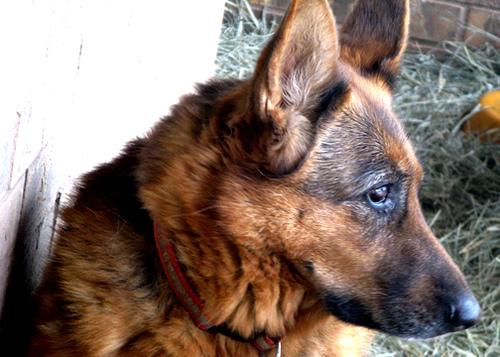
The classic GSD look: medium-length outer coat lying close to the body with a dense undercoat. The fur is slightly longer around the neck (forming a subtle mane), on the backs of the legs, and under the tail. This coat is highly functional — weather-resistant, dirt-shedding, and protective.
Long Stock Coat
Longer guard hairs throughout, with pronounced feathering on the ears, legs, and tail, and a fuller mane around the neck. The longer outer coat gives a softer appearance but requires more maintenance. Historically, the long coat was considered a breed fault because it was believed to be less weather-resistant. Modern breeding and recognition have largely moved past this.
Both types have the same dense undercoat. Both shed heavily. The long coat simply has more to manage.
The Undercoat: Your GSD's Secret Layer
The undercoat is the unsung hero — and the primary source of every German Shepherd owner's lint roller habit.
This dense, soft layer sits beneath the coarser guard hairs and serves as insulation. It's remarkably effective: the air trapped between undercoat and outer coat creates a thermal barrier that works in both directions — keeping the dog warm in winter and buffering against heat in summer.
The undercoat grows in a cycle:
In outdoor dogs, this cycle syncs with seasons. In indoor dogs with climate control and artificial lighting, the cycle becomes less defined, resulting in more constant year-round shedding.
A surprising fact: the German Shepherd's undercoat can be a completely different color from the outer coat. A black and tan GSD may have gray or cream undercoat. A sable may have undercoat that's lighter or darker than the visible coat. This is why GSDs sometimes look different when wet — the guard hairs flatten and the undercoat color shows through.
Color and Pattern Guide
German Shepherd coat colors are more complex than most owners realize:
Black and tan: The most recognized pattern. Tan areas lighten over time; puppies are born darker.
Sable: Each hair is banded with multiple colors. Sable GSDs change appearance significantly from puppyhood to adulthood and even between seasons.
Black: Solid black throughout, including undercoat. Less common and striking.
Bi-color: Predominantly black with minimal tan, usually just on the legs and face.
White: A white outer coat with a lighter undercoat. White GSDs are controversial in show circles but the coat behaves identically to colored coats.
Coat color doesn't affect grooming needs, but it does affect visibility of shedding. Black GSD owners with white furniture know this intimately.
Shedding Patterns and Triggers
German Shepherds shed in three modes:
Baseline shedding: Continuous, moderate, year-round. This is the cost of admission for GSD ownership. Use our free pricing calculator →
Coat blow: Twice yearly, typically spring and fall. The entire undercoat loosens over 2-4 weeks. During this period, you can pull out tufts of undercoat by hand. It's dramatic and relentless.
Stress shedding: GSDs shed more during stress — vet visits, car rides, storms, schedule changes. This is a physiological response, not a coat health issue.
Triggers that increase shedding beyond normal:
- Indoor temperature changes
- Hormonal shifts (spaying/neutering, pregnancy)
- Nutritional deficiency
- Skin conditions or allergies
- Certain medications
Proper Brushing Protocol
Effective GSD brushing requires the right tools and technique:
Essential Tools
- Undercoat rake: Primary deshedding tool. Reaches through guard hairs to remove loose undercoat without damaging the outer coat.
- Slicker brush: For working through tangles, especially in longer areas like the mane, leg feathering, and tail.
- Bristle brush: For finishing — smooths guard hairs and distributes natural oils.
- Metal comb: For checking behind ears and in thicker areas for hidden tangles.
Frequency
- Standard periods: 3 times per week
- Coat blow: Daily (not negotiable)
- After swimming/bathing: Once coat is dry
Technique
What Your Groomer Should Check
Every professional grooming session should include a skin assessment. German Shepherds are prone to conditions that hide under dense fur:
- Hot spots: Red, moist, inflamed patches that worsen rapidly
- Dry patches: Can indicate allergies, dietary issues, or environmental irritants
- Lumps and bumps: Any new growths should be noted and monitored
- Parasites: Ticks can embed in the dense undercoat and go undetected
- Coat thinning: Patchy or thinning coat can signal thyroid or hormonal issues
Coat Nutrition
The German Shepherd coat responds strongly to diet:
- High-quality protein supports keratin production for strong guard hairs
- Omega-3 fatty acids (fish oil) reduce skin inflammation and improve coat luster
- Omega-6 fatty acids support the skin barrier and reduce dryness
- Zinc: GSDs can be prone to zinc-responsive dermatosis. Adequate zinc supports healthy skin and coat
- Biotin: Supports coat growth and reduces excessive shedding
Your German Shepherd's coat is functional equipment, not decoration. Understand its design, maintain it consistently, and work with your groomer to keep it performing at its best. The coat will protect your dog — if you take care of the coat.
---
Ready to streamline your grooming workflow? PawOps Board Manager helps salons track every German Shepherd from check-in to pickup with real-time visibility. Start your free 30-day trial →
Related Reading: