Understanding Your German Wirehaired Pointer's Coat: What Every Owner Should Know
Understanding Your German Wirehaired Pointer's Coat: What Every Owner Should Know
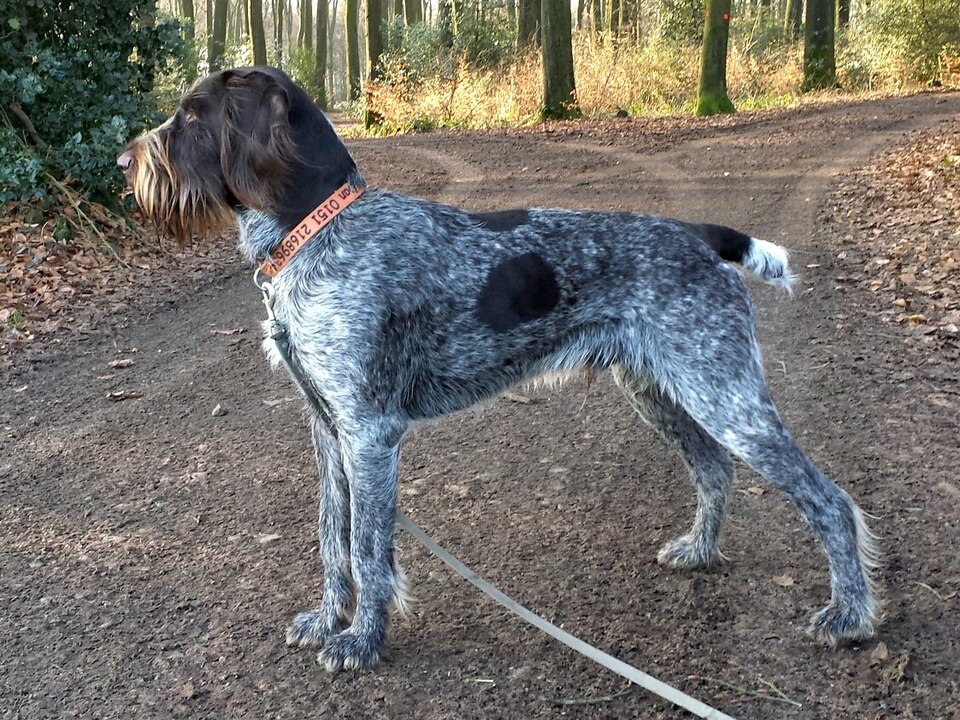
The German Wirehaired Pointer's coat is a masterwork of selective breeding -- perhaps the most functionally complete protection system in the entire pointing group. It keeps the dog warm in freezing water, cool in summer heat, protected in dense brush, and dry in pouring rain. Understanding how this system works helps you maintain it properly.
The Architecture: Two Layers, One Mission
Layer 1: The Wire Outer Coat
Physical properties:
- Length: 1-2 inches on the body (longer is accepted on the legs and belly)
- Texture: Extremely harsh -- the coarsest in the pointing/setting group
- Lie: Flat and close to the body
- Density: Thick enough that skin is not visible when you part the hair
- Flexibility: Stiff enough to deflect thorns yet flexible enough to not impede movement
- First-line defense against thorns, briars, and brush
- Water shedding (wire texture causes water to bead and roll off)
- Protection from UV radiation
- Resistance to tangling with vegetation
- Camouflage (the liver-and-white ticking pattern breaks up the dog's outline in the field)
Layer 2: The Dense Undercoat
Physical properties:
- Texture: Soft, downy, fine
- Density: Extremely dense in winter, thin to absent in summer
- Length: Short (less than half the outer coat length)
- Color: Usually lighter than the outer coat
- Insulation: Traps air close to the body, creating a thermal layer
- Water resistance: Density prevents water from reaching the skin even when outer coat is wet
- Temperature regulation: Seasonal changes allow the dog to adapt to climate
- October-March: Full, dense undercoat develops
- April-May: Heavy undercoat shed ("blowing coat")
- June-September: Minimal undercoat, allowing heat dissipation
- September-October: New winter undercoat begins growing
The Facial Furnishings
Eyebrows: Bushy, wiry, arching over the eyes. Function: protect eyes from brush, rain, and low-angle sun. The GWP's eyebrows are more prominent than most pointing breeds.
Beard/Whiskers: Moderate (less than a Spinone, more than a smooth-faced breed). Function: face protection during retrieving and pushing through cover.
Color Patterns and What They Tell You
German Wirehaired Pointers come in several color patterns:
Liver and white (most common): Can be ticked, patched, or roaned. The liver color should be rich and dark.
Solid liver: Entire body is liver/brown, sometimes with a small white chest patch.
Liver roan: A blend of liver and white hairs creating a mottled appearance. Often darkens with age.
Black and white (less common, controversial in some registries): Same patterns as liver but with black pigment.
What color indicates about coat health:
- Rich, deep liver with sheen: healthy, well-nourished coat
- Faded or reddish liver: possible sun damage, nutritional deficiency, or coat that needs stripping
- Loss of ticking definition: dead coat accumulation muting the pattern
Shedding: The Complete Picture
The GWP's shedding profile is complex because the two layers behave differently:
Outer coat (wire): Sheds very little on its own. Dead wires stay loosely in the follicle until stripped out. If never stripped, dead coat accumulates gradually -- you will not notice dramatic shedding, but the coat quality deteriorates.
Undercoat: Sheds seasonally and noticeably. During spring coat blow, expect 2-4 weeks of increased hair on furniture, clothing, and floors. Not as dramatic as a Husky or Golden Retriever, but distinctly more than zero.
Overall shedding rating: 4-5 on a 10-point scale. Moderate year-round with seasonal spikes.
The Water Test: How to Tell If Your GWP's Coat Is Healthy
Here is a simple home test for coat function:
Pour a cup of water over your dog's back. On a healthy, properly maintained wire coat:
- Water beads on the surface
- Rolls off within seconds
- The undercoat stays dry
- Water soaks in immediately
- Coat becomes saturated
- Takes much longer to dry
What Damages the Wire Coat
Clipping (the primary threat): Cuts the thick wire shaft at a random point. Regrowth is thinner and softer. After 2-3 clip cycles, the outer coat loses its wire quality entirely. Recovery requires 3-6 months of hand-stripping to regrow proper wire from the roots.
Over-bathing: Strips the natural oils that contribute to water resistance and self-cleaning properties. Most GWPs need bathing no more than monthly -- many owners bathe only when truly dirty.
Wrong products: Conditioning products designed for soft coats can coat the wire hairs and reduce their natural texture. Use simple, protein-free shampoos. Skip conditioner entirely on the body.
Neglect: Not stripping allows dead coat to accumulate, progressively compressing the undercoat, blocking airflow, and reducing the coat's protective and insulating properties.
Home Maintenance Between Professional Visits
Weekly (10 minutes):
- Run a natural bristle brush through the coat (with the grain)
- Check ears for odor
- Feel for any unusual lumps or hot spots
- Wipe beard if dirty
- Use an undercoat rake through the coat (gentle, short strokes)
- Comb through facial furnishings
- Check between toes for debris
- More intensive dead coat removal with a stripping knife or stone
- Focus on neck, shoulders, and back where dead coat is most evident
- Extra undercoat raking during blow periods
Reading Your GWP's Coat
| Coat Appearance | What It Means | |----------------|---------------| | Harsh, flat, rich color | Healthy, well-maintained | | Standing away from body | Dead coat buildup, needs stripping | | Soft to the touch | Has been clipped or coat issue | | Dull with no sheen | Nutritional deficiency or needs stripping | | Excessive undercoat visible | Seasonal blow starting or overdue for de-shedding | | Patchy areas | Hormonal issue, allergies, or over-stripping |
The Breed Standard Perspective
The AKC standard states the coat should be "weather resistant and, to some extent, water-repellent" with a "functional wiry coat" that is "sufficiently thick to protect against rough cover."
Every word is functional. The standard does not describe an aesthetic -- it describes performance specifications. When your GWP's coat meets standard, it is not about appearance. It is about whether the coat can do its job.
A Coat Worth Understanding
The German Wirehaired Pointer's coat represents one of the most successful engineering projects in canine breeding. Two simple layers working together create protection from water, brush, cold, heat, and UV -- all while remaining relatively low-maintenance compared to other complex coats.
Your role is straightforward: hand-strip the dead outer coat, manage the seasonal undercoat, and avoid the things that damage the system (clipping, over-washing, wrong products). Do these things, and your GWP's coat will protect them for a lifetime of work and adventure.
---
Ready to streamline your grooming workflow? PawOps Board Manager helps salons track every German Wirehaired Pointer from check-in to pickup with real-time visibility. Start your free 30-day trial →
Related Reading: