Why Your German Wirehaired Pointer Needs Professional Grooming
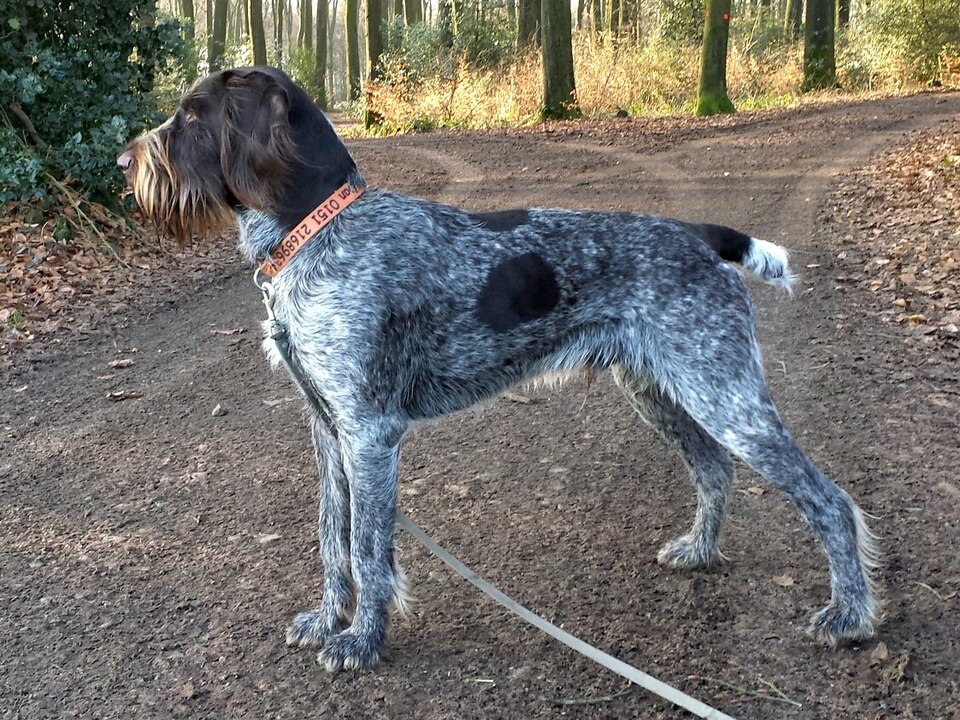
Why Your German Wirehaired Pointer Needs Professional Grooming
The German Wirehaired Pointer was bred to be the ultimate all-purpose hunting dog -- pointing, tracking, and retrieving through the harshest terrain Germany could throw at it. Their coat is their field armor: a dense, harsh, weather-proof system that shrugs off thorns, sheds water, and insulates against cold. Maintaining that armor is not optional.
Too many GWP owners treat grooming as an aesthetic choice. It is not. For this breed, grooming is functional maintenance of a working system.
The GWP Coat: Engineering for the Field
The German Wirehaired Pointer carries one of the most functional double coats in the sporting group:
Outer coat: Extremely harsh, straight wire hairs approximately 1-2 inches long. These are the toughest guard hairs in the pointing group -- coarser than a Griffon, stiffer than a Spinone. They deflect thorns, shed water instantly, and resist tangling with vegetation.
Undercoat: Dense and weather-resistant. Thick enough to insulate in cold water and winter air. The undercoat changes seasonally -- heavy in winter, thin to nearly absent in summer.
Facial armor: Distinctive bushy eyebrows protect the eyes in thick brush. A moderate beard and whiskers protect the face during retrieving and tracking.
Why You Cannot Skip Professional Grooming
Hand-Stripping Preserves Function
The GWP's outer coat has a strict growth-and-die cycle. Dead wire hairs do not fall out on their own -- they stay in the follicle, blocking new growth and gradually creating a dull, packed layer that loses its protective properties.
Hand-stripping removes these dead hairs, allowing fresh wire to grow in with full thickness and texture. The alternative -- clipping -- cuts the hair at the shaft. The result after 2-3 clip cycles: a soft, cotton-like coat that catches every thorn, absorbs water, and provides no protection. Industry veterinary surveys consistently show that clipped wire coats correlate with higher rates of brush-related skin injuries in working dogs.
For a breed built to crash through dense cover, a compromised coat is a safety issue, not just an aesthetic one.
The Undercoat Requires Seasonal Management
The GWP's undercoat is one of the densest in the sporting group. During seasonal transitions (spring and fall), enormous amounts of dead undercoat need removal. Without professional de-shedding:
- Dead undercoat compresses against the skin
- Airflow to the skin is blocked
- Moisture gets trapped (especially after swimming or rain)
- Hot spots develop rapidly
- The insulation system fails (packed dead undercoat insulates less effectively than healthy undercoat)
Ear Vulnerability
The GWP's medium-length folded ears are not as heavy as a spaniel's, but they still create a closed environment around the ear canal. For a breed that swims frequently during hunting season, regular ear cleaning is preventive medicine. Professional ear care every 6-8 weeks keeps the canal clean and reduces the moisture-related infections that plague water-working sporting breeds.
Skin Monitoring
Beneath that dense double coat, skin issues can develop invisibly. GWPs are known for certain dermatological tendencies. Professional groomers who work through the coat systematically during hand-stripping catch issues early -- lumps, irritation, parasites, and infections that would otherwise go undetected until they become serious.
What Professional Grooming Includes for a GWP
A complete professional session:
Total time: 75-120 minutes depending on coat condition and whether it is a seasonal transition period.
The Working Dog vs. Pet Dog Grooming Debate
Some GWP owners question whether their non-hunting companion dog needs the same grooming attention as a field dog. The answer: yes, with minor schedule adjustments.
Working GWP: Professional groom every 6-8 weeks. Extra attention during hunting season. Post-hunt debris checks. Ear care after every water session.
Pet GWP: Professional groom every 8-10 weeks. Same techniques, slightly longer intervals since the coat is not taking field damage. The undercoat still needs seasonal management. The wire still needs stripping.
The coat does not know whether the dog hunts or hikes. Its biology remains the same regardless of lifestyle.
Grooming Schedule
- Every 6-10 weeks: Full hand-stripping session (6-8 for working dogs, 8-10 for pets)
- Spring and Fall: Extra undercoat removal session during seasonal transition
- Weekly at home: Bristle brush through the coat, beard check, ear inspection
- After swimming: Thorough ear drying and body shake encouragement
- After field work: Check for embedded seeds, foxtails, and thorns
Finding a GWP-Experienced Groomer
German Wirehaired Pointers are more common than some wire breeds (AKC ranks them around 65th), so finding an experienced groomer is more feasible than for rarer breeds. Look for:
- Hand-stripping services listed (ask specifically)
- Experience with sporting wire coats (terrier groomers also qualify)
- Understanding of the harsh coat standard (should feel like bristle brush, not cotton)
- Large-dog capability (GWPs are 50-70 pounds of muscular, energetic dog)
The Bottom Line
Your German Wirehaired Pointer was bred to be indestructible in the field. Their coat is half of what makes that possible. Professional grooming is not pampering -- it is maintaining your dog's built-in protection system. Hand-stripping keeps the armor functional. Undercoat management keeps the insulation working. Ear care prevents infections. All of it together keeps your GWP performing at their best, whether that is in the field or on the family trail.
---
Ready to streamline your grooming workflow? PawOps Board Manager helps salons track every German Wirehaired Pointer from check-in to pickup with real-time visibility. Start your free 30-day trial →
Related Reading: