Understanding Your Goldendoodle's Coat: What Every Owner Should Know
Understanding Your Goldendoodle's Coat: What Every Owner Should Know
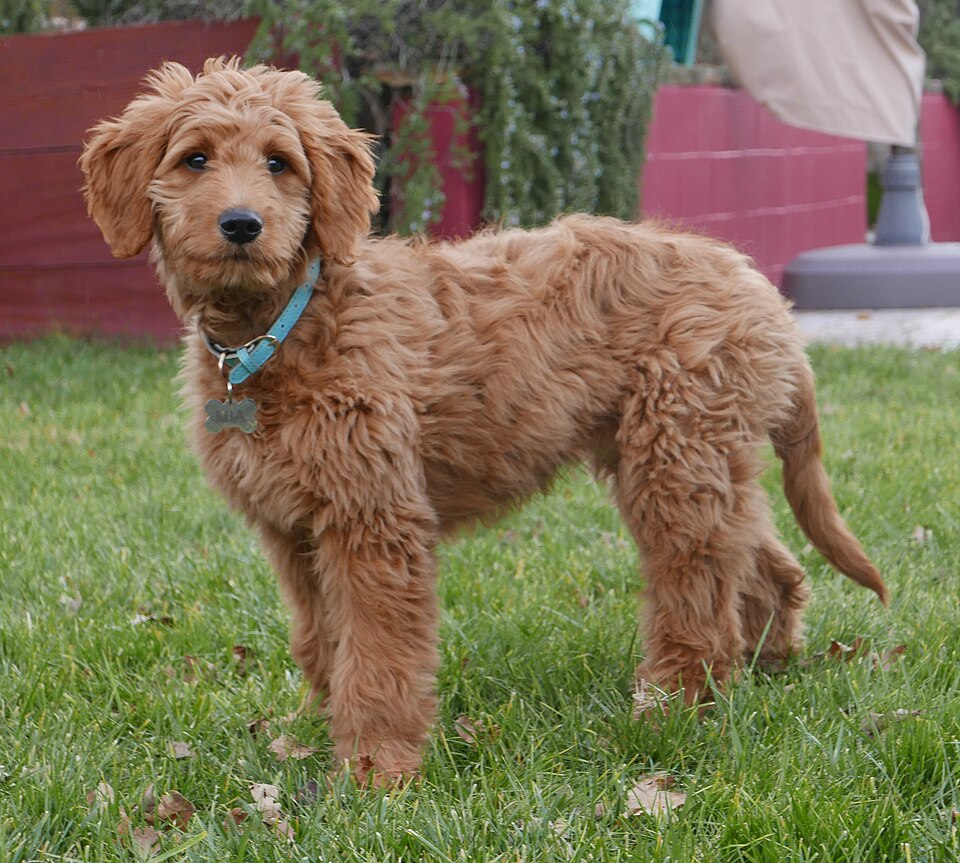
That fluffy, irresistible goldendoodle coat is the breed's signature feature. It's also the source of more grooming confusion than almost any other breed. Goldendoodles don't come with a single coat type — they come with three, and each one behaves differently, mats differently, and needs a different care routine.
If you've ever wondered why your Goldendoodle's coat looks nothing like your friend's Goldendoodle, this is why.
The Three Goldendoodle Coat Types
Goldendoodles inherit coat genetics from both Golden Retrievers and Poodles. The result is a spectrum, and your dog's coat falls somewhere on it.
Straight Coat (Flat Coat)
The straight coat looks most like a Golden Retriever. It lies flat against the body, has a slight wave at most, and sheds more than the other two types. Straight-coated Goldendoodles are the easiest to maintain but don't have that classic "teddy bear" look.
Care profile: Brushing once or twice a week is usually sufficient. Professional grooming every 6-8 weeks. Less prone to matting but sheds more, so regular deshedding treatments help.
Wavy Coat (Fleece Coat)
This is the most common Goldendoodle coat type. It's soft, has a gentle wave or loose curl, and gives the breed that stuffed-animal appearance everyone loves. Wavy coats shed minimally but mat moderately.
Care profile: Brushing two to three times per week. Professional grooming every 5-6 weeks. The waves trap loose hair, so consistent brushing prevents tangles from becoming mats.
Curly Coat (Wool Coat)
The curly coat is closest to a Poodle's. Tight curls, minimal to no shedding, and maximum matting potential. Curly-coated Goldendoodles look fantastic when well-maintained and miserable when neglected.
Care profile: Brushing every other day, ideally daily. Professional grooming every 4-5 weeks. This coat type is the most demanding and the least forgiving of skipped maintenance.
How Coat Type Affects Everything
Your Goldendoodle's coat type determines more than just brushing frequency. It affects:
Grooming cost: Curly coats take longer to groom and cost more. Use our free pricing calculator → A curly standard Goldendoodle is one of the most time-intensive grooms in the industry.
Style options: Wavy and curly coats hold styles better. Straight coats don't maintain the rounded, sculpted looks as well.
Allergen levels: No dog is truly hypoallergenic, but curly coats trap dander more effectively, which reduces allergic reactions for many people. A 2024 study published in the Journal of Allergy and Clinical Immunology found that individual variation within breeds matters more than breed labels when it comes to allergen production — so don't assume your Goldendoodle is allergy-safe based on coat type alone.
Seasonal changes: Straight and wavy coats may thicken in winter and thin in summer. Curly coats stay relatively consistent year-round.
The Furnishings Factor
Here's a surprising detail most owners don't know: the gene that gives Goldendoodles their facial hair — the beard, eyebrows, and mustache — is called "furnishings," and it's controlled by a single gene variant called the RSPO2 gene.
Goldendoodles with two copies of the furnishings gene (F/F) have the classic Doodle face. Those with one copy (F/f) have lighter furnishings. Those with no copies (f/f) have a smooth face like a Golden Retriever — these are sometimes called "improper coat" or "flat-faced" Goldendoodles.
Furnishings affect grooming because that facial hair needs regular trimming and cleaning. Food, water, and debris get trapped in the beard, and the hair around the eyes can obstruct vision if left unmanaged.
What to Ask Your Groomer
Not all groomers assess coat type before starting. A good groomer should be able to tell you:
Look, if your groomer hasn't had this conversation with you, ask for it. Understanding your dog's coat is the single most important factor in preventing grooming problems.
Between-Visit Care That Actually Works
Home maintenance doesn't need to be complicated, but it does need to be consistent.
Daily: Check behind the ears and under the collar for tangles. These spots mat first.
Every 2-3 days: Full brush-out with a slicker brush. Work in sections, brushing from the skin outward — not just the surface. Surface brushing is the number one mistake owners make. It smooths the top layer while mats tighten underneath.
Weekly: Check sanitary areas, between toes, and armpits. These are friction zones that mat quickly.
After water exposure: Any time your Goldendoodle gets wet — bath, rain, swimming — dry the coat thoroughly with a towel and brush it out. Wet hair mats exponentially faster than dry hair.
The Right Tools
- Slicker brush: Your primary tool. Look for one with flexible pins that reach the undercoat.
- Metal comb: Use after the slicker brush to verify you haven't missed hidden mats.
- Detangling spray: A light conditioning spray makes brushing easier and reduces breakage.
- Drying towel or blow dryer: Removing moisture promptly prevents mat formation.
Coat Changes Over Time
Goldendoodle puppies don't keep their puppy coat forever. Between 6 and 12 months, the adult coat starts coming in, and this transition period is when matting often spikes. The puppy coat loosens while the adult coat grows underneath, creating a tangle-prone layer.
This is the worst time to skip grooming. Many groomers recommend increasing visit frequency during the coat change, sometimes to every 3-4 weeks, to manage the transition smoothly.
Adult coats also change with age, hormones, and health. Spaying or neutering can alter coat texture. Nutritional deficiencies show up in coat quality. If your Goldendoodle's coat suddenly changes — becomes dull, brittle, or excessively oily — that's worth mentioning to both your groomer and your vet.
The Takeaway
Your Goldendoodle's coat isn't generic. It's a specific type with specific needs, and treating it that way makes the difference between a dog that's comfortable and healthy and one that's chronically matted and miserable. Learn your dog's coat type, talk to your groomer about it, and build a home care routine that matches. The coat will thank you for it.
---
Ready to streamline your grooming workflow? PawOps Board Manager helps salons track every Goldendoodle from check-in to pickup with real-time visibility. Start your free 30-day trial →
Related Reading: