Understanding Your Irish Terrier's Coat: What Every Owner Should Know
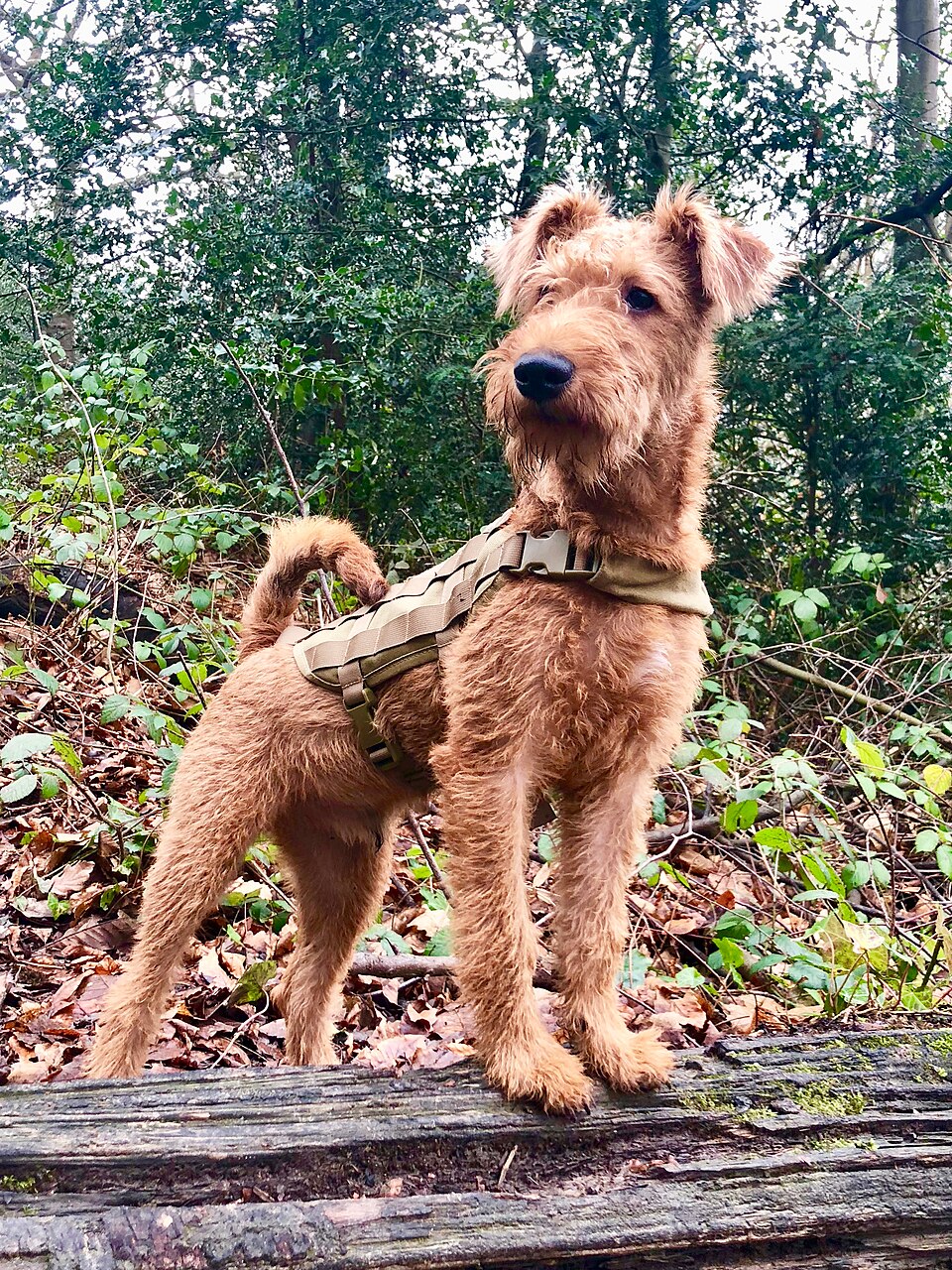
Understanding Your Irish Terrier's Coat: What Every Owner Should Know
The Irish Terrier's coat is one of a kind in the dog world. No other terrier breed -- in fact, very few dog breeds of any kind -- wear that solid, warm red in a wire texture. It is a coat that turns heads when properly maintained and tells a story of centuries of Irish breeding for both function and beauty.
Understanding what you are working with is the first step to keeping it right.
The Structure: Wire Over Soft
Like all wire-coated terriers, the Irish Terrier carries a double coat. But the Irish Terrier's version has its own character.
The Outer Coat
The outer coat is dense, wiry, and lies close to the body. The AKC standard describes it as having a "broken" appearance -- not smooth, not fluffy, but tight and slightly rough-textured. Each hair is coarser than what you find on soft-coated breeds, with a thicker cortex that gives it that springy, resilient feel.
The Irish Terrier's outer coat is notably flat-lying compared to some wire-coated breeds. Where a Wire Fox Terrier's coat may stand away from the body, the Irish Terrier's hugs the contours, creating a sleek, athletic silhouette. This is a breed that looks streamlined, not bushy.
The wire hairs have the standard growth cycle of wire coats: they grow to a set length, die, and remain in the follicle. They do not shed out naturally. This is the fundamental reason wire-coated breeds need professional coat removal -- the dead hairs have to be pulled or cut out by a human.
The Undercoat
The undercoat is shorter, softer, and finer than the outer coat. It sits close to the skin and provides thermal insulation. On a properly maintained Irish Terrier, you will not see the undercoat -- it hides under the wire exterior.
The undercoat sheds lightly during seasonal transitions, but the amount is modest. Most Irish Terrier owners report minimal shedding -- one of the breed's practical advantages.
The Color: Why Red Matters
Irish Terriers come in three accepted shades, all in the warm spectrum:
- Bright red -- the most iconic color, a clear, fiery red
- Red wheaten -- a slightly golden shade of red
- Golden wheaten -- the lightest accepted shade, a warm gold
The Color-Texture Connection
This is the single most important coat fact for Irish Terrier owners: the richness and depth of the red color is directly linked to coat texture and maintenance.
Wire hairs are fully pigmented from root to tip when they grow in fresh. Each new hair comes in at full color intensity. Hand-stripping removes dead hairs from the root, allowing fully pigmented new growth to replace them. The result is a coat that maintains its vibrant, deep red.
Clipping cuts the hair partway down the shaft. The remaining stub, combined with softer regrowth, produces hair that is often lighter in color and less vibrant. Over multiple clipping cycles, an Irish Terrier can shift from a rich, fiery red to a dull, flat orange-ish tone.
Breed enthusiasts report that the color difference between a stripped and a clipped Irish Terrier can be dramatic -- sometimes looking like two different shades of the breed entirely. A 2024 survey by the Irish Terrier Club of America found that 78% of owners who switched from clipping to hand-stripping reported noticeable color improvement within two full strip cycles.
How the Coat Changes Over a Lifetime
Birth to 4 Months
Irish Terrier puppies are born with soft, dark coats that bear little resemblance to the adult coat. Some puppies are born nearly black, with the red emerging gradually over the first few months. This surprises many new owners who expected a red puppy.
4-12 Months: The Transition
The adult wire coat begins pushing through the puppy coat. This is the scraggly phase -- the coat looks uneven, patches of wire mix with patches of soft puppy coat, and color can appear mottled. The puppy coat needs to come out to let the adult coat establish, which is why the first professional stripping session (typically around 6-8 months) is so important.
12-18 Months: Coat Maturation
By about 12 to 18 months, the adult coat is fully established. The wire texture is at its prime, the color has settled into its adult shade, and the coat has achieved its close-lying, athletic appearance. This is when an Irish Terrier truly starts to look like an Irish Terrier.
8+ Years: Senior Changes
Graying appears first around the muzzle and may spread gradually to the eyebrows and face. The wire texture may soften slightly. Some older Irish Terriers develop a thinner undercoat. These changes are normal and do not require adjustments to the grooming routine.
The Furnishings: Less Is More
Compared to bushy-faced breeds like Schnauzers, the Irish Terrier's facial furnishings are relatively understated. The breed has:
- A neat beard -- present but not voluminous. Adds character without the "old man" look.
- Moderate eyebrows -- frame the eyes, contribute to the alert expression. Not as dramatic as a Schnauzer's.
- Clean cheeks and throat -- the sides of the face and throat are trimmed close, giving a clean, refined look.
- Leg furnishings -- longer hair on the legs, but styled to follow the leg's natural line rather than creating dramatic columns.
A Coat Feature That Surprises Owners
The Irish Terrier's coat is remarkably resistant to weather and dirt when in proper wire condition. Experienced breeders often describe the coat as "Teflon-like" -- mud dries and brushes off, rain beads on the surface, and the coat stays surprisingly clean between baths. One Irish Terrier breed resource notes that a properly maintained wire coat can go four to six weeks between baths without developing noticeable odor.
This self-cleaning quality disappears when the coat goes soft. Soft coat absorbs water, holds dirt, and develops odor. Owners who switch from a neglected soft coat to a properly stripped wire coat often comment that the biggest quality-of-life change is how much cleaner their dog stays.
Home Maintenance Between Professional Grooms
Your regular routine should include:
- Daily: Quick check of the beard for food debris. Wipe after meals if needed.
- Weekly: Full body brush with a slicker brush. Comb furnishings with a steel comb. Check ears for debris.
- Monthly: Verify nail length. Check paw pads for matted hair.
Tools for Irish Terrier Coat Care
- Slicker brush -- body coat maintenance
- Steel comb -- furnishing checks
- Stripping knife -- for owners learning basic maintenance stripping
- Undercoat rake -- seasonal dead undercoat removal
- Wire-coat shampoo -- maintains texture without softening