Understanding Your Italian Greyhound's Coat: What Every Owner Should Know
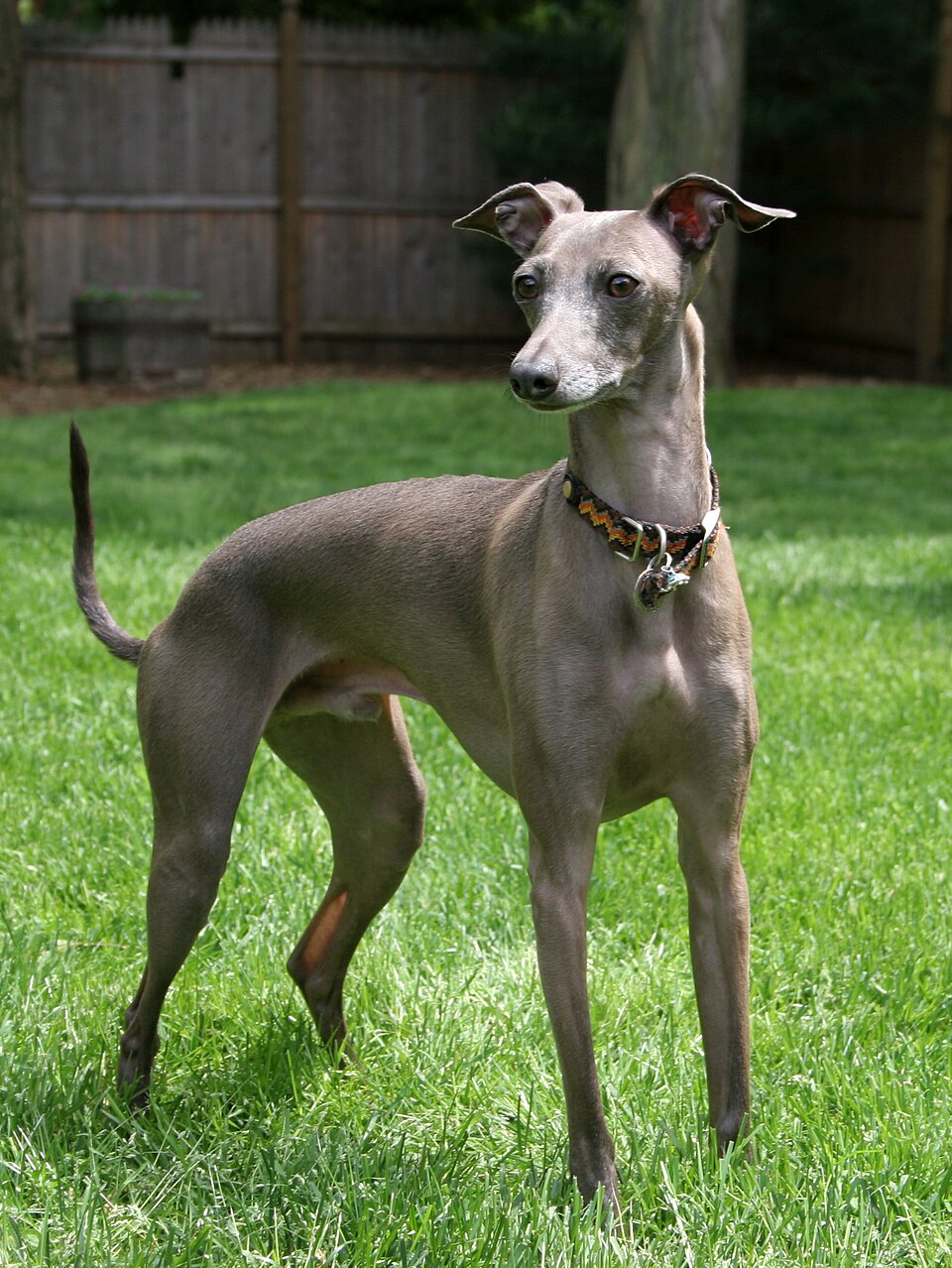
Understanding Your Italian Greyhound's Coat: What Every Owner Should Know
The Italian Greyhound coat looks like the simplest coat in the dog world. Short, sleek, shiny, and apparently requiring zero effort. And while it is true that you will never need to schedule a haircut for your Iggy, that minimalist coat comes with its own set of characteristics and care needs that every owner should understand.
What the Italian Greyhound Coat Actually Is
The Italian Greyhound has a single-layer coat of very short, fine hair that lies flat against the body. There is no undercoat. The individual hairs are thin, smooth, and grow to a uniform short length before shedding and being replaced.
Let us put some numbers on this. Where a Labrador Retriever's outer coat hairs might be 2 to 3 inches long and backed by a dense undercoat, an Italian Greyhound's coat hairs are typically under half an inch. The coat density -- meaning hairs per square inch -- is also significantly lower than double-coated breeds.
The result is a coat that:
- Provides minimal insulation (your Iggy feels temperature changes intensely)
- Offers almost no protection from sun, abrasion, or irritants
- Sheds lightly but continuously
- Shows the body underneath clearly (every muscle, rib, and bone is visible)
Shedding: The Truth
Italian Greyhound owners often hear that the breed "does not shed." This is not accurate. Italian Greyhounds do shed -- they just shed so lightly that many people do not notice.
The shedding is consistent year-round rather than seasonal. There are no blowout periods where hair comes out in clumps. Instead, individual hairs fall out one at a time as they reach the end of their growth cycle and are replaced. You might notice fine hairs on dark clothing or bedding, but you will never pull tufts of undercoat out of the couch.
Because the hairs are so fine and short, a weekly once-over with a soft bristle brush or grooming mitt is sufficient to remove loose hair and distribute skin oils. That is genuinely the extent of coat-specific home maintenance.
The Skin Underneath: Where the Real Story Is
Since the Italian Greyhound coat provides minimal barrier between the skin and the world, skin health is the primary coat-related concern for this breed. The skin itself has several notable characteristics:
Thin and Delicate
Italian Greyhound skin is notably thinner than that of most breeds. This makes it more susceptible to:
- Cuts and scrapes from normal play and activity
- Bruising (yes, dogs bruise, and thin-skinned breeds bruise more easily)
- Pressure sores from lying on hard surfaces (provide padded beds)
- Reactions to grooming products that thicker-skinned breeds tolerate fine
Prone to Dryness
Without a dense coat to trap natural oils near the skin, Italian Greyhounds can develop dry, flaky skin, especially in winter or in homes with forced-air heating. A light moisturizing conditioner during baths and occasional application of dog-safe skin oil between baths helps considerably.
Sun Sensitive
Lighter-skinned Italian Greyhounds -- particularly those with white, cream, or dilute-colored coats -- can sunburn on areas with thin hair coverage. The belly, inner thighs, and nose are most vulnerable. Dog-safe sunscreen or UV-protective clothing is appropriate for extended outdoor time.
Color Dilution Alopecia: The Condition Every Iggy Owner Should Know About
This is the Italian Greyhound coat topic that does not get enough attention.
Color dilution alopecia (CDA) is a genetic skin condition that affects dogs with diluted coat colors. In Italian Greyhounds, it most commonly appears in blue (gray), blue fawn, and certain pale fawn individuals. The condition is linked to the dilution gene (MLPH) that creates those elegant muted colors.
Here is what CDA looks like:
- Hair becomes progressively thinner in dilute-colored areas
- The remaining hair is dry, brittle, and breaks easily
- The underlying skin becomes dry, flaky, and prone to bacterial infections
- Hair loss may be patchy or widespread, typically developing between six months and three years of age
According to veterinary dermatology research, CDA affects an estimated 10 to 20 percent of dogs with dilute coat colors across all breeds. In Italian Greyhounds, blue individuals appear to be disproportionately affected.
Italian Greyhound Coat Colors
The breed comes in a wide range of colors, and the color actually matters for care:
- Black: Dense pigment, generally the most resilient skin. Lowest CDA risk.
- Seal: Very dark brown that can appear black. Healthy coat, low CDA risk.
- Red and fawn: Warm tones, moderate skin sensitivity. Watch for sun exposure on lighter individuals.
- Cream and white: Lightest pigmentation. Highest sunburn risk. May need sun protection.
- Blue (gray): Dilute color. Highest CDA risk. Requires extra skin monitoring.
- Blue fawn: Dilute warm tone. Elevated CDA risk. Same monitoring as blue.
- Sable: Fawn with dark-tipped hairs. Variable sensitivity.
Seasonal Coat Considerations
The Italian Greyhound coat does not change much with seasons, but your dog's needs do:
Winter:
- Italian Greyhounds get cold. Genuinely, uncomfortably cold. The single-layer coat provides almost zero insulation. Dog sweaters and jackets are functional necessities, not fashion accessories.
- Heated indoor air dries the skin. Increase moisturizing during winter months.
- Paw pads are vulnerable to ice, salt, and cold pavement. Booties or paw wax help.
- Sun protection for light-skinned individuals. Limit midday sun exposure.
- The coat actually helps slightly by reflecting some UV radiation, but it is not sufficient protection alone.
- Iggies overheat less easily than dense-coated breeds but can still suffer in extreme heat.
- Insect bites land directly on barely-covered skin. Check for reactions after outdoor time.
- Italian Greyhounds famously dislike rain, and honestly, their dislike is rational. The coat provides zero water resistance. A wet Iggy is a cold, miserable Iggy. Rain jackets are a practical solution.
A Surprising Fact About the Italian Greyhound Coat
Here is something most people do not realize: the Italian Greyhound coat is almost identical in structure to the Greyhound coat, just scaled down. Both breeds have the same single-layer, short, fine coat type. But while Greyhounds weigh 60 to 70 pounds with proportional body mass to retain heat, Italian Greyhounds weigh 7 to 14 pounds. The same coat type on a much smaller body means dramatically less thermal regulation. This is why Italian Greyhounds shiver when Greyhounds do not, even though their coats are structurally the same. The physics of surface-area-to-volume ratio means your tiny sighthound loses body heat far faster than its full-sized cousin.
Home Coat and Skin Care Essentials
Your Italian Greyhound care toolkit should include:
- Soft bristle brush or grooming mitt: For weekly brushing sessions. Removes loose hair and stimulates skin.
- Gentle, moisturizing dog shampoo: The skin needs hydration support, not stripping.
- Light conditioner or skin oil: For between-bath moisture, especially in dry climates.
- Dog-safe sunscreen: For light-skinned individuals during outdoor time.
- Quality nail trimmer or grinder: For between-grooming nail maintenance.
- Soft, padded bedding: Prevents pressure sores on thin-skinned joints.
When to See the Groomer Versus the Vet
| Observation | See Groomer | See Vet | |-------------|------------|--------| | General dryness or mild flaking | Yes -- moisturizing bath | If it persists after treatment | | Mild skin irritation or redness | Yes -- can assess and suggest products | If it worsens or spreads | | Progressive hair thinning (possible CDA) | Adjust grooming protocol | Yes -- needs diagnosis | | Cuts, wounds, or bleeding | Basic first aid only | Yes -- for anything beyond superficial | | Lumps or unusual growths | Notice and flag | Yes -- needs examination | | Nail issues (splitting, infection) | Trim or refer | If infected or painful |
Your groomer and your vet are partners in your Italian Greyhound's skin and coat health. Neither replaces the other.
The Coat Reflects Overall Health
With a breed this short-coated, changes in coat quality are immediately visible. A healthy Italian Greyhound has a smooth, glossy coat that lies flat and feels soft. If you notice dullness, excessive dryness, patchiness, or a rough texture, something has changed -- whether it is diet, environment, stress, or an underlying health issue. The coat is your Italian Greyhound's most visible health indicator. Pay attention to it.
PawOps helps grooming salons assess every breed based on actual care requirements -- so your Italian Greyhound gets the skin-focused, condition-based care this breed truly needs, not a generic small-dog bath.