Why Your Komondor Needs Professional Grooming (Those Cords Are Not Taking Care of Themselves)
Why Your Komondor Needs Professional Grooming (Those Cords Are Not Taking Care of Themselves)
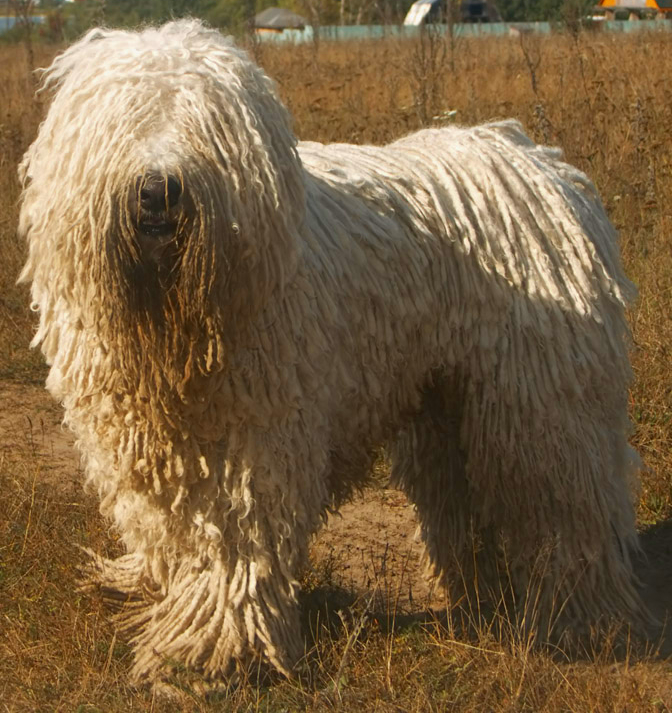
The Komondor is one of the most visually striking dogs on the planet. That floor-length corded coat -- thick, ropy strands that can reach the ground -- is the breed's signature and its most demanding feature. People see a Komondor and think two things: "That is incredible" and "How on earth do you take care of that?"
The answer: with professional help. Komondor grooming is not something most owners can handle solo, especially during the critical cord formation period. This is a breed where the coat is not just fur -- it is a grooming commitment that spans the dog's entire life.
The Komondor Coat: What You Are Actually Dealing With
The Komondor's coat consists of a soft, dense undercoat and a coarser outer coat. As the dog matures -- typically between nine months and two years -- these two coat types begin to tangle together and form cords. The cords start at the skin and grow outward over the years, eventually reaching the ground on a fully mature adult.
Here is the critical detail: cords do not form correctly on their own. Without intervention, the coat forms massive, irregular mats rather than distinct, separate cords. A properly corded Komondor has hundreds of individual cords, each roughly pencil-thickness to thumb-thickness, hanging separately from the body. An improperly maintained Komondor has large, flat, matted sheets that pull on the skin and harbor moisture, bacteria, and parasites.
The Hungarian Komondor Club estimates that cord formation and maintenance during the first two years accounts for more grooming hours than many owners anticipate -- sometimes 30 or more hands-on hours during the initial formation period alone.
What Professional Grooming Does
Cord Formation and Separation
This is the most important professional service for a young Komondor. As the coat begins to tangle, a knowledgeable groomer separates the forming mats into individual cords by hand. This process involves:
- Tearing the matting coat into sections from the skin outward
- Ensuring each cord is a consistent thickness
- Checking that cords separate all the way to the skin (cords that fuse at the base pull painfully)
- Monitoring for proper airflow between cords
Bathing and the Drying Problem
Bathing a Komondor is straightforward. Drying one is an event. A fully corded Komondor can take six to eight hours to dry, and some owners report up to 24 hours for air-drying without professional equipment. This is not an exaggeration. Each cord is essentially a felt rope that absorbs and holds water deep inside its layers.
Professional groomers have high-velocity dryers, cage dryers with airflow, and temperature-controlled environments that reduce drying time to two to four hours. This is genuinely important because a damp Komondor cord is a mildew factory. Incompletely dried cords develop a musty smell and can harbor fungal growth that leads to skin infections.
Skin Assessment
Once the cords are formed, you cannot see your Komondor's skin. At all. Professional groomers part the cords to inspect the skin underneath for:
- Hot spots and bacterial infections
- Fungal growth (especially common in humid climates)
- Parasites that hide at the base of the cords
- Lumps, bumps, or skin changes that might indicate health issues
- Pressure sores from improperly formed cord bases
Hygiene Maintenance
Komondors need regular attention to sanitary areas. The cords around the rear, belly, and face collect debris, food, urine, and feces. Professional groomers trim and maintain these areas to prevent hygiene problems. The beard cords are particularly prone to collecting food and water, and need to be kept clean to prevent yeast infections around the mouth.
What Happens Without Professional Care
The consequences of neglecting Komondor grooming are serious:
- Cord fusion. Individual cords that are not separated regularly will fuse together into large matted sheets. These sheets trap moisture and heat against the skin and can become so tight they restrict movement.
- Chronic dampness. Without proper drying, the inner layers of the cords stay moist. This leads to mildew, fungal infections, and a persistent foul odor that no amount of surface cleaning will fix.
- Skin disease. A 2019 veterinary dermatology study found that corded breeds with inadequate grooming had a 40% higher incidence of bacterial and fungal skin infections compared to properly maintained individuals.
- Weight and mobility issues. A wet, dirty Komondor coat can weigh significantly more than a clean, dry one. Mature Komondors already weigh 80 to 100+ pounds. Adding pounds of water weight in dirty cords strains joints and limits mobility.
How Often Does a Komondor Need Professional Grooming
| Life Stage | Frequency | Focus | |------------|-----------|-------| | Puppy (0-9 months) | Every 8-10 weeks | Standard grooming, coat monitoring | | Cord formation (9 months-2 years) | Every 3-4 weeks | Cord separation, monitoring, skin checks | | Adult with formed cords | Every 6-8 weeks | Bathing, drying, skin inspection, hygiene | | Senior | Every 4-6 weeks | Health monitoring, mobility-related trimming |
The cord formation period is the most intensive. Once cords are established, the schedule relaxes, but it never stops.
Finding a Groomer for Your Komondor
This is one of the biggest challenges Komondor owners face. Most groomers have never worked with a corded coat, and some will outright decline the appointment.
Look for groomers who:
- Have experience with corded breeds (Komondor, Puli, or Bergamasco)
- Understand that the cords are the goal, not a problem to solve
- Have adequate drying equipment for a coat of this density
- Are willing to spend the time the job requires without rushing
- Price based on time and condition, not flat breed rates
An Investment in Your Dog's Health
The Komondor's coat is one of the most remarkable natural structures in the dog world. When properly maintained, it protects the dog from weather, predators, and the environment just as it has for centuries on the Hungarian plains. Professional grooming is not cosmetic -- it is the difference between a functional, comfortable coat and a health hazard.
Your Komondor's cords are beautiful. Keep them that way with someone who knows what they are doing.
PawOps helps grooming salons accurately assess and price specialty coats like the Komondor's cords -- because time-based, condition-based pricing ensures groomers are fairly compensated and owners know exactly what they are paying for. Use our free pricing calculator →