Understanding Your Miniature Pinscher's Coat: What Every Owner Should Know
Understanding Your Miniature Pinscher's Coat: What Every Owner Should Know
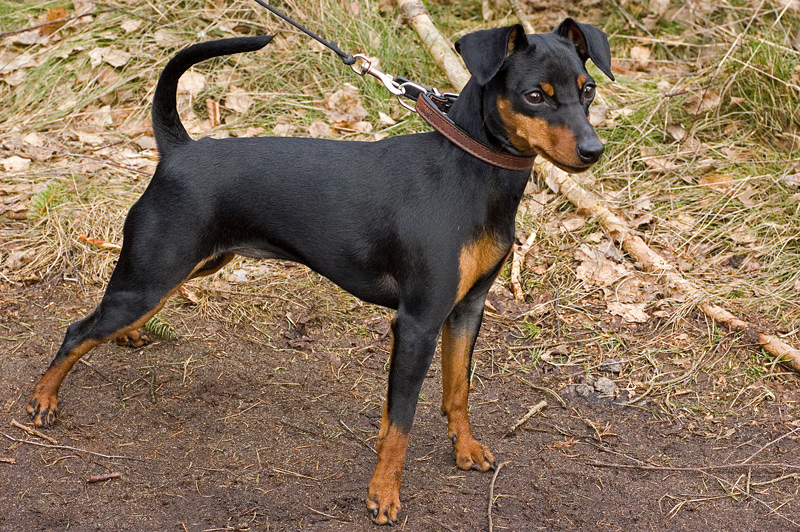
The Miniature Pinscher's coat is about as straightforward as dog coats get. Short, smooth, close-lying, and shiny -- it looks like the breed was designed to need as little grooming as physically possible. And honestly, from a pure coat-maintenance perspective, that is not far from the truth.
But the simplicity of the Min Pin coat comes with trade-offs that every owner should understand. What the coat does not do is just as important as what it does.
The Min Pin Coat: Structure and Function
Single-Layer Design
Miniature Pinschers have a smooth, single-layer coat with no undercoat. Each hair is short (typically half an inch or less), hard-textured, and lies flat against the body. The coat is dense enough to cover the skin completely but provides minimal insulation or protection compared to double-coated or longer-haired breeds.
This is a coat designed for life in moderate climates. The Miniature Pinscher originated in Germany where it worked as a ratter in stables, barns, and farmhouses -- environments that provided shelter from extreme weather. The coat was selected for practicality in that context: short enough that rats could not grab it, tight enough to shed hay dust and stable debris, and hard-textured enough to resist minor scrapes.
Hair Growth Cycle
Min Pin hair grows on a relatively short cycle. Each hair grows to its genetically determined length (short), rests briefly, and sheds. This cycle runs continuously rather than having dramatic seasonal shifts, which is why Min Pins shed year-round at a fairly consistent rate rather than having the blowout events that double-coated breeds experience.
The short growth cycle means that shed Min Pin hairs are small, stiff, and surprisingly difficult to remove from fabric. They embed in upholstery, clothing, and carpet in a way that longer, softer hairs do not. If you have ever tried to lint-roll Min Pin hair off a dark sweater, you know exactly what this means.
Shedding: The Underestimated Reality
This is the biggest surprise for new Min Pin owners. The breed sheds more than its appearance suggests.
Min Pins are moderate shedders. Not as prolific as a Labrador or German Shepherd, but noticeably more than truly low-shedding breeds like Poodles or Bichons. The shedding is constant -- there is no season where it stops -- and the needle-like hairs seem to embed themselves in everything.
A rubber curry brush or grooming mitt is your best friend here. Used once or twice a week, it pulls loose hair out before it deposits on your furniture. The difference between a weekly-brushed Min Pin and a never-brushed Min Pin is genuinely significant in terms of how much hair you find around your home.
Color Variations and Coat Implications
Min Pins come in several color patterns, and -- this is the important part -- coat color actually has health implications for this breed.
Standard Colors
- Solid red (from rich deer red to darker stag red)
- Black and tan (black with rust markings)
- Chocolate and tan (chocolate with rust markings)
Dilute Colors
- Blue and tan (dilute of black and tan)
- Fawn (dilute of red, also called Isabella)
Color Dilution Alopecia: What You Need to Know
CDA is a genetic condition that affects the hair follicles in dilute-colored dogs. The dilute pigment granules (called melanosomes) are larger and unevenly distributed in the hair shaft, causing structural weakness. This leads to:
- Hair breakage and thinning, particularly on the back and sides
- A rough, dull coat texture instead of the characteristic smoothness
- Recurrent bacterial skin infections in affected areas
- Progressive hair loss that typically appears between 6 months and 3 years of age
If your Min Pin is blue or fawn, this is not a certainty -- not every dilute dog develops CDA. But it is a real possibility that affects grooming decisions. Dogs with CDA need:
- Extremely gentle shampoos that do not irritate already-compromised skin
- Moisturizing treatments to support skin health
- Careful brushing that does not break fragile hairs
- More frequent grooming appointments for skin monitoring
A Surprising Fact About the Min Pin Coat
Here is something that catches almost everyone off guard: despite looking remarkably similar to a Doberman Pinscher, the Miniature Pinscher is not a miniaturized Doberman. The Min Pin is actually the older breed by roughly 200 years. But here is the coat-related surprise -- while both breeds have smooth, short coats, the Min Pin's coat is measurably harder in texture. Research on canine hair shaft morphology has documented that the Min Pin's individual hairs have a thicker cuticle layer (the outermost layer of each hair) compared to similarly sized smooth-coated breeds. This thicker cuticle is what gives the coat its characteristic high-gloss, almost metallic sheen and also contributes to the stiffness that makes shed Min Pin hairs so annoyingly good at embedding in fabrics.
Temperature Sensitivity and the Coat
The Min Pin's single coat provides almost no insulation. This has direct practical implications:
Cold Weather
Min Pins get cold easily. A dog with no undercoat and minimal body fat (Min Pins are lean, muscular dogs) has very little thermal protection. In temperatures below about 45 degrees Fahrenheit, most Min Pins benefit from a sweater or coat for outdoor time. This is not just about comfort -- prolonged cold exposure on a poorly insulated small dog can cause real physiological stress.
Grooming-wise, winter can dry out the skin and make the coat appear dull. A moisturizing shampoo during winter grooms and a humidifier in the home help maintain coat quality.
Hot Weather
While the thin coat means Min Pins do not overheat as easily as double-coated breeds, they are vulnerable to sunburn, particularly on lighter-colored skin areas and on the belly. The coat provides minimal UV protection. Dog-safe sunscreen may be necessary for Min Pins that spend significant time outdoors in summer.
Essential Coat Care for Min Pin Owners
Your toolkit is simple:
- Rubber curry brush or grooming mitt -- your primary tool. Use once or twice weekly in circular motions to remove loose hair, stimulate circulation, and distribute natural oils.
- Soft bristle brush -- for finishing and polish.
- Moisturizing shampoo -- gentle, pH-balanced for dogs, not humans. Avoid anything with harsh detergents.
- Coat conditioner or leave-in spray -- helps maintain the coat's natural shine and prevents dryness.
- Dog-safe sunscreen -- for summer outdoor exposure on lightly pigmented areas.
Home Coat Care Routine
Keep it simple and consistent:
- Weekly: 5-minute brushing session with rubber curry and bristle brush
- As needed: Wipe down with a damp cloth after walks (especially belly and paws)
- Monthly: Quick paw pad check and moisturizing if dry
- Every 6-8 weeks: Professional groom with skin assessment and nail trim
Coat Changes Through Life
The Min Pin coat evolves slightly over time:
- Puppies: The puppy coat is softer than the adult coat. Around 4 to 6 months, the adult coat grows in with its characteristic harder texture.
- Adults: Consistent coat quality and shedding pattern throughout adulthood.
- Seniors: The coat may thin somewhat, lose some of its gloss, and become drier. Senior Min Pins benefit from dietary supplements (omega-3 fatty acids) and more moisturizing grooming products.
When to See a Professional or Veterinarian
Consult your groomer or vet if you notice:
- Unusual hair loss or thinning (especially in dilute-colored dogs)
- Persistent dryness, flaking, or dandruff
- Red, irritated, or bumpy skin
- Loss of the coat's characteristic shine
- Excessive scratching or biting at the coat
- Any changes in coat color or texture
The Bottom Line
The Miniature Pinscher coat is elegantly simple -- a smooth, glossy, single-layer coat designed for a small working dog that needed to move fast and stay clean. Understanding its limitations (minimal insulation, sun vulnerability, potential color-linked issues) is just as important as appreciating its advantages (low maintenance, easy care, distinctive appearance). Give it basic consistent care, protect it from temperature extremes, and watch for changes that might signal health issues underneath.
PawOps helps grooming salons assess every breed's unique needs using condition-based scoring. For smooth-coated breeds like the Miniature Pinscher, the assessment focuses on skin health, coat quality, and the breed-specific factors that matter most -- not just coat length and density.