Understanding Your Mudi's Coat: What Every Owner Should Know
Understanding Your Mudi's Coat: What Every Owner Should Know
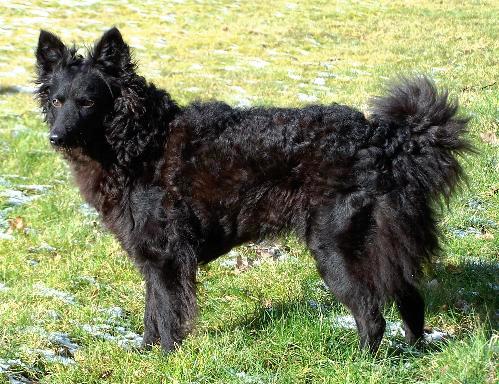
The Mudi wears one of the most distinctive coats in the herding group -- a body covered in wavy-to-curly hair while the face stays sleek and smooth. It is a coat that turns heads at dog shows and confuses groomers who have never seen one. Understanding how it works is the key to keeping your Mudi comfortable and healthy.
Two Textures, One Dog
The Mudi's coat is defined by its dual texture:
Smooth Areas: The face, the front of the forelegs below the elbow, and the lower portions of the hind legs are covered in short, smooth, dense hair. This hair lies flat against the skin and is easy to maintain. It gives the Mudi a clean, alert expression.
Curly-to-Wavy Body Coat: From behind the ears across the entire body, the Mudi carries hair that ranges from wavy to tightly curly, depending on genetics. This body coat is typically 1 to 3 inches long and forms natural ridges, cowlicks, and sometimes loose cord-like formations on the back and sides.
The transition between these two textures happens around the cheeks, throat, and behind the ears. This zone is where grooming challenges concentrate because smooth and curly hairs intermingle and tangle.
Not Quite a Double Coat
Unlike most herding breeds, the Mudi does not carry a traditional thick double coat. The body hair has minimal undercoat -- it is primarily a single-layered curly topcoat with slight undercoat density that varies by individual and climate.
This means:
- Shedding is lower than breeds like German Shepherds or Australian Shepherds
- Dead hair gets trapped in the curls rather than falling to the floor
- The coat does not "blow" dramatically in spring and fall
- Temperature regulation relies more on curl density than undercoat insulation
Color Varieties and Coat Behavior
Mudis come in several colors, and coat texture can vary slightly between them:
- Black: The most common color. Black Mudis tend to have the densest, most defined curls.
- White: Often slightly softer in texture. White coats show dirt more easily and may need more frequent bathing.
- Brown (liver): Moderate curl density. The coat can appear reddish in sunlight.
- Fawn (yellow): Range from pale cream to deep gold. Curl pattern is typically looser.
- Gray/Blue Merle: Also called "cifra" in Hungarian. Striking appearance with varied curl intensity.
- Ash (gray): Rare and beautiful. Texture similar to black Mudis.
Shedding: Light but Sneaky
Mudi owners are often told their breed is "low shedding." That is partially true -- you will not find tumbleweeds of hair under your couch. But the Mudi sheds dead hair into its own coat. Those dead hairs get caught in the curls and accumulate over time.
If you do not actively remove this dead hair through brushing and professional grooming, it builds up into a dense, felted layer against the skin. From the outside, the coat looks fine. Underneath, it is creating a barrier that:
- Blocks airflow to the skin
- Traps moisture after rain or swimming
- Creates an ideal environment for fungal and bacterial growth
- Causes the dog to overheat in warm weather
The Coat Care Routine That Works
Here is a practical maintenance schedule for the Mudi coat:
Twice Weekly (10-15 minutes):
- Pin brush the body coat, working with the curl pattern rather than against it
- Pay special attention to transition zones at the cheeks, throat, and behind ears
- Use a metal comb to check for tangles after brushing -- if the comb passes through smoothly, you are done
- Check ears for debris or wax buildup (the erect ear shape helps, but tufts trap dirt)
- Inspect paw pads for hair growth between toes
- Run your hands through the body coat feeling for developing mats or unusual lumps
- Full bath with curl-appropriate shampoo
- High-velocity blow-dry to separate curls and remove trapped dead hair
- Dead coat removal via carding or combing
- Minimal trimming: feet, hocks, sanitary area
- Ear cleaning and nail trimming
- During spring coat transition, increase brushing to 3-4 times weekly
- Consider an extra professional session during heavy dead coat release
Tools That Work for the Mudi Coat
The right tools make a significant difference with textured coats:
- Pin brush (with polished tips): The primary tool for the wavy-to-curly body. The rounded pins glide through curls without pulling or breaking them.
- Metal greyhound comb (wide and fine tooth): For checking your work and detangling transition zones. Start with wide teeth, finish with fine.
- Slicker brush (soft): For smoothing the face and leg areas. Use gently on the transition zones.
- Spray conditioner/detangler: A light mist before brushing prevents static and breakage in the curly coat.
- Undercoat rake (optional): Useful during seasonal transitions when dead coat is releasing.
Mistakes That Damage the Mudi Coat
Shaving or close-clipping: The curly body coat may not grow back with the same texture after shaving. The curl pattern can be permanently altered, resulting in a flat or patchy appearance.
Over-bathing: More than once every 3-4 weeks strips the natural oils that maintain curl definition and water resistance. The coat becomes dry, frizzy, and prone to breakage.
Blow-drying on high heat: Heat damages curl structure. Professional high-velocity dryers use air speed, not heat, to dry and separate the coat. Home hair dryers on the hot setting will flatten and fry the curls.
Brushing a dry, tangled coat: Always mist with conditioner or water before working through tangles. Brushing dry curly hair causes breakage and pain.
Ignoring the belly and inner thighs: These hidden areas mat first because of friction from movement. They are easy to forget and painful to fix once matted.
When the Coat Signals a Problem
Your Mudi's coat is a health indicator:
- Dull, lifeless curls: Often a sign of nutritional deficiency, particularly omega-3 fatty acids. Consult your vet about dietary supplements.
- Excessive shedding or bald patches: May indicate thyroid issues, allergies, or stress. Mudis are sensitive dogs -- environmental changes can affect coat quality.
- Strong odor: Trapped moisture and dead coat creating bacterial growth. Needs professional intervention immediately.
- Coat texture change: Sudden softening or straightening of curls can indicate hormonal changes or medication side effects.
Appreciate the Coat You Have
Every Mudi's coat is slightly different. Some have tight, defined curls. Others have loose waves. Some develop cord-like formations that make them look like a miniature Puli. All of these are correct for the breed.
The goal is not to make your Mudi's coat conform to a magazine image. The goal is to maintain whatever natural texture your dog has -- keeping it clean, free of dead hair, and healthy. When you do that, the coat does what Hungarian breeders designed it to do: protect a versatile working dog through every season and every task.
---
Ready to streamline your grooming workflow? PawOps Board Manager helps salons track every Mudi from check-in to pickup with real-time visibility. Start your free 30-day trial →
Related Reading: