Understanding Your Neapolitan Mastiff's Coat: More Going On Than You Think
Understanding Your Neapolitan Mastiff's Coat: More Going On Than You Think
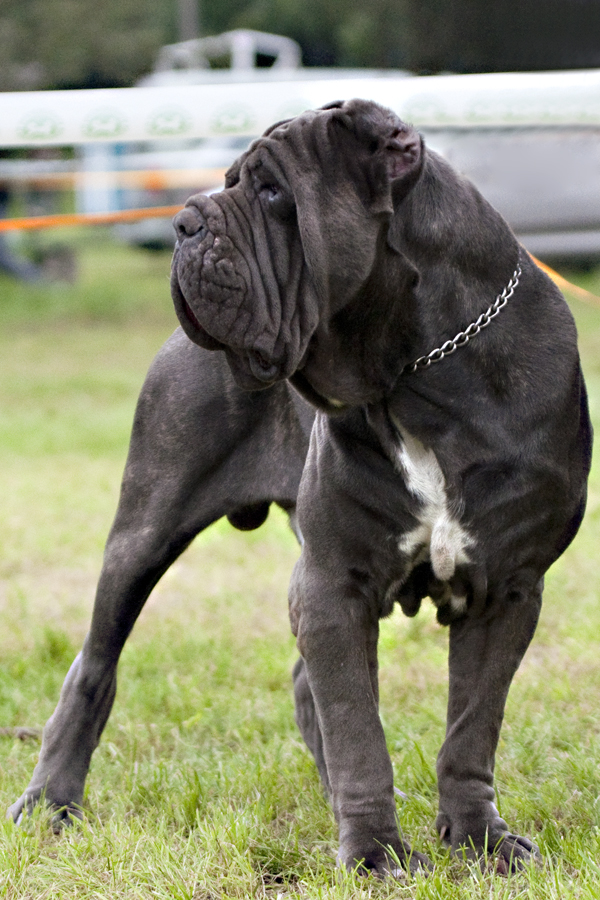
At first glance, the Neapolitan Mastiff coat looks like the easiest coat in the dog world. It is short, it lies flat, and there are no flowing locks to worry about. But the Neo's coat exists in partnership with something far more complex -- those massive, heavy skin folds -- and understanding how the two interact is essential to keeping your dog healthy and comfortable.
What the Neo Coat Is Made Of
The Neapolitan Mastiff has a short, dense, single-layer coat. The hair is uniformly close to the body, usually no more than an inch long, with a slightly coarse texture. The coat is the same length across most of the body, with slightly shorter hair on the face and slightly longer hair on the tail.
Colors run the spectrum from solid black, blue, mahogany, and tawny, with some dogs showing brindle patterns. Blue and black Neos tend to have a slightly softer coat texture compared to tawny or mahogany dogs, though this is a generalization with plenty of exceptions.
Unlike many short-coated breeds, the Neo's coat is surprisingly dense. If you part the fur and look at the skin, you will see more hair per square inch than you might expect. This density is part of the breed's heritage -- the Neapolitan Mastiff was originally a Roman war dog and guard breed, and that dense coat provided a degree of protection.
The Wrinkle-Coat Interaction
Here is where things get interesting. The coat itself is simple. But the Neapolitan Mastiff's defining feature -- those deep, rolling skin folds -- fundamentally changes how the coat behaves.
Inside every wrinkle, the coat grows in opposing directions as the folds push hair against itself. This creates friction zones where hair rubs against hair and skin rubs against skin. In these areas:
- Dead hair accumulates faster because normal shedding does not clear it from inside folds
- Moisture gets trapped between layers of coat-covered skin
- Natural oils concentrate rather than distributing across the body
- Debris collects in ways it simply cannot on a smooth-skinned breed
Shedding Patterns
Neapolitan Mastiffs shed moderately year-round with heavier drops during seasonal changes, typically spring and fall. Despite the short length of individual hairs, the density of the coat means the volume of shed hair is significant. Those short, coarse hairs have a special talent for embedding themselves in furniture, clothing, and car upholstery in ways that longer dog hair does not -- they stick into fabric like tiny needles.
During heavy shedding periods, daily brushing with a rubber curry comb or grooming mitt helps manage the volume. A deshedding treatment at the groomer during these periods makes a noticeable difference in how much hair ends up on your couch.
A Surprising Fact About the Neo Coat
Here is something most Neo owners do not know: the Neapolitan Mastiff's coat has a natural mild odor that is breed-specific and normal. Unlike many breeds where a strong smell indicates a problem, Neos have sebaceous glands that produce more oil than average, giving the coat a distinctive scent even when clean. This is not a grooming failure -- it is breed biology. However, this extra oil production is also why the coat inside wrinkles gets greasy faster and why regular cleaning matters more than it would for a less oily breed. According to veterinary dermatology references, breeds with higher sebaceous output need more frequent bathing to prevent the oil from becoming a breeding ground for yeast, particularly in skin folds where airflow is limited.
Common Coat and Skin Issues
The Neo's coat and skin are prone to several conditions that owners should recognize:
Skin Fold Dermatitis
The most common issue. Red, irritated, sometimes oozing skin inside the folds. Caused by moisture and bacterial buildup. Prevention is far easier than treatment -- regular fold cleaning and thorough drying after baths or rain.
Demodectic Mange
Neapolitan Mastiffs have a higher-than-average susceptibility to demodex mites, which live in hair follicles and cause hair loss, redness, and scaling. The dense coat can mask early signs. Regular skin checks during grooming catch this early.
Acne
Yes, dogs get acne, and Neos are prone to it on the chin and lower lip area. Bacteria trapped under the heavy jowl folds irritate hair follicles. Keeping the chin area clean and dry helps prevent outbreaks.
Hot Spots
Acute moist dermatitis can develop rapidly under the Neo's dense coat, especially in humid climates. A patch of irritated skin that the dog licks or scratches can become a painful, oozing wound within hours. Regular grooming helps detect these early, before the dog makes them worse.
Seasonal Coat Care
The Neo's coat behaves differently depending on the season:
- Summer: The dense coat retains heat. This breed is heat-sensitive, and keeping the coat clean and dead hair removed helps with temperature regulation. Never shave a Neo -- the coat actually provides some UV protection and insulation from external heat.
- Fall: Shedding increases as the coat thickens slightly for cooler weather. Increase brushing frequency.
- Winter: The coat is at its densest. Wrinkle care becomes more important because indoor heating dries the skin while body heat creates moisture in the folds.
- Spring: The heaviest shedding period. Professional deshedding treatments are most valuable now.
Essential Tools for Neo Coat Care
Keep these on hand:
- Rubber curry comb or grooming mitt -- your primary brushing tool, works with the short coat to lift dead hair
- Soft bristle brush -- for finishing and distributing natural oils
- Unscented, gentle wipes -- for daily wrinkle cleaning
- High-quality moisturizing shampoo -- the oily coat benefits from a formula that cleans without stripping too aggressively
- Drying cloths or chamois -- for thorough fold drying after baths or rain
When the Coat Tells You Something Is Wrong
Your Neo's coat is a health indicator. Watch for:
- Dull, dry-looking coat -- could indicate nutritional deficiency, particularly omega fatty acids
- Excessive greasiness beyond normal -- may signal a sebaceous gland disorder or fungal overgrowth
- Patchy hair loss -- could be mange, allergies, or hormonal issues
- Redness visible through the coat -- skin irritation or infection
- Constant scratching or rubbing -- allergies, parasites, or fold irritation
Working With Your Groomer
A good groomer becomes your partner in Neo coat and skin health. They see your dog's skin more thoroughly than you do at home, and they can track changes over time. Tell your groomer about any scratching, unusual smells, or visible changes you have noticed between appointments. They should be telling you what they found during the groom -- fold condition, skin health, coat density, any concerns.
The Neapolitan Mastiff coat may be short, but it is far from simple. It is one piece of a complex system that includes wrinkles, skin folds, oily glands, and a massive body. Understanding how all these elements work together helps you keep your Neo comfortable, healthy, and smelling as good as a Neo can.
PawOps helps grooming salons assess coat and skin condition for wrinkle-heavy breeds using detailed scoring that accounts for fold health, coat density, and breed-specific factors -- giving your Neapolitan Mastiff the specialized care they need.