Understanding Your Norfolk Terrier's Coat: What Every Owner Should Know
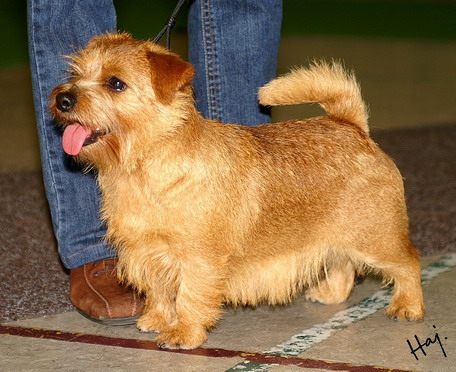
The Norfolk Terrier's coat is a study in functional design packed into one of the smallest frames in the terrier group. Standing just 10-11 inches tall and weighing 11-12 pounds, these dogs carry a coat that would be appropriate on a dog twice their size -- and that coat requires understanding if you want to maintain it properly.
The Norfolk Coat Blueprint
The breed standard calls for a "hard, wiry, straight coat lying close to the body with a definite undercoat." Each word in that description matters:
Hard: The outer coat should feel rough and bristly, not soft or silky. This hardness is what makes the coat weather-resistant.
Wiry: The texture is similar to wire mesh -- individual hairs are thick and somewhat stiff. This prevents penetration by thorns, teeth, and weather.
Straight: Unlike some terrier breeds whose coats wave or curl, Norfolk coat lies straight. Curl or wave suggests incorrect texture.
Lying close: The coat follows the body contour. It doesn't stand away from the body like a Cairn Terrier's or puff out like a West Highland's.
Definite undercoat: The undercoat is thick, soft, and serves as insulation. "Definite" means it should be easily identifiable -- not sparse or thin.
Understanding Norfolk Furnishings
Norfolk Terriers have moderate furnishings that give them their characteristic expression:
Eyebrows: Slight, not dramatic. They shade the eyes without obscuring vision.
Whiskers/beard: Present but tidier than many terrier breeds. The Norfolk's face should look open and expressive.
Leg hair: Longer than body coat, straight, and forming a slight fringe. Should look natural, not sculpted.
Ears: The ears themselves have shorter, smoother hair than the body. The ear edges may have slightly longer fringing.
Neck/chest: A slight mane or ruff is acceptable but shouldn't be excessive.
These furnishings are NOT stripped -- they're maintained through combing and selective tidying. Understanding this distinction is crucial for proper coat care.
Color and Its Maintenance
Norfolk Terriers come in several colors, each with specific maintenance considerations:
Red (all shades from deep fox-red to light ginger): The most popular color. Red coats show their richest color when properly stripped. Clipping fades red to a washed-out strawberry.
Wheaten (pale cream to warm gold): Lighter colors show dirt more easily. Wheaten Norfolks may need slightly more frequent bathing -- but always with coat-appropriate products.
Black and tan: The rarest Norfolk color. The black areas must be properly stripped to maintain depth. Black that's been clipped turns rusty-gray.
Grizzle: Dark-tipped hairs over a lighter base. This color pattern is actually the most sensitive to improper grooming -- the dark tips are specifically on the guard hairs that clipping removes.
A 2024 Norfolk Terrier Club health survey found that owners who maintain hand-stripping report significantly better coat color retention throughout their dog's life compared to those who clip -- with some clipped dogs losing up to 40% of their original color intensity by age 5.
The Double Coat System
The Norfolk's double coat creates a microclimate next to the skin:
Summer function: The undercoat creates an air pocket between skin and outer coat. Combined with the reflective properties of the harsh outer hairs, this system actually keeps the dog cooler than they would be without coat.
Winter function: The undercoat traps warm air close to the body. The outer coat blocks wind and sheds rain. Together, they create insulation comparable to a light jacket.
Rain function: Water hits the harsh outer coat and runs off rather than penetrating. A properly textured Norfolk coat sheds a light rain entirely. Heavy rain may dampen the outer coat but the undercoat stays dry.
Removing either layer (shaving, inadequate undercoat maintenance) disrupts this system. The 2023 Journal of Thermal Biology published research showing double-coated small breeds maintain core body temperature 2.3 degrees more consistently than shaved counterparts in variable conditions.
Coat Growth Patterns and Timing
Norfolk Terrier coat grows in a pattern owners should recognize:
Post-strip regrowth (weeks 1-3): New coat emerges as short stubble. The dog may look a bit bare, especially if a full strip was done rather than rolling.
Development phase (weeks 3-6): Coat reaches mid-length. Texture develops -- initially softer, becoming properly harsh as hairs mature.
Optimal phase (weeks 6-10): Full coverage, correct texture, rich color. This is when your Norfolk looks their best.
Mature phase (weeks 10-14): Coat is at maximum length. Tips may start to feel slightly softer as hairs enter the dying phase.
Blown phase (weeks 14+): Dead coat sits loose in follicles. Color dulls, texture softens, coat may separate and look untidy. Time for stripping.
Seasonal Changes
Like all double-coated breeds, Norfolks experience seasonal coat transitions:
Spring (February-April): Major undercoat shed. The soft inner coat loosens and comes out in clumps if brushed. This is normal -- not a sign of illness. Professional deshedding accelerates this transition.
Summer (May-August): Lightest coat of the year. Both layers are thinner. Guard hairs are at their shortest cycle.
Fall (September-November): Undercoat begins thickening. New growth is denser. A good time for a strip to let fresh coat grow in thick for winter.
Winter (December-February): Maximum coat density. Both layers at full thickness. The Norfolk looks slightly larger and more filled out.
Home Maintenance Protocol
Between professional grooming sessions (every 8-10 weeks), maintain your Norfolk's coat with this routine:
3x weekly (10 minutes each):
- Slicker brush through body coat (with direction of growth)
- Undercoat rake along spine and sides
- Metal comb through all furnishings
- Quick ear check (visual + sniff for odor)
- Check paw pads for trapped debris
- Clean face and beard (damp cloth)
- Pluck any obviously dead, loose coat hairs from the body
- Inspect skin along the back (part coat and look)
- Check for burrs or seeds in furnishings
- Remove any debris from ear folds
- Wipe feet if walking in treated grass areas
Products for Norfolk Terrier Coats
Choose products carefully -- wrong choices damage coat texture:
Shampoo: Use a texturizing or harsh-coat formula. Avoid anything labeled "softening," "smoothing," or "silky." Look for pH 5.5-7.0 for dogs.
Conditioner: Use ONLY on furnishings (legs, beard) if they tend to tangle. Never condition the body coat -- it softens the texture.
Coat spray: A light detangling mist is acceptable before brushing. Avoid heavy leave-in products.
Avoid: Human shampoo, dish soap, heavy oils, silicone-based products, anything that claims to make coat "softer."
When Coat Changes Signal Health Issues
Monitor these coat changes that may indicate underlying health problems:
- Sudden excessive shedding outside seasonal norms: possible thyroid, stress, or allergy
- Coat thinning without regrowth: hormonal issues, nutritional deficiency
- Coat becoming greasy or oily: skin infection, sebaceous gland issues
- Hair breaking rather than growing: nutritional deficiency, friction damage
- Color changes without clipping: liver or kidney issues (rare but worth checking)
---
Ready to streamline your grooming workflow? PawOps Board Manager helps salons track every Norfolk Terrier from check-in to pickup with real-time visibility. Start your free 30-day trial →