Understanding Your Norwegian Elkhound's Coat: What Every Owner Should Know
Understanding Your Norwegian Elkhound's Coat: What Every Owner Should Know
The Norwegian Elkhound's coat is not just fur. It is a survival system refined over thousands of years in some of the harshest climates on earth. Archaeological evidence places these dogs alongside Viking settlements dating back to 5000 BCE, making the Elkhound one of the oldest domesticated breeds still in existence. Every characteristic of their coat -- the density, the texture, the color -- exists for a reason.
Understanding that reason helps you care for it properly.
Two Layers, Two Jobs
Norwegian Elkhounds have a classic double coat with two distinct layers that work together as an integrated system.
The Guard Coat (Outer Layer)
The outer coat consists of coarse, straight hairs that lie relatively flat against the body. This guard coat is medium in length -- longer than a Labrador's but shorter than a Collie's. The hairs are thick and somewhat harsh to the touch, which is intentional. This texture sheds water and prevents snow from clinging to the coat.
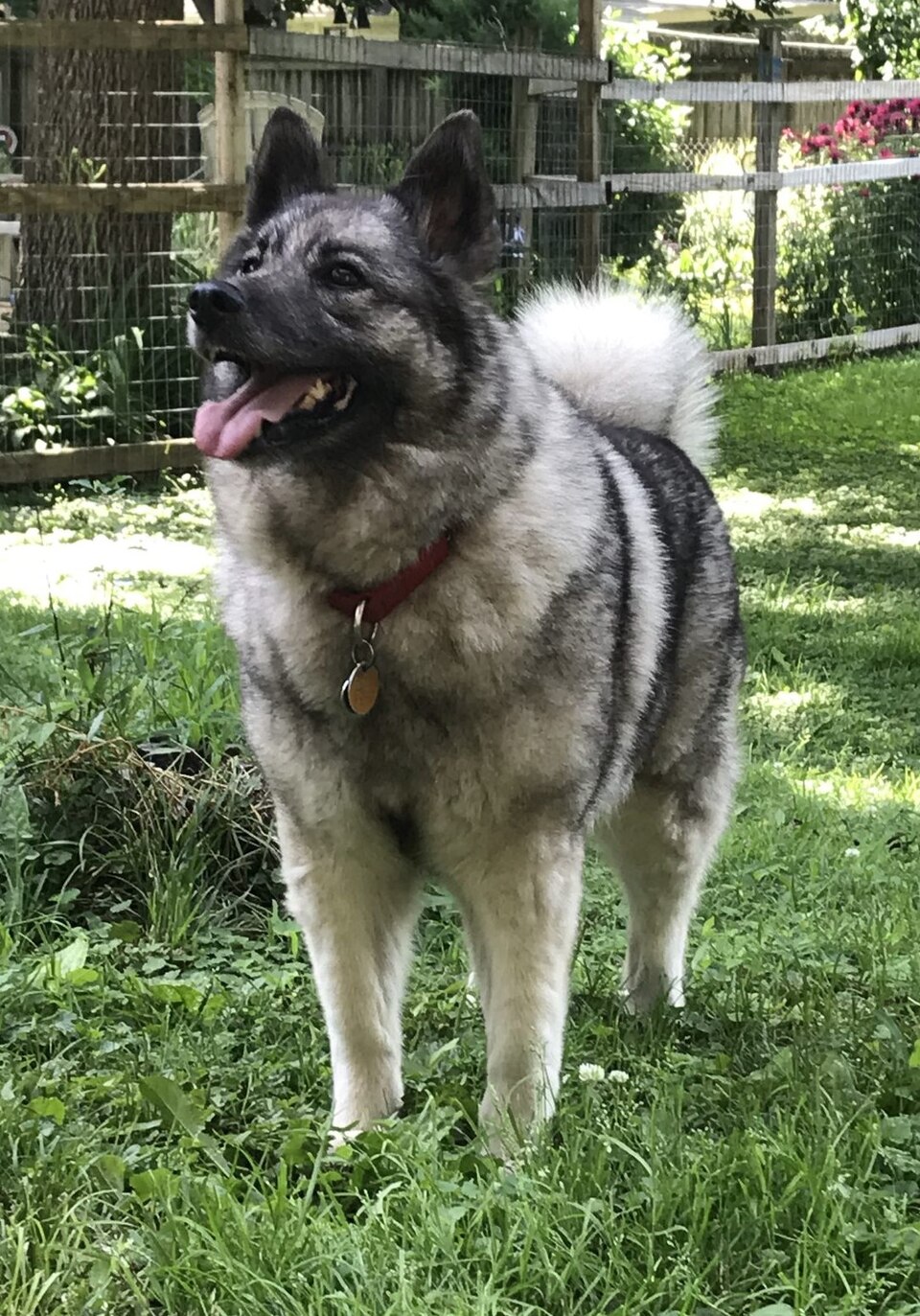
The color is a distinctive silver-gray created by banded hairs -- each individual hair has a lighter base and darker tip, creating that characteristic shimmering gray appearance. The AKC breed standard describes it as gray with lighter silver undercoat and darker tips. The muzzle, ears, and tail tip are black.
This guard coat serves as armor. It deflects rain, blocks wind, and provides a physical barrier against brush and thorns. In its ancestral role, the Elkhound pushed through dense Norwegian forest tracking moose -- the guard coat prevented branches from reaching the skin.
The Undercoat (Inner Layer)
Beneath the guard coat sits a dense, soft, woolly undercoat that provides insulation. This is the layer that makes an Elkhound feel so plush when you pet them. It is also the layer that covers your furniture, your clothes, and every surface in your house twice a year.
The undercoat works like down insulation in a jacket. It traps air close to the body, creating a thermal layer that keeps the dog warm in sub-zero temperatures. What many owners do not realize is that this same insulation works in reverse during summer -- it keeps external heat away from the body, acting as a cooling barrier.
This is why shaving an Elkhound for summer is counterproductive. You remove the insulation layer that actually helps them regulate temperature in both directions.
The Shedding Cycle
Elkhound shedding follows a predictable pattern tied to photoperiod -- the amount of daylight, not temperature.
Spring Blowout (March through May)
As daylight hours increase in spring, hormonal signals trigger the release of the heavy winter undercoat. Over three to six weeks, the Elkhound sheds an astonishing volume of soft, woolly undercoat. During peak blowout, you can pull tufts of loose fur from the coat with your bare hands.
The Norwegian Elkhound Association of America describes the spring blowout as the heaviest shedding period. Some owners report filling multiple grocery bags with loose undercoat from a single extended brushing session.
Fall Transition (September through November)
The lighter summer undercoat sheds to make room for the denser winter undercoat growing in. This blowout is typically slightly less dramatic than spring but still substantial.
Year-Round Background Shedding
Between the major blowouts, Elkhounds shed moderately. You will find fur on your clothes and furniture throughout the year -- this is the normal turnover of individual hairs completing their growth cycle. A 2023 study in the Journal of Veterinary Dermatology found that double-coated breeds shed individual hairs on a 90 to 130-day growth cycle, meaning some hair is always in the release phase.
The Ruff and Other Coat Variations
Not all parts of an Elkhound's coat are the same length or texture.
- The Ruff: Males especially develop a thicker, longer collar of fur around the neck and chest. This is the most visually striking part of the coat and also one of the areas most prone to matting if not maintained.
- The Tail: Elkhounds carry their tail tightly curled over the back. The tail fur is longer and denser than the body coat. It can mat where it contacts the back.
- The Breeches: The backs of the thighs carry slightly longer fur that can tangle.
- The Belly: Shorter, softer fur that mats when it contacts the ground during rest.
Common Coat Problems in Norwegian Elkhounds
Compacted Undercoat
The most common issue. Dead undercoat that is not removed packs down against the skin, forming a dense mat that prevents air circulation. This leads to overheating, odor, and skin irritation. You cannot always see compacted undercoat from the outside -- the guard coat looks normal while problems develop underneath.
To check: part the coat to the skin in several spots along the back and sides. You should see skin easily. If the undercoat is so dense that you cannot reach skin, it needs professional extraction.
Hot Spots
Elkhounds are moderately prone to hot spots (acute moist dermatitis), especially in humid climates. The dense coat traps moisture against the skin, and hot spots can develop rapidly -- literally overnight. The most common locations are along the back, behind the ears, and on the hip area.
Coat Funk
A poorly maintained Elkhound coat develops a distinctive musty odor. This is caused by oils and bacteria trapped in compacted undercoat. The smell does not wash out with a simple bath because the packed undercoat prevents water and shampoo from reaching the source. Professional deshedding and thorough high-velocity drying are required.
Dry, Brittle Guard Coat
Some Elkhounds develop dry, dull outer coats. This is frequently linked to diet -- insufficient omega-3 and omega-6 fatty acids. A coat supplement or a diet with adequate healthy fats often restores the natural sheen within four to six weeks.
Your Home Maintenance Routine
Between professional grooming sessions, here is what keeps an Elkhound coat healthy:
Essential Tools:
- Undercoat rake (the single most important tool for this breed)
- Slicker brush
- Steel comb
- High-velocity dryer (optional but highly effective)
Monthly:
- Check the skin by parting the coat in multiple locations
- Clean ears
- Inspect paw pads for matted fur between toes
A Coat Fact Most Owners Miss
The Norwegian Elkhound's silver-gray color is not just aesthetic -- it served a practical purpose in the field. When tracking moose in dense forest, the lighter coat made the dog visible to hunters at a distance, reducing the risk of accidental harm. The darker saddle marking along the back and the black muzzle provided some camouflage from the prey's perspective when the dog approached from above on hillsides.
The banded hair structure that creates this color also gives the coat a self-cleaning property. Dirt tends to flake off as the coat dries because it does not penetrate the slick guard hairs easily. This is why Elkhounds can get visibly dirty on a hike and look clean again the next morning -- the mud dries and falls away from the coarse outer coat.
When the Coat Tells You Something Is Wrong
Your Elkhound's coat is a health dashboard:
- Sudden excessive shedding outside normal cycles: May indicate thyroid dysfunction, stress, or allergies
- Loss of the silver sheen: Often diet-related, but can signal metabolic issues
- Patchy hair loss: Could be alopecia, fungal infection, or hormonal imbalance
- Persistent dandruff: May indicate dry skin, sebaceous adenitis, or environmental allergies
- Coat that does not lie flat: Sometimes indicates the undercoat is compacted and pushing the guard coat outward
PawOps helps grooming salons assess double-coated spitz breeds using coat density scoring and condition tracking -- ensuring your Norwegian Elkhound receives a grooming plan calibrated to their specific coat condition, not a one-size-fits-all approach.
Related Reading: