Why Your Nova Scotia Duck Tolling Retriever Needs Professional Grooming
Why Your Nova Scotia Duck Tolling Retriever Needs Professional Grooming
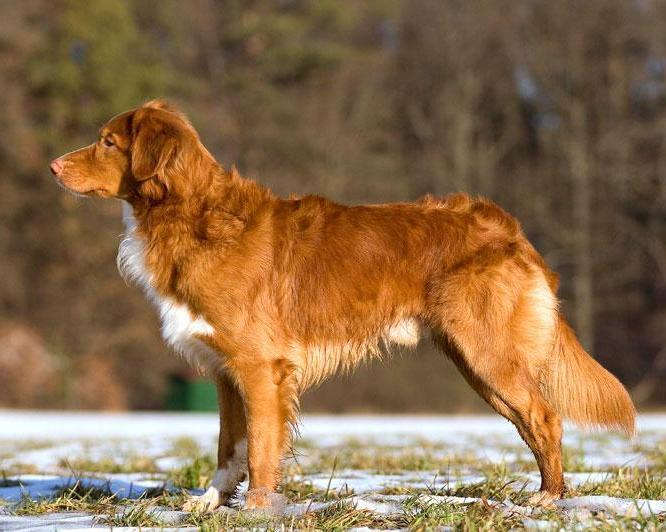
The Nova Scotia Duck Tolling Retriever — the Toller — is the smallest retriever breed, but don't let the compact size fool you. That medium-length, water-repellent double coat packs serious grooming needs into a 35-50 pound package. Nova scotia duck tolling retriever professional grooming keeps this working coat functional while maintaining the breed's distinctive fox-red beauty.
Here's why professional grooming matters for your Toller.
A Working Coat with Specific Requirements
The Toller coat was designed for the cold waters of Nova Scotia, where the breed was developed to lure ("toll") and retrieve waterfowl. The coat features:
- A medium-length, water-repellent outer coat that's straight to slightly wavy
- A dense, soft undercoat that provides insulation
- Moderate feathering on the throat, behind the ears, backs of the legs, and tail
- A water-repellent quality that's less oily than a Chessie but more effective than many sporting breeds
This coat needs professional maintenance to stay functional. Left ungroomed, the undercoat packs down, the featherings mat, and the coat's water-repellent quality diminishes.
Why Not Just DIY?
Toller owners are often active, hands-on people (the breed attracts them). Many think they can handle all grooming at home. And honestly, home maintenance is a big part of Toller care. But professional grooming fills critical gaps:
De-shedding expertise: Tollers shed. A lot. Particularly during the biannual coat blow, the undercoat releases in volume that catches owners off guard. Professional de-shedding with high-velocity drying removes dead undercoat from the base level that home brushing alone can't reach.
Feathering management: The featherings on a Toller — especially behind the ears and on the pants — mat in ways that are difficult to address without professional tools and technique. A groomer working through these areas prevents the progressive tightening that turns small tangles into skin-pulling mats.
Coat assessment: The dense coat conceals skin conditions effectively. Professional groomers check the skin during bathing and drying — catching hot spots, parasites, and irritation that develops invisibly under the coat.
Proper product selection: The Toller coat's water-repellent quality, while not as dramatic as a Chessie's, is still important. Professional groomers use products that clean without stripping natural oils.
Ear care: Tollers have medium-length, triangular ears that fold close to the head. Combined with regular water exposure, this creates conditions for ear infections. Professional ear cleaning at every groom is preventive medicine.
According to the American Kennel Club, Tollers are classified as a moderate-grooming-needs breed — but that moderate designation assumes consistent professional AND home care working together.
What a Professional Toller Groom Includes
A thorough session:
Total time: 60-90 minutes.
The Shedding Challenge
Tollers are heavy shedders for their size. The dense undercoat goes through a complete turnover twice a year, and the volume of hair released is disproportionate to the dog's compact frame.
During peak shedding:
- You'll pull entire handfuls of undercoat during brushing
- Hair will appear on every surface in your home
- The coat may look patchy or uneven as the undercoat releases unevenly
- Daily brushing is necessary (not optional)
The Fox-Red Factor
Tollers are known for their distinctive color — various shades of red and orange, often described as "fox-red":
- Deep red: Rich, copper-like
- Golden red: Warmer, lighter
- Buff: The lightest acceptable shade
The red coat shows grooming neglect quickly — a dull, lifeless coat stands out against the breed's naturally vibrant color. Sun bleaching can also affect the red tones, particularly in dogs that spend significant time outdoors.
Proper grooming — regular brushing that distributes natural oils, appropriate bathing products, and professional coat maintenance — keeps the red coat vibrant and lustrous.
Home Care Between Visits
- Brush 2-3 times weekly with a pin brush and undercoat rake
- Comb featherings weekly with a wide-tooth comb
- Dry ears after every swim — every time, without exception
- Check for mats weekly in the five usual spots: behind ears, armpits, pants, chest, and between toes
- During shedding season: daily brushing for 10-15 minutes
Your Toller was bred to work hard in tough conditions. Professional grooming ensures their coat is ready for anything — whether that's a November retrieve or a romp through the autumn leaves.
---
Ready to streamline your grooming workflow? PawOps Board Manager helps salons track every Nova Scotia Duck Tolling Retriever from check-in to pickup with real-time visibility. Start your free 30-day trial →
Related Reading: