Why Your Pekingese Absolutely Needs Professional Grooming
Why Your Pekingese Absolutely Needs Professional Grooming
Let us be real about the Pekingese coat: it is magnificent, and it is a lot of work. That lion-like mane and flowing double coat did not evolve for low maintenance. It evolved because Chinese emperors had palace servants dedicated to keeping their dogs groomed. You probably do not have palace servants, which is exactly why professional grooming is not optional for this breed.
The Pekingese Coat Is Among the Most Demanding in the Toy Group
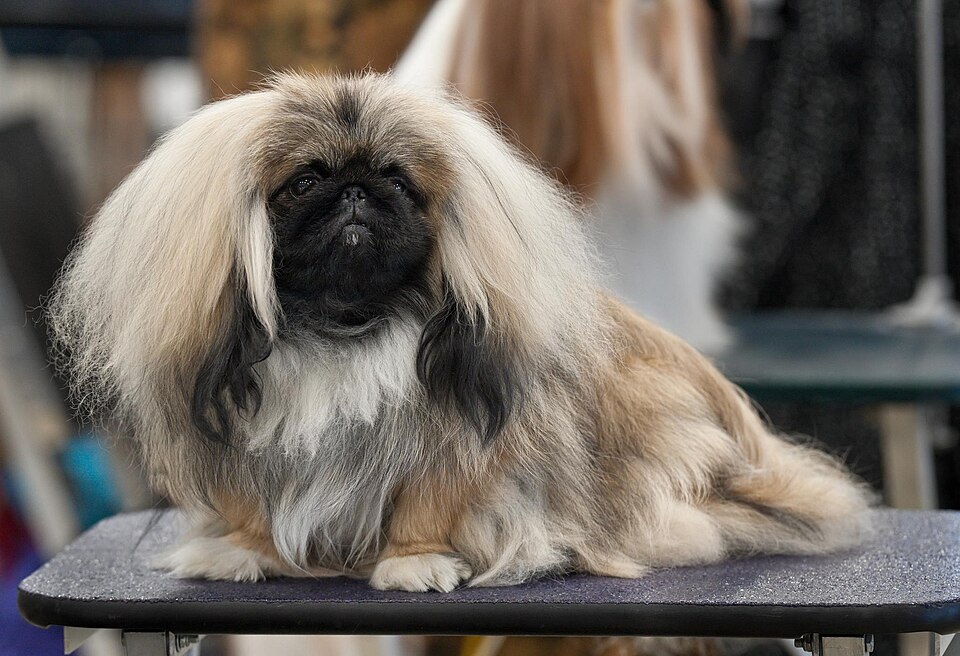
The Pekingese carries a thick double coat with a coarse outer layer and a dense, soft undercoat. The combination creates that distinctive volume -- the body looks almost twice its actual size under all that fur. The coat is longest around the neck and shoulders (forming the breed's famous "mane"), with heavy feathering on the ears, legs, tail, and toes.
This double coat creates grooming challenges that are fundamentally different from single-coated toy breeds. The undercoat traps heat, moisture, and debris. It mats from the inside out, meaning by the time you see a tangle on the surface, there is often a dense mat underneath that goes all the way to the skin.
Professional groomers have the tools and training to work through a Pekingese coat systematically. They use high-velocity dryers to separate the undercoat after bathing, line-brush through each section, and identify skin issues hiding under all that fur. This is not something most owners can replicate at home with a standard hair dryer and a brush from the pet store.
Health Risks That Make Professional Grooming Essential
The Pekingese is a brachycephalic breed -- that flat face is adorable, but it means the dog has compromised airway function. This has direct implications for grooming.
Overheating Risk
Pekingese overheat dangerously fast. Their thick double coat combined with their restricted breathing makes temperature regulation difficult. A matted coat makes this worse because mats act like insulation, trapping body heat against the skin. Professional groomers understand how to manage brachycephalic breeds during grooming -- using cool-air drying, taking breaks, monitoring for signs of respiratory distress, and never using cage dryers.
Here is a data point that should give every Peke owner pause: the Pekingese ranks among the top five breeds at highest risk for heat-related illness according to veterinary emergency data. Regular grooming that keeps the undercoat thinned and the coat clean directly reduces that risk.
Skin Problems Hidden Under the Coat
The Pekingese's dense coat hides skin issues that owners simply cannot see or feel during casual petting. Hot spots, fungal infections, flea infestations, and even tumors can develop undetected under that thick fur. Professional groomers do a hands-on assessment of the entire body during every session. They are often the first to spot lumps, rashes, or parasites -- sometimes before the dog shows any behavioral symptoms.
Facial Fold Infections
The Pekingese has deep facial wrinkles, particularly the nose roll (the fold of skin across the top of the muzzle). This fold traps moisture, tears, food particles, and bacteria. Without regular cleaning, it becomes red, irritated, and infected. Professional groomers clean and dry these folds as part of every session -- a step many owners either forget or are uncomfortable performing.
Eye Care
Those large, prominent Pekingese eyes are vulnerable to irritation from hair and debris. The long facial hair can grow into the eyes or channel debris toward them. Groomers carefully trim around the eyes and clean tear staining, protecting the breed's most vulnerable feature.
What Happens During a Professional Pekingese Groom
A full grooming session for a Pekingese typically takes 90 to 120 minutes -- longer if the coat is matted. Here is what that time includes:
The Lion Cut Question
Many Pekingese owners eventually ask about the lion cut -- shaving the body short while leaving the mane, leg feathering, and tail plume intact. This is a legitimate grooming option, especially for:
- Dogs in hot climates
- Senior Pekes who struggle with coat maintenance
- Owners who cannot maintain a brushing schedule between visits
- Dogs with chronic skin issues that need better airflow
How Often Should a Pekingese Be Professionally Groomed
Every four to six weeks for a full-coat Peke. If your dog is in a lion cut or shorter trim, you can sometimes stretch to six to eight weeks, but the face folds and nails still need regular attention.
Between visits, daily brushing is ideal. Yes, daily. The Pekingese coat does not forgive skipped sessions the way some breeds do. Even ten minutes a day with a slicker brush and a comb makes a dramatic difference in coat condition.
A Surprising Fact About Pekingese Grooming
During the Qing Dynasty, Pekingese in the Forbidden City had their own dedicated grooming staff and were bathed in scented water prepared by eunuchs. The breed was so protected that stealing one from the palace was punishable by death. Your Peke comes from a lineage that has literally always required professional-level grooming.
Choosing the Right Groomer
Not every groomer is comfortable with Pekingese. The combination of a dense double coat, flat face, and potential for overheating means this breed requires specific knowledge. Ask potential groomers:
- How do you handle brachycephalic breeds during drying?
- Do you line-brush or just surface-brush double coats?
- How do you clean facial folds?
- What is your protocol if a dog shows signs of overheating?
PawOps gives groomers the tools to score coat condition and difficulty for breeds like the Pekingese -- ensuring accurate pricing and appropriate time allocation for every appointment. Use our free pricing calculator →