Why Your Polish Lowland Sheepdog Needs Professional Grooming (That Shaggy Coat Has Secrets)
Why Your Polish Lowland Sheepdog Needs Professional Grooming (That Shaggy Coat Has Secrets)
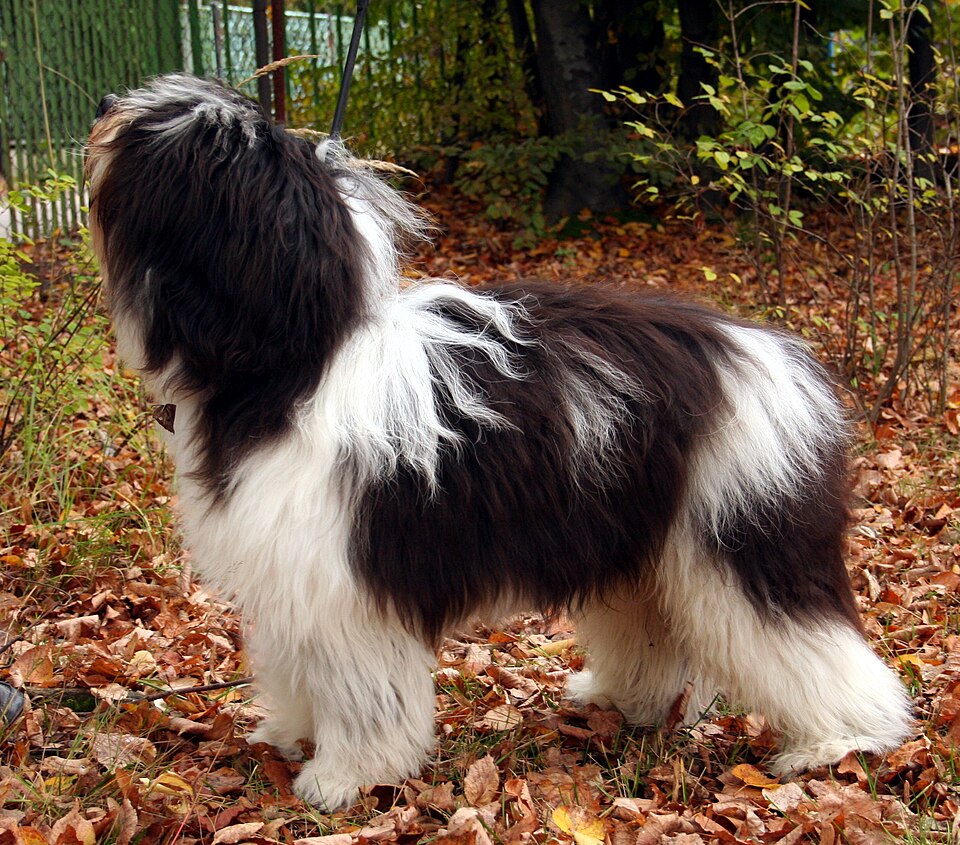
The Polish Lowland Sheepdog -- PON to those who know the breed, from the Polish name Polski Owczarek Nizinny -- is a medium-sized herding dog with a personality as big as its coat. And that coat is substantial. Dense, thick, and shaggy, it covers the entire body including the face, giving the breed its characteristic "I can barely see but I know exactly where you are" look.
What most new PON owners do not realize is just how much work that shaggy look requires. This is not a wash-and-go breed. The PON's double coat is one of the most mat-prone in the herding group, and without regular professional grooming, it goes from charming to chaotic faster than you would think possible.
The PON Coat: Dense, Double, and Demanding
The Polish Lowland Sheepdog has a thick double coat consisting of:
- A harsh, dense outer coat that is slightly wavy or straight. This is not silky or flowing -- it has texture and substance.
- A soft, dense undercoat that provides insulation and makes the overall coat incredibly thick.
The American Kennel Club breed standard describes the coat as "long, thick, shaggy, and dense" with a profuse undercoat. That is a polite way of saying it mats relentlessly.
Why Professional Grooming Is Essential
Deep Mat Prevention and Removal
PON coats mat in layers. The surface can look fine -- shaggy and charming -- while underneath, close to the skin, the undercoat is felting into solid sheets. This is sometimes called "hidden matting" and it is extremely common in the breed.
Professional groomers use line brushing techniques -- parting the coat in sections and brushing from the skin outward -- to identify and address matting before it becomes severe. They also have tools that most owners do not: high-velocity dryers that blow loose undercoat out, and specialized rakes and combs that reach through the dense outer coat to the undercoat layer.
According to grooming industry surveys, approximately 60% of double-coated herding breeds arrive at the salon with some level of matting that the owner was not aware of. For PONs, with their exceptionally dense coats, that number is likely higher.
Undercoat Management
The PON's undercoat is the engine of most grooming problems. It is soft, dense, and sheds in cycles. When the undercoat sheds, it does not simply fall out -- it gets trapped in the harsh outer coat and forms mats. A professional deshedding treatment removes this dead undercoat before it has a chance to tangle.
Without deshedding, the dead undercoat compacts against the skin, creating a felt-like layer that:
- Restricts airflow to the skin
- Traps moisture (a PON that gets wet and does not dry properly under the matted undercoat is at risk for hot spots)
- Creates the perfect environment for skin infections
Full Body Assessment
The PON's coat covers everything, including the face. This means ears, eyes, and skin are hidden under layers of fur. Professional groomers check:
- Eyes -- hair irritating the eyes can cause chronic tearing and infection
- Ears -- drop ears under thick fur create warm, moist environments for infections
- Skin -- hot spots, allergies, and parasites hide under the coat
- Paw pads -- fur between the pads collects debris and can cause slipping
- Sanitary areas -- hygiene around the rear requires regular trimming
Coat Shaping
PONs do not get clipped in the traditional sense for the show ring, but many pet owners opt for a practical trim that keeps the shaggy look while reducing maintenance. A professional groomer can shape the coat to manage the volume while preserving the breed's characteristic appearance. This is a skill -- the difference between a well-shaped PON and a badly trimmed one is significant.
What Happens When You Skip the Groomer
Neglecting a PON's grooming needs leads to predictable problems:
- Progressive matting. It starts small -- a tangle behind the ear, a clump in the armpit. Within two weeks, those tangles have expanded. Within a month, the entire undercoat can be matted to the skin. At that point, the only option is often a full shave-down.
- Skin problems. Matted coat against the skin causes irritation, hot spots, and bacterial infections. A 2020 veterinary dermatology survey found that breeds with dense double coats had 35% higher rates of bacterial skin infections when grooming was inconsistent.
- Discomfort. Mats pull on the skin with every movement. A severely matted PON is in constant low-grade discomfort. You may notice reluctance to be touched, changes in activity level, or increased scratching.
- Eye and ear issues. Without face trimming, hair grows into the eyes and ears, causing irritation and infection.
How Often Does a PON Need Professional Grooming
| Coat Length | Professional Grooming | Home Brushing | |-------------|----------------------|---------------| | Full length (show coat) | Every 4-5 weeks | Daily | | Moderate trim (practical pet) | Every 5-6 weeks | 3-4 times per week | | Shorter utility trim | Every 6-8 weeks | 2-3 times per week |
Regardless of coat length, a PON needs professional grooming at minimum every 6-8 weeks. The breed's dense undercoat simply requires more thorough maintenance than home brushing alone can provide.
Choosing a Groomer for Your PON
PONs are not a common breed, and many groomers have limited experience with them. Good indicators:
- Experience with other dense-coated herding breeds (Bearded Collies, Old English Sheepdogs, Briards)
- Knowledge of line brushing techniques
- Willingness to spend the time the coat requires rather than rushing
- Condition-based pricing (a well-maintained PON takes less time and should cost less)
- Understanding that the shaggy look is intentional, not a sign of neglect
The Partnership Between You and Your Groomer
PON grooming is a team effort. Your groomer handles the deep work -- undercoat removal, skin checks, shaping, and thorough bathing and drying. You handle the between-visit brushing that keeps mats from forming. Neither can replace the other.
Your PON's coat is part of what makes them a PON. It kept their ancestors warm on the Polish plains, protected them from the elements, and gave them that irresistible shaggy charm. Professional grooming keeps that coat doing its job.
PawOps helps grooming salons assess and price dense double coats like the PON's using condition-based scoring -- so owners who brush regularly pay less, and groomers are compensated fairly for the real work each dog's coat demands.