Understanding Your Standard Poodle's Coat: What Every Owner Should Know
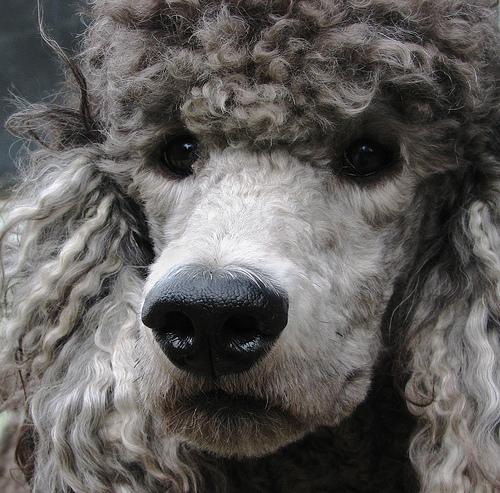
Understanding Your Standard Poodle's Coat: What Every Owner Should Know
The Standard Poodle coat is unlike any other in the dog world. It's hair, not fur. It grows continuously, curls tightly, and behaves in ways that surprise even experienced dog owners. Understanding how your Poodle's coat actually works is the foundation of keeping it healthy -- and keeping your grooming routine manageable.
Hair vs. Fur: Why It Matters
Most dogs have fur -- it grows to a genetically determined length, enters a resting phase, then falls out and regrows. That's shedding. Poodles have hair, which follows a growth cycle much more similar to human hair. It keeps growing without a predetermined stop point.
This difference creates two major realities for Poodle owners:
The upside: Minimal shedding. Poodle hair doesn't fall out in the same volume as fur. This is why Poodles are often recommended for allergy sufferers (though no dog is truly hypoallergenic -- Poodles just produce less airborne dander because shed hair stays trapped in the coat).
The downside: Without haircuts, the coat grows indefinitely. A Standard Poodle that never sees a groomer would eventually develop cords -- long, rope-like mats similar to dreadlocks. While corded Poodles exist intentionally, an accidentally corded coat is a health hazard.
The average Standard Poodle coat grows roughly half an inch per week. Over the course of a year without grooming, that's approximately 26 inches of hair growth. On a dog. Everywhere.
The Three Coat Stages
Standard Poodle coats go through distinct developmental stages, and each one has different care requirements.
Puppy Coat (Birth to 6-12 Months)
Poodle puppies are born with a soft, wavy coat that's much easier to manage than the adult coat. The puppy coat is finer, less dense, and doesn't mat as aggressively. Many new Poodle owners get lulled into thinking grooming will always be this easy.
Don't let that happen. Start professional grooming early -- by 12-16 weeks -- to get your puppy comfortable with the process before the adult coat arrives.
Coat Transition (6-18 Months)
This is the stage that catches owners off guard. The puppy coat doesn't simply fall out and get replaced. Instead, the adult coat grows in underneath while the puppy coat is still present. For several months, you have two coats coexisting, and they mat at an alarming rate.
Groomers report that the coat transition period produces more emergency dematting appointments than any other stage. Brushing frequency needs to increase to daily during this time, and professional grooming appointments should be every 3-4 weeks until the transition is complete.
A study from the Poodle Club of America notes that roughly 40% of Poodle coat damage occurs during this transition period when owners don't adjust their grooming routine.
Adult Coat (18+ Months)
Once the transition is complete, you're working with the coat your Poodle will have for life. The adult coat is denser, curlier, and coarser than the puppy coat. It requires consistent maintenance but becomes more predictable.
Adult Poodle coats vary in texture from tight, springy curls to looser, wavier patterns. Neither is better or worse -- they just need slightly different approaches.
Curl Types and What They Mean
Not all Standard Poodle coats are identical. There's natural variation in curl pattern:
Tight curls -- Small, dense spirals that hold shape well. This texture mats the fastest because adjacent curls interlock easily. Needs the most frequent brushing. Holds scissored shapes beautifully.
Medium curls -- The most common type. Balanced between manageability and shape retention. A good all-around texture for both pet and show clips.
Loose waves/curls -- Larger, softer curl pattern. Slightly easier to brush through but doesn't hold styled shapes as well. Some show breeders consider this a coat fault, but for pet owners, it's actually easier to live with.
Improper coat -- A genetic variation where the Poodle grows a flatter, less curly coat, sometimes with a visible undercoat. This is uncommon in well-bred Standards but does appear. Improper coats shed more than typical Poodle coats and may require different grooming approaches.
The Science of Poodle Matting
Understanding why Poodle coats mat helps you prevent it. The mechanism is straightforward:
Poodle hair curls. When adjacent curls grow, they wrap around each other. Without brushing to separate them, the curls fuse at the base, close to the skin. This fusion tightens over time as new growth pushes the mat tighter.
Mats form fastest in high-friction areas:
- Behind the ears -- contact with collar, head movement
- Armpits -- leg movement creates constant friction
- Collar area -- the collar rubs and compresses the coat
- Between the hind legs -- movement and moisture
- Where the harness sits -- if your Poodle wears a harness
Color and Coat Changes
Standard Poodles come in a wide range of solid colors: black, white, brown, apricot, red, silver, blue, cream, and cafe au lait. What many owners don't realize is that most of these colors change significantly over the dog's lifetime.
Clearing is a process where Poodle coats lighten over time. A black puppy may become blue or silver. A brown puppy may lighten to cafe au lait. An apricot may fade to cream. This process is gradual and is most dramatic between 1-3 years of age.
Some color-related coat facts:
- Black and white coats tend to have the coarsest, densest texture
- Apricot and red coats are often slightly softer and finer
- Brown and cafe au lait coats may have a different texture than black coats on the same dog's body
- Sun exposure lightens coat color, particularly on red and apricot Poodles
Coat Health Indicators
Your Standard Poodle's coat is a direct reflection of their overall health. Here's what to watch for:
Healthy coat signs:
- Dense, springy curls that bounce back when compressed
- Consistent texture across the body
- Clean skin underneath with no flaking
- Even growth rate
- Thinning coat or bald patches (hormonal issues, allergies, or sebaceous adenitis)
- Change in texture -- becoming wiry or limp (nutritional deficiency or illness)
- Excessive dryness or oiliness (skin condition)
- Slow regrowth after clipping (thyroid or hormonal)
Essential Home Care Between Professional Grooms
Your professional groomer handles the heavy lifting every 4-6 weeks. Between visits, your job is keeping the coat mat-free and healthy:
Daily (non-negotiable):
- Slicker brush the entire body, working in sections
- Line brush -- part the coat and brush from the skin outward, not just the surface
- Comb through with a metal comb to verify no tangles remain
- Check ears for odor, redness, or discharge
- Clean face and eye area (Poodles are prone to tear staining)
- Inspect skin for any changes -- dry patches, bumps, redness
- Spot-clean dirty areas rather than full baths between professional grooms
- Apply detangling spray before brushing if the coat feels dry
- Trim sanitary areas if they become soiled
Tools Every Standard Poodle Owner Needs
The Bottom Line on Poodle Coats
Owning a Standard Poodle means committing to coat care that's more intensive than 95% of dog breeds. That's just the deal. But when you understand your Poodle's coat -- how it grows, why it mats, what it needs -- the daily maintenance becomes routine, and the results speak for themselves.
A well-maintained Standard Poodle coat is genuinely stunning. It's dense, springy, and has a vitality that you can see and feel. That coat didn't get that way by accident. It got that way because someone understood what it needed and showed up every day with a brush.
---
Ready to streamline your grooming workflow? PawOps Board Manager helps salons track every Poodle (Standard) from check-in to pickup with real-time visibility. Start your free 30-day trial →
Related Reading: