Understanding Your Rhodesian Ridgeback's Coat: What Every Owner Should Know
Understanding Your Rhodesian Ridgeback's Coat: What Every Owner Should Know
The Rhodesian Ridgeback's coat is one of the most distinctive in the dog world -- and not just because of the ridge. That smooth, short, gleaming exterior hides a surprising amount of complexity, and the iconic ridge itself carries both grooming considerations and health implications that every owner should understand.
As a first-time Ridgeback owner or you've shared your life with the breed for years, here's everything you need to know about what's covering your dog.
The Rhodesian Ridgeback Coat: Anatomy of a Working Coat
The Ridgeback's coat was forged in the African bush. It needed to protect against sun, thorns, insects, and temperature extremes while staying close enough to the body to avoid catching on brush during pursuit. The result is a coat that's brilliantly functional.
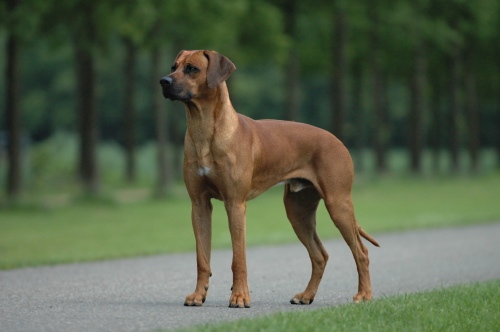
Structure: Single coat (no undercoat in the traditional double-coat sense). The hairs are short, dense, sleek, and slightly coarse to the touch. They lie flat against the body in a uniform direction -- except, of course, along the ridge.
Texture: Firmer than you'd expect from looking at photos. A Ridgeback's coat has a stiffness that provides structure and weather resistance. It's not soft and silky like a Vizsla, and it's not harsh like a terrier. It falls in a sweet spot that sheds water, repels light debris, and offers UV protection.
Density: Despite being a single coat, the hair density is high. The individual hairs grow close together, creating a smooth surface with minimal skin exposure. This density is the coat's primary defense mechanism -- dense enough to block UV rays and insect penetration, thin enough to allow heat dissipation in hot weather.
Here's a surprising fact: the Rhodesian Ridgeback's coat has measurable UV protection. Research on canine coat structure has shown that dense, pigmented coats like the Ridgeback's block over 90% of UV radiation, functioning essentially as biological sunscreen. This is especially relevant for the breed, which was developed in the intense sun of southern Africa.
The Ridge: More Than a Grooming Feature
The ridge is the breed's signature -- a stripe of hair along the spine that grows in the opposite direction from the rest of the coat. It starts just behind the shoulders and runs to the hip area, typically 2-4 inches wide, with two identical crowns (whorls) at the top.
From a grooming perspective, the ridge creates unique considerations:
Junction zones: Where the ridge hair meets the normally growing coat, there's a natural boundary line. Dead hair and debris accumulate along this boundary because the opposing growth directions create a natural trap. Regular brushing along the ridge edges keeps these boundaries clean.
Crown whorls: The two crowns at the top of the ridge are tight spiral growth patterns. Dirt, dander, and dead hair collect in these whorls more readily than on flat-lying coat areas. During professional grooming, these crowns should be cleaned and inspected individually.
Dermoid sinus risk: This is the medical side of the ridge. Dermoid sinuses are congenital tube-like structures that can form along the ridge line, connecting the skin surface to deeper tissues (sometimes to the spinal cord). They're essentially developmental remnants from the same embryonic process that creates the ridge itself.
Not all Ridgebacks have dermoid sinuses, and reputable breeders screen for them at birth. But some are subtle enough to go undetected in puppies and only become apparent later. Professional groomers familiar with the breed check the ridge for small openings, bumps, or drainage that might indicate a previously undetected dermoid sinus.
If your groomer notices anything unusual along the ridge, take it seriously. Dermoid sinuses can become infected and may require surgical correction. The groomer isn't diagnosing -- they're performing early detection that gets you to the vet before a serious infection develops.
Rhodesian Ridgeback Coat Colors
The breed comes in one color family: wheaten. But within "wheaten" there's more variation than you might think:
Light wheaten: Pale gold to cream. Beautiful and distinctive but shows dirt easily. Light wheaten Ridgebacks need slightly more frequent bathing or spot cleaning to maintain a clean appearance.
Wheaten: The classic golden-brown. The most common shade. Moderate maintenance -- shows moderate dirt and staining.
Red wheaten: A deep, rich reddish-gold. Darker and warmer than standard wheaten. This shade tends to hide dirt well and shows less staining from drool or grass.
The breed standard allows a small amount of white on the chest and toes. The nose is black, and the muzzle may have a slight black mask.
Color changes over time: Ridgeback puppies are often slightly darker than their adult color. The coat typically lightens to its adult shade by about 12 months. Senior Ridgebacks may develop gray hairs around the muzzle starting around 7-8 years. Some also experience subtle lightening of the body coat with age.
From a coat care perspective, lighter wheaten Ridgebacks are more prone to sunburn on areas with thin coat coverage -- the belly, inside of the thighs, and the nose bridge. While the coat provides good UV protection where it's dense, these thinner areas are vulnerable during extended sun exposure.
The Rhodesian Ridgeback Shedding Story
Every Ridgeback owner has heard "they don't shed much." And every Ridgeback owner has learned that this is, at best, a relative statement.
Rhodesian Ridgebacks shed year-round at a moderate pace. The hairs are short, stiff, and have a talent for weaving themselves into fabric. They're nearly invisible individually but accumulate into a visible layer on dark clothing and light furniture.
Shedding intensity factors:
- Seasonal transitions: Shedding increases during spring and fall as the coat adjusts to changing temperatures and daylight. The increase is moderate -- nothing like a Husky's blow-out -- but noticeable.
- Climate: Ridgebacks in temperate climates with distinct seasons shed more seasonally than those in consistently warm areas who tend to shed evenly year-round.
- Stress: Like many breeds, Ridgebacks shed more under stress. Veterinary visits, travel, changes in household routine, and anxiety all trigger increased hair loss.
- Nutrition: Diet quality directly impacts shedding. A Ridgeback on a high-quality diet with adequate omega fatty acids sheds less and has a sleeker, healthier coat.
- Hormonal changes: Intact females shed more heavily after heat cycles. Spaying often stabilizes shedding patterns.
What the Rhodesian Ridgeback Coat Tells You About Health
The short, smooth coat makes the Ridgeback a good breed for visual health monitoring -- changes in coat quality are visible quickly because there's nowhere for problems to hide.
Healthy coat signs:
- Smooth, sleek appearance with visible sheen
- Even color distribution
- Hair lies flat and uniform (outside the ridge)
- Skin underneath is smooth, supple, and free of flaking
- Ridge hair grows cleanly with well-defined crowns
- Dull, matte coat: Almost always nutritional or health-related. The Ridgeback coat should gleam. When it doesn't, check diet quality, hydration, and consider a veterinary wellness check. Thyroid issues, which the breed is predisposed to, often present first as coat quality decline.
- Excessive shedding: Beyond normal seasonal variation, sudden heavy shedding suggests allergies, stress, hormonal imbalance, or systemic illness.
- Patchy hair loss: Potential allergic dermatitis, fungal infection (ringworm), follicular dysplasia, or parasitic infestation. Ridgebacks are susceptible to demodex mites, particularly during puppyhood.
- Bumps, redness, or raised patches: Allergic hives, insect bites, or bacterial skin infection. The short coat makes these visible early -- take advantage of that visibility by acting quickly.
- Dry, flaky skin: Dehydration, low environmental humidity, excessive bathing, or omega fatty acid deficiency. The Ridgeback's skin needs moisture, and the short coat doesn't retain environmental humidity the way long coats do.
- Changes along the ridge: Any new lump, drainage, or tenderness along the ridge warrants veterinary examination. While not all ridge changes are dermoid sinuses, any change in this area deserves prompt attention.
Caring for the Rhodesian Ridgeback Coat at Home
Brushing
Ridgeback coat care is wonderfully straightforward:
Frequency: Once or twice a week. Daily during seasonal shedding upticks.
Best tools:
- Rubber curry mitt or grooming glove: The gold standard for Ridgeback grooming. Use in circular motions over the entire body, including along the ridge. The rubber grips and removes dead hair better than any bristle tool on a short coat.
- Bristle brush: Follow the curry mitt with a bristle brush in the direction of hair growth to smooth the coat and distribute natural oils.
- Hound glove (chamois side): For finishing. A quick pass with a hound glove gives the coat that classic Ridgeback gleam.
Brushing takes about 5 minutes. Five minutes, once or twice a week, for a beautiful coat and reduced shedding. That's the Ridgeback grooming advantage.
Bathing
Frequency: Every 6-8 weeks, or as needed.
The Ridgeback's coat has a natural self-cleaning quality. Dried mud often brushes off completely, and the coat doesn't hold odor the way long or dense coats do. Many Ridgeback owners find they bathe less frequently than they expected.
- Use a gentle, pH-balanced dog shampoo. Oatmeal-based is a good choice for the breed's sensitive skin tendencies.
- For Ridgebacks with skin sensitivity, consider a hypoallergenic or medicated formula as recommended by your vet.
- Rinse thoroughly -- short coats trap less shampoo than long coats, but residue still causes irritation.
- Dry completely. A high-velocity dryer works great if your Ridgeback tolerates it. If not, towel drying is usually sufficient for this coat type -- it air-dries quickly because of its length and single-layer structure.
Nutrition for Coat Health
The Ridgeback coat is remarkably responsive to diet:
- Omega-3 and omega-6 fatty acids: Fish oil or salmon oil supplementation produces visible improvement in coat sheen and texture within 3-4 weeks. This is the single most impactful thing you can do for coat quality.
- High-quality protein (minimum 22-28%): Supports healthy hair growth and turnover.
- Zinc: Important for skin cell health. Some Ridgebacks benefit from zinc supplementation, particularly those with chronic skin sensitivity.
- Adequate hydration: The short coat provides less moisture retention than long coats. Well-hydrated dogs have suppler, healthier skin and coat.
- Coconut oil: Applied topically in small amounts, coconut oil can add shine and moisture to the coat. Use sparingly -- a little goes a long way on a short coat.
The Ridgeback Coat and Your Climate
Hot weather (the coat's home turf): The Ridgeback's coat was designed for African heat. Dense pigmentation provides UV protection, and the short, single-layer structure allows heat dissipation. In hot weather, the coat is your dog's friend -- never shave or clip it.
Cold weather: This is where the single coat shows its limitation. Ridgebacks lack the insulating undercoat that keeps northern breeds warm. Below 45 degrees Fahrenheit, most Ridgebacks appreciate a dog coat or sweater for extended outdoor time. Below freezing, outdoor time should be limited and a warm coat is essential.
Humidity: The coat handles dry heat well but can struggle in high humidity. Humid conditions increase the risk of skin infections and hot spots. More frequent bathing with antifungal shampoo may be needed in consistently humid climates.
Swimming: Ridgebacks' coats dry faster than most breeds due to the short, single-layer structure. Still, towel dry after swimming and check skin folds for trapped moisture.
Your Rhodesian Ridgeback's coat is a masterclass in functional design -- evolved for a demanding environment and still performing beautifully in domestic life. The ridge makes it unique, the sleek texture makes it stunning, and the minimal maintenance makes it practical. Give it consistent basic care, feed it properly from the inside, and it will reward you with that head-turning Ridgeback gleam that makes strangers stop and stare.
---
Ready to streamline your grooming workflow? PawOps Board Manager helps salons track every Rhodesian Ridgeback from check-in to pickup with real-time visibility. Start your free 30-day trial →