Understanding Your Scottish Deerhound's Coat: What Every Owner Should Know
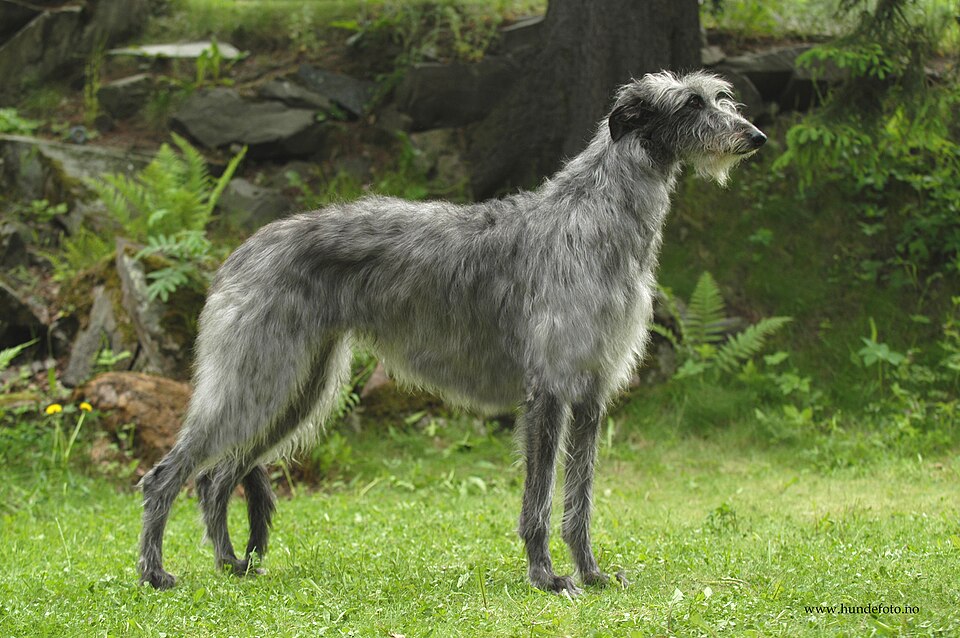
The Scottish Deerhound's coat is Highland armor. Developed over centuries to protect a large sighthound running full speed through bracken, rain, and freezing wind in pursuit of red deer, every aspect of this coat serves a specific function. Understanding it helps you maintain it -- and appreciate the engineering that went into creating one of the world's most majestic dog breeds.
Coat Architecture
The Scottish Deerhound's coat has distinct zones, each with different texture and function:
Body coat: The primary coverage. Harsh, wiry, ragged-looking, 3-4 inches long. Should feel like coarse wire mesh when you press into it. This is the weather armor -- rain, wind, cold, and thorns all encounter this layer first.
Mane/neck area: Slightly longer and denser than body coat. Provides additional protection for the throat and upper chest during pursuit through brush.
Belly and chest coat: Softer, less dense, slightly shorter. These areas were less exposed during running (sheltered by the body) and have correspondingly less armor.
Leg furnishings: Long, wiry hair on the backs of forelegs and thighs. Adds wind protection to the limbs during speed running.
Face: Softer hair forming slight beard, mustache, and eyebrows. Protects the face during terrain navigation while maintaining clear sightlines.
Tail: Long, tapering, covered in wiry hair. Carried low -- a rudder and balance tool that receives ground-level protection.
Ears: Short, smooth hair (often compared to "mouse ears"). The soft, folded ears themselves don't need the same protection as the body.
The breed standard notes that the coat should never appear "woolly" -- a woolly coat absorbs water rather than shedding it, defeating the entire purpose.
The Wire Texture: What It Does
The harsh, wiry texture isn't aesthetic preference -- it's engineering:
Water management: Wiry hair has a larger surface-area-to-diameter ratio than smooth hair, but the stiff structure prevents water from penetrating to skin. Rain runs off a properly textured Deerhound coat like water off a wire brush.
Debris resistance: Twigs, burrs, and seeds that would embed in soft coat get caught on the surface of wiry coat and can be shaken or brushed out. The coat traps debris at the surface rather than next to the skin.
Thermal regulation: The 3-4 inch wire coat creates an air pocket between the elements and the dog's skin. This trapped air provides insulation that can be as effective as the dense undercoat of other breeds.
Physical protection: The harsh hairs act like tiny springs -- they absorb and distribute impact from thorns, rocks, and ground contact during the dog's crouching, lunging hunting style.
Historical records from the Scottish Highlands show Deerhounds working in conditions that would disable smooth-coated dogs within hours. The coat made that possible.
Undercoat: Subtle but Present
Scottish Deerhounds have a lighter undercoat than you might expect for a cold-weather breed. It's:
- Present but not dense (unlike a Husky or Newfoundland)
- Softer than the outer coat
- Most concentrated along the back and sides
- Thinner on the belly and legs
- Seasonal -- thickens slightly in winter, thins in summer
Color and Coat Care
Scottish Deerhounds come in several colors:
Dark blue-gray: The most traditional and preferred color. The "blue" is actually a steel gray produced by individual hairs with dark tips over lighter bases.
Brindle: Tiger-striped pattern. Various shades from dark to light.
Gray/silver: Lighter overall. Sometimes called "silver brindle" when faint striping is present.
Fawn/sandy: Warm, lighter color. Less common.
Yellow/red: Rare but acceptable.
Color maintenance considerations:
- Dark colors hide dirt better but show dandruff more
- Brindle patterns require correct stripping to maintain the distinct color layering
- Lighter colors stain more easily (urine, food, environmental)
- All colors dull when the coat is overdue for stripping (dead hair lacks vibrancy)
Growth Cycle and Maintenance Timing
Deerhound coat grows in a predictable cycle:
Weeks 1-4 post-strip: New coat emerges. Short, slightly softer than mature coat. The dog looks somewhat bare but new growth fills in quickly on this large body.
Weeks 4-8: Coat reaches mid-length. Texture develops -- progressively harsher as hairs mature. This is the comfortable sweet spot.
Weeks 8-12: Full working length achieved. Coat functions optimally for weather protection. Texture at its harshest and most water-resistant.
Weeks 12-16: Coat is blown. Dead hairs sit loose, coat starts to look untidy and ragged (beyond the breed's normal "dignified dishevelment"). Texture softens at tips.
Beyond 16 weeks: Actively problematic. Dead coat mats against new growth, traps moisture, and the dog becomes uncomfortable.
Home Maintenance Between Professional Visits
For a Scottish Deerhound, home maintenance is non-negotiable between professional sessions:
3x weekly (20-30 minutes each session):
- Work through the entire body with a pin brush or slicker brush
- Pay special attention to: behind ears, armpits, groin, between back legs
- Comb through all furnishings (legs, chest, beard)
- Remove any visible debris (twigs, burrs, leaves)
- Feel for mats forming and tease apart with fingers before they tighten
- Thorough skin inspection (part coat in multiple locations)
- Ear cleaning and inspection
- Check tail for tangles or matting near the base
- Inspect paws -- between toes, pad condition
- Assess coat condition -- is it approaching blown stage?
- Full mat check of all problem areas
- Nail assessment (between trims)
- Overall coat evaluation -- texture, density, any thinning
- Teeth/gum check
Common Coat Issues
Matting: The most frequent problem. Prevented by regular brushing, especially in soft-coat zones. Severe matting requires professional de-matting or, in extreme cases, clipping out (which damages coat texture locally).
Coat softening: Usually from skipped stripping sessions. The dead coat weighs down new growth and prevents proper texture development. Regular stripping prevents this.
Uneven growth: Sometimes one area grows faster or thicker than others. A professional groomer can evaluate whether this is normal variation or indicates a skin/health issue.
Winter dry coat: Highland weather notwithstanding, indoor heating can dry out the coat. A light coat oil (jojoba or coconut) applied sparingly helps in dry climates.
Hot spots: Can develop under mats in warm weather. The trapped moisture + matting + warmth = bacterial growth. Prevention is entirely about regular brushing and mat removal.
Products for Deerhound Coats
Shampoo: Texturizing or coat-hardening formulas. Never softening products. The coat should remain harsh after bathing.
Conditioner: Use only on furnishings that tangle -- never on the wiry body coat. A light detangling spray for leg furnishings is acceptable.
Coat spray: Before brushing, a light mist of detangling spray prevents breakage. Work through the coat section by section.
Oil: Very sparingly in dry conditions. Jojoba or light coconut oil on fingertips, rubbed through the coat. Too much makes the coat lank and attracts dirt.
The Deerhound Coat Through Seasons
Scottish Highland reality: This breed was designed for a climate with 60+ inches of annual rainfall, temperatures from -5C to 20C, and near-constant wind. The coat performs optimally in these conditions.
In warmer/drier climates: The coat may not achieve the same density. The dog produces less coat because less protection is needed. This is normal adaptation, not a problem.
In air-conditioned homes: The coat may become slightly drier than in natural environments. Regular outdoor time and appropriate humidity levels help maintain coat health.
Your Scottish Deerhound's coat is a masterpiece of natural engineering -- created for one of the most demanding environments on Earth. Maintain it with respect for its function, and your Deerhound will carry their Highland armor with the dignity the breed has shown for centuries.
---
Ready to streamline your grooming workflow? PawOps Board Manager helps salons track every Scottish Deerhound from check-in to pickup with real-time visibility. Start your free 30-day trial →