Understanding Your Sealyham Terrier's Coat: What Every Owner Should Know
Understanding Your Sealyham Terrier's Coat: What Every Owner Should Know
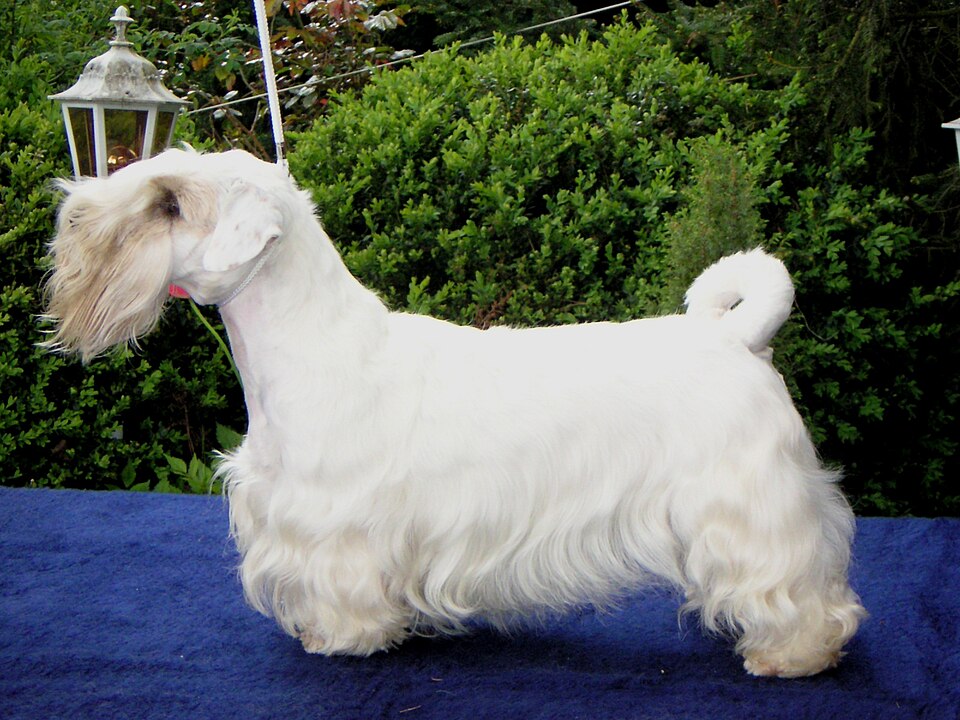
The Sealyham Terrier's coat is one of the most eye-catching in the terrier world -- a brilliant white wire coat that once made this breed a favorite of Hollywood stars and British royalty. Elizabeth Taylor, Humphrey Bogart, Alfred Hitchcock, and the British Royal Family all owned Sealyhams, drawn in part by that striking white presentation. Today, the breed is rare, but the coat remains just as demanding and just as rewarding as it was in the Sealyham's heyday.
Coat Structure
Sealyham Terriers have a classic wire-coated terrier double coat, but in white -- which changes everything about how you care for it.
The Outer Coat
The outer coat is hard, dense, and wiry. It lies close to the body and provides weather resistance, dirt repulsion, and physical protection. Like all wire coats, the dead outer hairs remain in the follicle rather than shedding, requiring manual removal through stripping or clipping.
The texture should feel distinctly coarse and springy. A properly maintained Sealyham coat has a crisp, clean feel that is nothing like the soft coats of companion breeds.
The Undercoat
The undercoat is soft, dense, and weather-resistant -- designed for a breed that was developed to hunt badgers in the Welsh countryside. It provides insulation and adds fullness to the coat. The undercoat sheds lightly, particularly during seasonal transitions, but the amount is modest.
The White Factor
Here is what makes the Sealyham different from every other wire-coated terrier: it is white. And white changes everything.
White wire hair is structurally identical to colored wire hair, but it is chromatically unforgiving. Every stain, every bit of dirt, every environmental discoloration shows immediately and obviously. A dark-coated terrier can go two weeks without a bath and look presentable. A Sealyham going two weeks without attention looks dingy.
The white also means that coat health indicators like yellowing, reddening, and discoloration can signal both grooming issues and health issues. A good groomer learns to read a Sealyham's white coat the way a doctor reads vital signs.
Colors and Markings
While predominantly white, Sealyhams often have markings on the head and ears:
- Lemon -- a pale yellow-gold
- Brown -- ranging from tan to deep brown
- Blue -- a blue-gray tone
- Badger -- a mix of dark and light hairs creating a grizzled effect
An interesting color note: Sealyham puppies may be born with more extensive body markings that fade as the adult coat comes in. It is common for body spots present at 8 weeks to disappear entirely by 12 months.
The Staining Problem
Let us talk specifically about staining because it is the defining maintenance challenge of owning a white-coated breed.
Types of Staining
- Saliva staining -- porphyrins in saliva leave reddish-brown marks, most visible on the beard and around the mouth
- Tear staining -- the same porphyrins create reddish tracks below the eyes
- Urine staining -- yellowing on the belly, rear legs, and feet from contact with urine
- Food staining -- pigments from wet food or treats discolor the beard
- Grass staining -- green-brown marks on feet and belly from outdoor activity
- Mineral staining -- iron and other minerals in drinking water can yellow the beard over time
Managing Stains
Stain management is an ongoing process, not a one-time fix:
- Beard: Wipe after every meal and water session. Use a damp cloth, not just a dry wipe. Clean food and water from the facial hair before it has a chance to set.
- Eyes: Wipe tear tracks daily with a damp cotton ball. Commercial tear stain removers can help for stubborn staining.
- Belly and legs: Rinse or wipe after outdoor activity, especially on wet grass. Dry thoroughly afterward.
- Water source: Filtered water or a stainless steel bowl can reduce mineral-based staining.
Coat Care Through the Seasons
Spring
The undercoat loosens as temperatures warm. This is the best time for thorough undercoat removal. Spring rains and muddy ground mean more belly and leg cleaning.
Summer
Grass staining peaks. The coat may appear slightly creamy due to sun exposure and outdoor activity. Increase belly rinsing frequency. The wire coat provides some UV protection for the skin.
Fall
Undercoat begins thickening. Leaf debris catches in the furnishings. A good time for a full stripping session before the winter coat grows in.
Winter
The coat is at its densest and whitest -- cold weather reduces many staining sources. However, salt and ice-melt chemicals on sidewalks can cause paw irritation and belly discoloration. Rinse paws and belly after winter walks.
Something Most Sealyham Owners Discover
Here is a fact that changes how many Sealyham owners think about their dog's coat: a properly stripped wire coat is actually easier to keep white than a clipped one. The hard, correctly textured wire hairs repel dirt and do not absorb staining agents as readily as softer, clipped hair. Breeders consistently report that hand-stripped Sealyhams stay cleaner between baths than clipped ones.
This seems counterintuitive -- you would think the grooming method would not affect staining. But it makes sense when you consider the hair structure. Wire hairs have a tighter, harder cuticle that liquids bead on rather than absorb into. Clipped hair, with its softer texture and cut end, wicks moisture and staining agents more readily.
If keeping your Sealyham brilliantly white matters to you, this is one more argument for incorporating hand-stripping into your grooming routine.
Home Care Toolkit
- Slicker brush -- body and furnishing maintenance
- Steel comb -- checking for mats in white furnishings
- Whitening shampoo -- for spot-treatments between grooms
- Tear stain remover -- for daily eye area maintenance
- Pet wipes -- for quick beard and belly clean-ups
- Stainless steel water bowl -- reduces mineral staining
- Detangling spray -- for furnishing brushing
- Undercoat rake -- seasonal undercoat removal
When Staining Signals a Health Issue
Not all staining is cosmetic. See your vet if:
- Tear staining suddenly increases (may indicate blocked tear ducts or eye irritation)
- Red-brown staining appears on the paws from licking (often signals allergies)
- Yellowing is accompanied by skin changes (may indicate yeast infection)
- Staining does not respond to normal cleaning (may indicate internal health issues)