Why Your Tibetan Mastiff Needs Professional Grooming (That Mane Will Not Manage Itself)
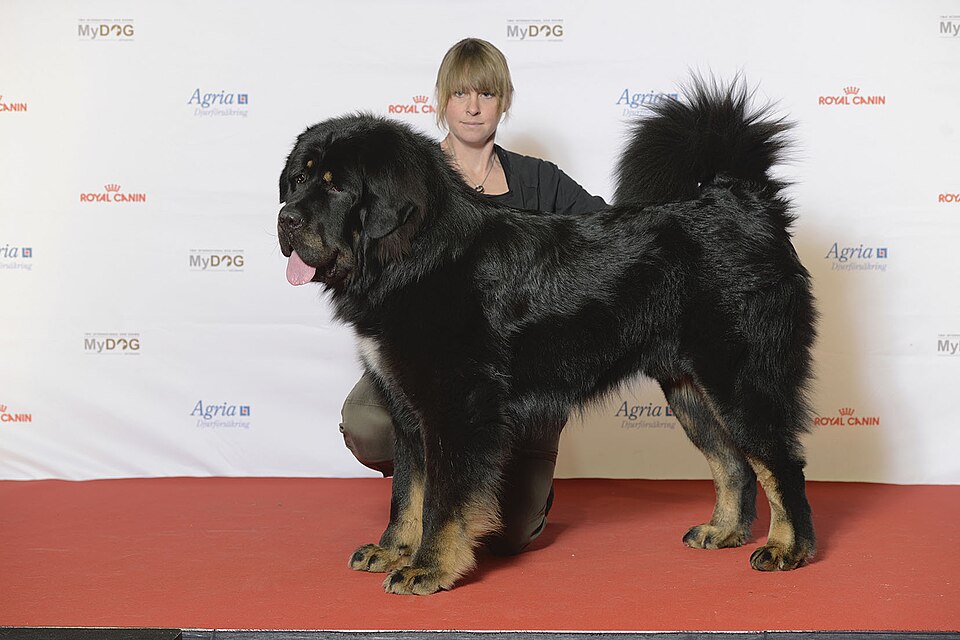
Why Your Tibetan Mastiff Needs Professional Grooming (That Mane Will Not Manage Itself)
The Tibetan Mastiff is not your average large breed. This is an ancient guardian dog whose coat evolved to handle Himalayan winters at altitudes above 15,000 feet. That massive double coat with its lion-like mane is one of the most impressive -- and most demanding -- coats in the entire dog world. Professional grooming is not optional for this breed. It is a fundamental part of responsible ownership.
Understanding What You Are Working With
The Tibetan Mastiff has a heavy double coat that varies somewhat by climate but is consistently substantial. The outer coat is long, thick, and straight with a hard texture that repels dirt and moisture. The undercoat is dense, soft, and woolly -- the insulation layer that protected these dogs from subzero Himalayan temperatures.
Then there is the mane. Male Tibetan Mastiffs (and some females) develop a thick ruff of longer fur around the neck and shoulders that gives them their signature lion-like appearance. This mane hair is thicker and coarser than the body coat and grows in a pattern that naturally traps debris, tangles, and dead undercoat.
According to the American Kennel Club breed standard, the Tibetan Mastiff's coat should be "heavy, rather long, thick" with a heavy undercoat that may become less dense in warmer months. What the breed standard does not tell you is how much work that coat requires to maintain.
What Professional Grooming Actually Does for a Tibetan Mastiff
Undercoat Management
This is the single biggest grooming need. The Tibetan Mastiff's undercoat is extraordinarily dense. When it sheds -- and it sheds dramatically, usually once a year in a massive "blowing coat" event -- the dead undercoat does not just fall out. It loosens from the skin but stays trapped under the outer coat, creating a compressed layer of dead fur that holds heat, traps moisture, and prevents air from reaching the skin.
A professional groomer with high-velocity drying equipment and proper undercoat removal tools can extract this dead coat safely and thoroughly. This single service can take one to three hours depending on how much coat the dog is carrying. It is not something a slicker brush at home can accomplish.
Mat Prevention and Removal
Tibetan Mastiff mats form in predictable locations -- behind the ears, in the mane, in the feathering on the legs and tail, and around the hindquarters. These mats start small and tighten over time, pulling on the skin and creating discomfort. In the mane area especially, mats can grow large enough to form solid plates of felted fur.
Professional groomers catch mats early and remove them without damaging the coat or skin. They also know which tools to use on a Tibetan Mastiff -- aggressive dematting on this coat type can damage the texture of the outer coat, which takes months to grow back correctly.
Skin Health Assessment
Under all that coat, skin problems can hide for weeks. Hot spots, fungal infections, and parasites all thrive beneath a heavy double coat. A groomer who lifts and parts the coat systematically can spot issues that you would never find by running your hands over the dog at home.
Sanitary Trimming
The fur around the Tibetan Mastiff's rear end, paw pads, and ears benefits from careful trimming. This is not about aesthetics -- it is about hygiene. Long fur in these areas collects waste, moisture, and debris.
Nail Care
Tibetan Mastiffs are large dogs (80 to 150 pounds) with strong, thick nails. Overgrown nails on a dog this size affect gait and stress joints. Many owners find nail trimming at home challenging simply because the dog is powerful enough to refuse.
The Annual Blowout: Why This Matters
Tibetan Mastiffs do not shed like most double-coated breeds. Instead of year-round moderate shedding with seasonal peaks, most Tibetan Mastiffs have one enormous coat blow per year, typically in late spring or early summer. During this period, the entire undercoat loosens and comes out over a period of two to six weeks.
This is when professional grooming is most critical. The volume of dead undercoat is staggering. Owners who try to manage the blowout at home with a brush report spending hours per day and still feeling like they are losing the battle. A professional deshedding session at the start of the blowout -- and often a follow-up two to three weeks later -- removes the dead coat efficiently and prevents it from matting into the outer coat.
Here is a surprising fact: some Tibetan Mastiffs in consistently warm climates never develop the full dense undercoat that their cold-climate counterparts carry. The breed has an unusual capacity to adapt its coat density to the environment over time. If your TM lives in Texas, their coat may be notably lighter than one living in Colorado. But even the lighter version needs professional management during the annual shed.
What Happens When You Skip the Groomer
The consequences for a neglected Tibetan Mastiff coat are serious:
- Matting becomes structural. Mats grow together into large plates that cover significant areas of the body. Removing them requires shaving, which exposes skin that has not seen sunlight or airflow in months.
- Skin infections develop unseen. Trapped moisture and debris under matted fur create bacterial and fungal infection conditions. By the time you smell the problem, it has been developing for weeks.
- Heat stress increases. A compacted, dead undercoat acts as insulation the dog cannot remove. In warm weather, this is dangerous for a breed already adapted to cold.
- Pain becomes constant. Tight mats pull on the skin with every movement. A severely matted Tibetan Mastiff is a dog in chronic, low-grade pain.
How Often Should a Tibetan Mastiff See a Groomer
| Season | Frequency | Focus | |--------|-----------|-------| | Non-shedding months | Every 6-8 weeks | Maintenance brush-out, mat check, nails, ears | | During coat blow (spring/summer) | Every 2-3 weeks | Intensive undercoat removal, full deshedding | | After coat blow | Once | Final cleanup, coat assessment |
Between appointments, plan on brushing your Tibetan Mastiff thoroughly two to three times per week, increasing to daily during the coat blow.
Choosing the Right Groomer
This breed requires a groomer who:
- Has experience with heavy double-coated breeds (Newfoundlands, Great Pyrenees, Chow Chows)
- Understands the difference between undercoat removal and coat stripping
- Has high-velocity drying equipment rated for large, heavy-coated dogs
- Will not shave the coat unless absolutely necessary for mat removal (shaving damages the Tibetan Mastiff's coat texture and it may not grow back correctly)
- Has the time -- a proper TM groom is not a 45-minute appointment
PawOps helps grooming salons assess and price heavy-coated giant breeds using condition scoring that accounts for coat density, mat severity, and the extra time these magnificent dogs require.