Understanding Your Whippet's Coat: What Every Owner Should Know
Understanding Your Whippet's Coat: What Every Owner Should Know
The Whippet coat is about as straightforward as dog coats get -- until you start living with one and realize that "simple" and "no maintenance" are very different things. That smooth, athletic exterior comes with real characteristics that affect how you care for your dog day to day. Here is what you need to know.
What the Whippet Coat Is Made Of
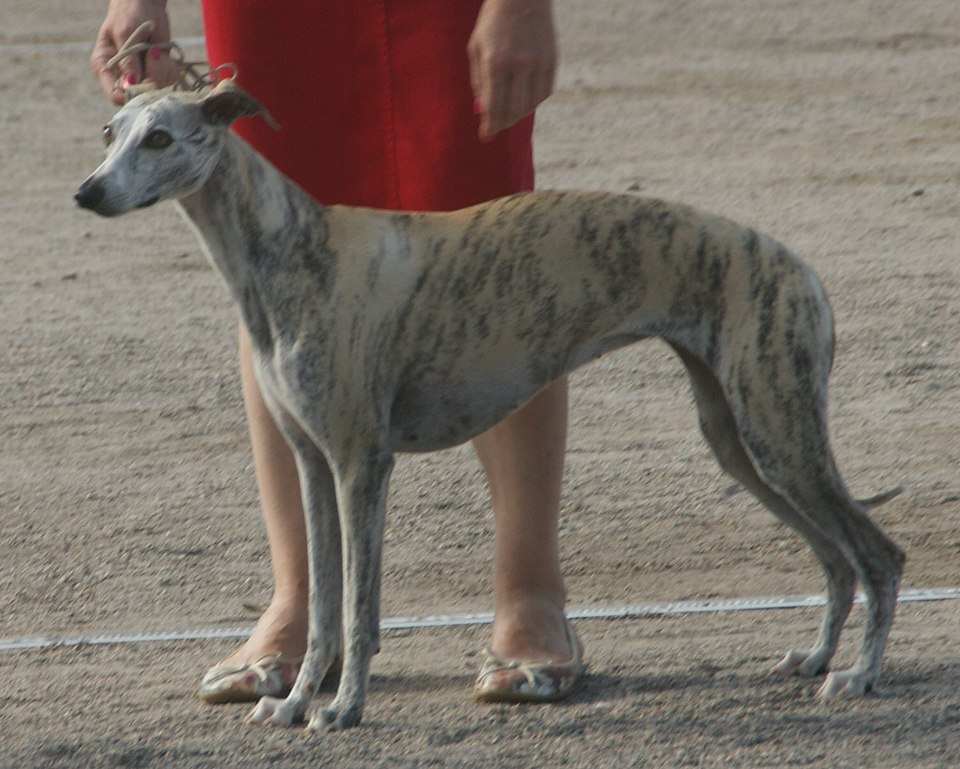
The Whippet has a short, smooth, single-layer coat that lies close to the body. There is no undercoat. The individual hairs are fine, straight, and dense enough to provide some coverage but thin enough that you can easily see the skin underneath, especially on the belly and inner thighs.
Coat length is consistent across the body with slightly longer hair on the back of the thighs and underside of the tail in some individuals. The texture is smooth and firm to the touch -- sighthound people sometimes describe it as feeling like warm velvet over muscle.
For comparison:
- A Labrador has a short double coat with a dense, insulating undercoat
- A Whippet has a short single coat with no undercoat whatsoever
- A Doberman has a similar single-layer coat but with slightly coarser, thicker hair
Shedding: Light But Constant
Let us address the shedding question directly. Whippets shed. Not dramatically, not seasonally, not in clumps -- but they do shed.
The shedding pattern is a slow, continuous replacement cycle. Individual hairs reach the end of their growth phase, fall out, and are replaced by new ones. This happens year-round with no significant seasonal increase. You will find fine, short hairs on clothing, furniture, and bedding, but the volume is manageable.
A weekly session with a rubber grooming mitt or soft bristle brush removes loose hair effectively and takes about five minutes. It also distributes natural skin oils, which benefits that thin coat.
One thing to know: Whippet hairs are fine enough that they can embed in fabric rather than sitting on top of it. A lint roller is your friend, and you might find that smooth-weave fabrics release Whippet hair more easily than textured ones.
The Skin Story
Because the coat is more of a suggestion than a barrier, the skin does most of the work of protecting your Whippet from the outside world. And Whippet skin has some specific traits you should understand.
Thin and Vulnerable
Whippet skin is noticeably thinner than many breeds. You can often see veins through the skin on the belly and inner legs. This thinness makes the skin more susceptible to:
- Cuts and scrapes from running through brush, rough play, or catching on objects
- Bruising from impacts that thicker-skinned breeds barely notice
- Tearing under stress (though this is uncommon in normal conditions)
Minimal Fat Layer
Whippets carry very little subcutaneous fat. The typical body fat percentage for a Whippet in athletic condition is significantly lower than most breeds. This means the skin sits close to muscle and bone with minimal cushioning. The result is bony prominences -- elbows, hips, spine, chest -- that develop calluses from contact with hard surfaces.
Sensitive to Products
With thin skin and minimal coat buffering, Whippets can react to grooming products, household chemicals, and even certain fabrics more readily than thick-coated breeds. Stick with gentle, fragrance-free products and watch for signs of irritation after exposure to new substances.
Whippet Coat Colors and Patterns
Whippets come in virtually every color and pattern combination, which is part of what makes the breed visually stunning. The main categories:
- Solid colors: Black, blue, fawn, red, cream, white
- Brindle: Tiger-stripe pattern in various color combinations. One of the most common and visually striking Whippet coat patterns.
- Parti-color: White combined with any other color in patches
- Sable: Fawn or red with black-tipped hairs
- Blue and dilute colors: Gray-blue tones created by the dilution gene
Temperature Regulation: The Big Issue
This is where the Whippet coat has its most significant real-world impact on daily life.
Whippets are, to put it plainly, terrible at staying warm. The combination of a single-layer coat, minimal body fat, and a lean build with high surface-area-to-mass ratio means they lose body heat rapidly.
Here is a data point that illustrates it: a study published in the Journal of Veterinary Internal Medicine found that sighthound breeds consistently demonstrate lower resting body temperatures and faster heat loss in cool environments compared to mesomorphic breeds of similar weight. The Whippet's coat is a major contributor.
What this means practically:
- Whippets shiver. Not because they are anxious (though they can be), but because they are genuinely cold. Indoor temperatures below 68 degrees Fahrenheit can make some Whippets uncomfortable.
- Dog clothing is functional. Sweaters, fleece jackets, and coats are not costumes for a Whippet. Use our free pricing calculator → They are temperature regulation tools. Many Whippet owners keep a wardrobe of layers.
- Outdoor time in cold weather needs management. Short potty trips are fine. Extended outdoor time below 45 degrees Fahrenheit requires insulating clothing.
- Rain is miserable. The coat offers zero water resistance. A wet Whippet is a cold Whippet. Waterproof jackets earn their purchase price.
Seasonal Coat Care
Winter:
- Increase skin moisturizing. Heated indoor air dries Whippet skin quickly.
- Use layered clothing outdoors and consider a sweater for indoors if your home runs cool.
- Check paws after walks for salt, ice, and cracking.
- Watch for dry, flaky skin and adjust bathing products if needed.
- Light-skinned and white-coated Whippets can sunburn. Use dog-safe sunscreen on exposed areas during extended outdoor time.
- The lean build actually helps with heat -- Whippets cool more efficiently than heavy-coated breeds. But they can still overheat during intense exercise.
- Provide shade and water during outdoor activities.
- Check for insect bites after outdoor time. The thin coat offers minimal protection.
- Shedding remains consistent -- no seasonal blowouts to worry about.
- Temperature swings may require adjusting clothing. Keep a light jacket and a heavier one accessible.
A Surprising Coat Fact
Here is something that fascinates sighthound enthusiasts: the Whippet's smooth coat actually serves an aerodynamic function. Wind tunnel studies on sighthound body types have demonstrated that a tight, short coat produces measurably less drag than a longer or rougher coat at the speeds these dogs can achieve. A Whippet running at 35 miles per hour -- their documented top speed -- benefits from every fraction of reduced resistance. The coat is not just short because of genetics. It is short because the breed was selectively bred for centuries to run, and less coat means faster dogs. Your Whippet's smooth exterior is a performance feature, not an accident.
Home Coat and Skin Care Essentials
Your Whippet care toolkit:
- Rubber grooming mitt or soft bristle brush: Weekly use removes loose hair and stimulates skin
- Gentle, moisturizing dog shampoo: Supports thin, dry-prone skin
- Light leave-in conditioner or skin oil: For dry patches and winter months
- Dog-safe sunscreen: For light-skinned individuals
- Quality nail grinder: Between-visit nail maintenance
- Several dog coats and sweaters: Multiple weights for different temperatures
- Padded bedding: Prevents calluses on bony points
Reading Your Whippet's Coat
Because the coat is short and the body is lean, changes in coat quality are immediately visible on a Whippet:
- Glossy and smooth = healthy dog, good nutrition, proper skin care
- Dull or rough-feeling = possible nutritional issue, skin dryness, or underlying health concern
- Patchy thinning = potential CDA, allergic reaction, or hormonal issue
- Flaking or dandruff = dry skin, possibly from environment or product sensitivity
- Excessive shedding = stress, dietary change, or health issue worth investigating
PawOps helps grooming salons assess every breed based on actual needs -- so your Whippet gets condition-based care focused on skin health and wellness, not a generic short-coat treatment that misses what matters.