Understanding Your Wirehaired Pointing Griffon's Coat: What Every Owner Should Know
Understanding Your Wirehaired Pointing Griffon's Coat: What Every Owner Should Know
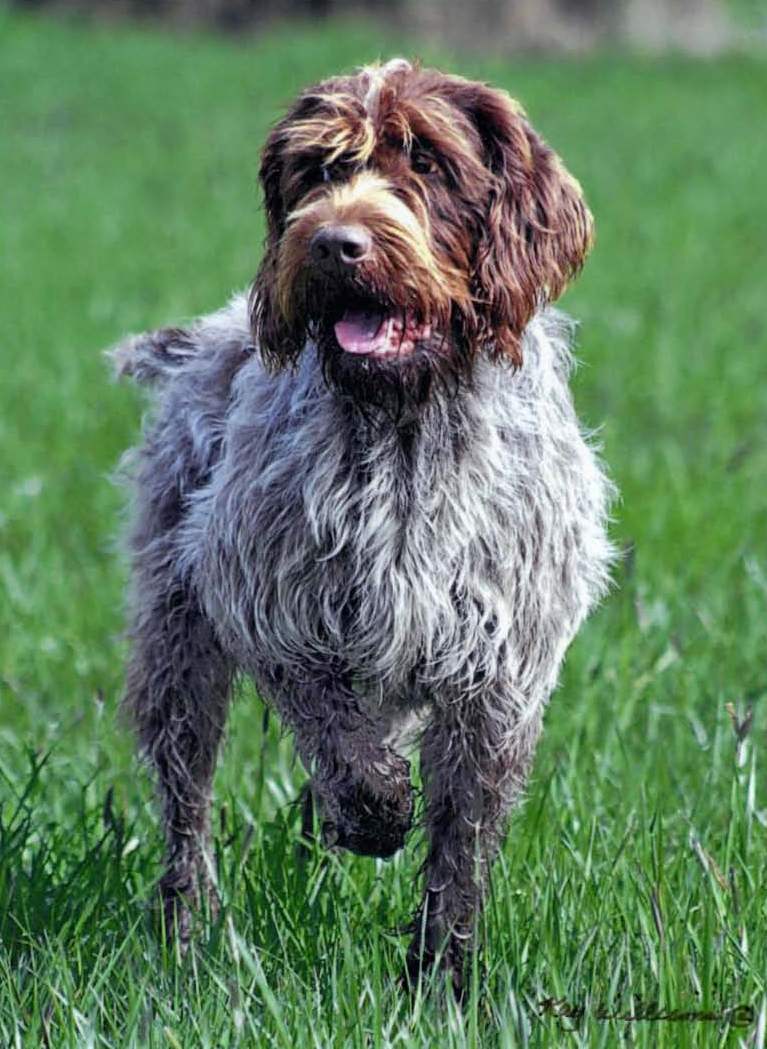
The Wirehaired Pointing Griffon carries a coat that is, by design, the perfect field jacket. Harsh, water-resistant, self-cleaning, and protective -- it is everything a versatile hunting dog needs. Understanding how this coat works at the structural level helps you make informed decisions about its care.
The Two-Layer System
The Griff coat is a true double coat with two functionally distinct layers:
The Outer Coat (Guard Hairs)
Texture: Harsh, straight to slightly wavy, and wiry. Should feel like coarse steel wool or bristle when you run your hand against the growth direction. If it feels soft, something is wrong.
Length: Typically 1.5-2 inches on the body. Slightly longer on the legs and belly.
Function: The primary protective layer. These harsh hairs:
- Deflect thorns and brush (hairs are too stiff to catch on vegetation)
- Shed water rapidly (the wiry texture prevents absorption)
- Resist tangling (unlike soft hair, wire hairs do not interlock)
- Provide camouflage in the field
Growth cycle: Wire guard hairs grow to a set length and then die. Unlike continuously growing hair (Poodles), each wire hair reaches its terminal length and stops. Dead hairs remain loosely in the follicle until stripped out, at which point a new wire hair begins growing.
The Undercoat
Texture: Soft, downy, dense. Feels like lightweight fleece.
Density: Thick enough to insulate in cold water but not so thick as to overheat in warm weather. The density varies seasonally.
Function: Insulation layer that:
- Traps air close to the body for warmth
- Adds water resistance (the density repels water penetration)
- Provides cushioning against impact from heavy brush
Facial Furnishings
The Griff's distinctive expression comes from prominent furnishings:
Eyebrows: Thick, wiry hairs that arch over the eyes. Functionally, they shield the eyes from brush and rain. Aesthetically, they give the breed its thoughtful, intelligent expression.
Beard: Full, wiry mustache and beard covering the muzzle. Originally functional -- protecting the face while pushing through brush. Now also a breed hallmark.
Texture: Slightly softer than body coat but still wiry. Should never be silky.
How Wire Texture Works (And Why It Matters)
The "wire" in wirehaired is not just a description -- it is a structural characteristic of each individual hair:
Hair shaft structure: Wire hairs have a thicker medulla (inner core) and a flatter cross-section compared to round soft hairs. This gives them rigidity and resilience -- they spring back after being bent rather than staying creased.
Follicle angle: Wire hairs grow at a more upright angle from the skin than soft hairs. This is what creates the slightly "stand-off" appearance and why the coat does not lie flat like a Labrador's.
Why clipping destroys texture: When you clip a wire hair, you cut through the thick shaft at a random point. The hair that regrows from that cut point is thinner at the tip -- it no longer has the proper tapered, rigid structure. The undercoat hairs, which grow faster than wire hairs, push through the cut guard hairs. After 2-3 clip cycles, the undercoat dominates the surface, creating a soft, cotton-like texture that is functionally useless.
Why hand-stripping preserves texture: Pulling a dead wire hair removes it at the root. The follicle then produces a brand-new hair with proper structure from base to tip. Every stripped hair is replaced by a correct wire hair. This is why breed purists insist on hand-stripping -- it is the only method that maintains the coat's engineered properties.
Seasonal Changes
The Griff coat adapts to seasons:
Winter: Undercoat thickens significantly, adding insulation. Guard hairs maintain their length. The coat appears denser and fuller.
Spring: Undercoat begins shedding (can be dramatic for 2-4 weeks). Guard hairs that have reached the end of their cycle loosen. This is the ideal time for hand-stripping.
Summer: Minimal undercoat. Guard hairs provide sun protection and brush resistance without overheating. The coat appears thinner and lies closer.
Fall: Undercoat begins regenerating. Some dead summer guard hairs loosen. A second good window for hand-stripping before winter coat comes in.
Shedding Reality
Griffs are moderate shedders with specific patterns:
- Daily: Light undercoat shedding (a few wispy hairs, not tumbleweeds)
- Seasonal: Moderate undercoat blow in spring/fall lasting 2-4 weeks
- Guard hair shedding: Minimal if hand-stripped regularly. Without stripping, dead guard hairs accumulate and eventually fall out in clumps
- Overall rating: 4-5 on a 10-point scale (less than a Lab, more than a Poodle)
The Self-Cleaning Advantage
One of the Griff's best coat features: it is largely self-cleaning.
How it works: The wire texture and natural oil coating cause dirt and debris to dry and fall off the coat rather than embedding. Mud that would cling to a Golden Retriever's feathering dries and crumbles off a Griff's wire coat.
Practical benefit: Griffs need fewer baths than most sporting breeds. Over-bathing strips the natural oils that enable self-cleaning. Most Griff owners bath only when the dog is truly dirty or smelly -- perhaps monthly in hunting season, every 2-3 months otherwise.
Home Maintenance Between Professional Sessions
Weekly (10-15 minutes):
- Run a natural bristle brush through the coat (not a slicker brush on the body)
- Check ears for debris or odor
- Comb through beard and eyebrows
- Check between paw pads for foxtails or debris
- Run hands through the coat checking for burrs or embedded seeds
- Most debris will have already fallen off (the wire texture's best feature)
- Check ears especially after water work
- More thorough dead coat removal during spring/fall transitions
- Can use a stripping knife or stripping stone for basic dead coat pulling between professional visits
Common Coat Problems and Solutions
| Problem | Cause | Solution | |---------|-------|----------| | Coat becoming soft | Clipping instead of stripping | Stop clipping, begin hand-stripping cycle | | Patchy appearance | Inconsistent stripping or hormonal | Strip evenly, check thyroid if persistent | | Excessive matting | Neglected undercoat or wrong products | Professional undercoat removal, avoid conditioners on body | | Beard discoloration | Minerals in drinking water | Stainless steel bowls, wipe after drinking | | Skin visible through coat | Over-stripping or follicular issue | Allow recovery time, see vet if persistent |
What Your Griff's Coat Tells You
- Harsh and springy: Healthy, well-maintained
- Dull and lying flat: Dead coat accumulation, needs stripping
- Soft throughout: Has been clipped or has a genetic coat issue
- Uneven texture: Inconsistent maintenance or mixed growth stages
- Excessive oil: Could be seborrhea; normal level is barely perceptible
- Dry and brittle: Nutritional deficiency or over-bathing
Nutrition and Coat Quality
The Griff's wire coat responds directly to nutrition:
- Omega-3 fatty acids: Support skin health beneath the dense coat
- Biotin: Supports proper keratin production for wire texture
- Zinc: Essential for hair follicle function and coat color
- Protein quality: Wire hairs have higher keratin content; quality protein supports proper texture
Respect the Engineering
The Wirehaired Pointing Griffon's coat represents over a century of selective breeding by Eduard Korthals and those who followed. Every characteristic -- the harshness, the density, the furnishings, the seasonal adaptation -- exists because it made dogs better at their work.
When you maintain this coat properly through hand-stripping and appropriate care, you are preserving functional design. When you clip it or neglect it, you are undoing generations of purposeful breeding. The coat is not decoration -- it is equipment. Treat it accordingly.
---
Ready to streamline your grooming workflow? PawOps Board Manager helps salons track every Wirehaired Pointing Griffon from check-in to pickup with real-time visibility. Start your free 30-day trial →
Related Reading: