Understanding Your Wirehaired Vizsla's Coat: What Every Owner Should Know
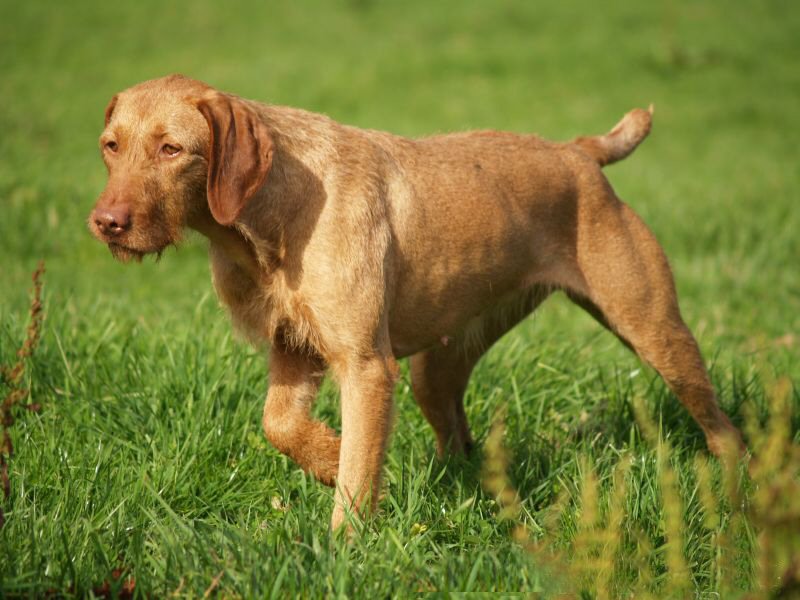
Understanding Your Wirehaired Vizsla's Coat: What Every Owner Should Know
The Wirehaired Vizsla was developed in Hungary in the 1930s by crossing smooth Vizslas with German Wirehaired Pointers. The goal: create a dog with the Vizsla's hunting instinct and temperament but with a more weather-resistant coat for harsher conditions. The result is a coat that beautifully bridges two worlds -- the Vizsla's golden rust elegance with the durability of wire.
Coat Structure: The Best of Both Worlds
The Wire Outer Coat
Character: The WHV's wire is notably different from a German Wirehaired Pointer's. It is:
- Moderately harsh (firm to the touch but not coarse like steel wool)
- Close-lying (lies flatter against the body than a GWP)
- Shorter than most wire breeds (approximately 1-1.5 inches on the body)
- Dense enough to provide protection without being bulky
Color: Golden rust -- the same signature color as the smooth Vizsla. This ranges from a darker burnished copper to a lighter golden shade, with various tones acceptable. The wire texture adds visual depth to the color, creating subtle variation as light catches individual hairs at different angles.
The Functional Undercoat
Presence: More developed than a smooth Vizsla (which has virtually none), less dense than a GWP. The WHV's undercoat is clearly present -- you can feel it when you push your fingers through to the skin -- but it is not the thick, woolly layer found in heavier wire breeds.
Seasonal adaptation: Thickens in winter for insulation, thins in summer for heat management. The seasonal change is noticeable but not as dramatic as heavily-undercoated breeds.
Water resistance: The undercoat density, combined with the wire outer coat, creates effective water resistance. The WHV was specifically developed for cold-water retrieving -- the coat keeps them functional in conditions that would chill a smooth Vizsla.
Facial Furnishings
Beard: Present and distinguishing. Not as long or dramatic as a Spinone or Griffon, but clearly visible. Gives the WHV a distinguished appearance compared to the smooth Vizsla's clean face.
Eyebrows: Moderate. Arching slightly over the eyes, providing some brush protection. More defined than a smooth Vizsla, less bushy than a GWP.
Expression: The furnishings give the WHV what enthusiasts describe as a "wise old professor" look -- thoughtful and dignified compared to the smooth Vizsla's more sleek, athletic expression.
How the WHV Coat Differs From Other Wire Breeds
| Feature | Wirehaired Vizsla | German Wirehaired Pointer | Wirehaired Pointing Griffon | |---------|-------------------|---------------------------|-----------------------------| | Wire harshness | Moderate | Very harsh | Moderate-harsh | | Coat length | 1-1.5 inches | 1-2 inches | 1.5-2 inches | | Undercoat density | Moderate | Dense | Dense | | Facial furnishings | Moderate beard, light brows | Moderate beard, bushy brows | Full beard, prominent brows | | Color | Golden rust only | Liver/white variations | Multiple | | Overall maintenance | Moderate | Moderate-high | Moderate-high |
The WHV is the most refined of the wire-coated pointing breeds -- less coat overall, less extreme texture, and less dramatic furnishings. This translates to somewhat lower grooming demands.
The Color Story
The golden rust color is perhaps the most discussed aspect of the Wirehaired Vizsla's coat, and for good reason -- it is integral to breed identity.
Color science: The golden rust color in Vizslas (both varieties) comes from specific alleles at the E-locus and B-locus that produce pheomelanin (red/yellow pigment) while restricting eumelanin (black/brown pigment). The result is a coat that ranges from a dark copper to a warm gold.
How wire texture affects color perception: The wire hairs scatter light differently than smooth hairs. This creates a dimensional quality -- the coat appears to have more depth and variation than a smooth Vizsla's uniform coloring. In sunlight, a well-maintained WHV coat almost glows.
Color and grooming: The most intensely pigmented portion of each wire hair is the outer tip (the last section to grow). This is why hand-stripping -- which removes dead hairs entirely and allows fully-pigmented new wires to grow -- preserves color better than clipping, which cuts away the most pigmented tips.
Shedding Profile
The WHV's shedding falls in a comfortable middle ground:
- Daily: Light. You will find occasional golden rust hairs but not in quantities that dominate your wardrobe or furniture.
- Seasonal: Moderate increase during spring/fall undercoat transitions. More than a smooth Vizsla, less than a Golden Retriever.
- Wire coat shedding: Minimal -- dead wires stay in place until stripped. This is both an advantage (less mess) and a requirement (they need manual removal).
- Overall rating: 3-4 on a 10-point scale. One of the lower-shedding sporting breeds.
Coat Development Timeline
Puppy coat (0-6 months): Soft, short, similar to a smooth Vizsla puppy. No furnishings visible. Many new owners wonder if their puppy will actually develop wire coat.
Transitional coat (6-14 months): Wire texture begins emerging. First signs of beard and eyebrows appear. Coat goes through an awkward mixed phase that can look uneven.
Young adult (14-24 months): Wire coat establishes fully. Furnishings reach their adult presentation. First professional hand-stripping can begin (many start at 12-14 months with light stripping to train the coat).
Mature adult (2+ years): Full wire coat with consistent texture. Seasonal cycling is established. The coat is now in its maintenance phase.
Senior (8+ years): Wire may soften slightly. Furnishings may thin. Growth rate slows. Gentle grooming approach for aging skin.
Water Performance
The WHV was developed specifically for cold-water work, and the coat delivers:
Water entry: The outer wire keeps initial water at the surface. The undercoat provides a secondary barrier.
In-water insulation: The undercoat traps a thin layer of air against the skin, providing insulation during cold-water retrieves.
Post-water recovery: The wire coat sheds water quickly with a good shake. Drying time is significantly faster than breeds with absorbent coats (like Golden Retrievers).
Comparison to smooth Vizsla: The WHV can work in water temperatures 10-15 degrees (Fahrenheit) colder than a smooth Vizsla before showing signs of cold stress, directly attributed to the wire coat and undercoat system.
Care Essentials
Home routine:
- Weekly bristle brush (5-10 minutes)
- Beard wipe after messy meals
- Ear check 2x weekly
- Post-swim ear dry
- Hand-strip every 8-12 weeks
- Facial furnishing maintenance every 6-8 weeks
- Undercoat removal during seasonal transitions
- Natural bristle brush (for general maintenance)
- Stripping knife (for between-visit touch-ups if you learn the technique)
- Simple pH-balanced shampoo (nothing conditioning or softening)
- Ear cleaning solution
- Conditioners on the body coat (soften wire texture)
- Silicone-based detanglers (coat the wire hairs, reducing natural texture)
- Human shampoo (wrong pH)
Recognizing Coat Health
A healthy WHV coat should:
- Feel firmly textured when you stroke against the grain
- Show rich golden rust color with dimensional depth
- Lie relatively flat against the body
- Shed water when wet
- Look neat without appearing "styled" (natural ruggedness is correct)
- Softening texture without explanation (thyroid check warranted)
- Color fading (nutrition evaluation or sun protection needed)
- Excessive shedding beyond seasonal norms (stress, illness, or allergy)
- Beard becoming persistently matted (may need more frequent professional care)
Honor the Hybrid
Your Wirehaired Vizsla carries a coat that represents deliberate, thoughtful breeding -- combining Vizsla elegance with wire-coat durability. The result is something unique: a beautiful golden rust dog that can handle harsh weather, cold water, and rough brush while maintaining the refined appearance that makes the Vizsla family so beloved.
Understanding this coat means respecting both its origins. The Vizsla gives it color and refinement. The wire heritage gives it protection and resilience. Your job is to maintain both qualities through proper care.
---
Ready to streamline your grooming workflow? PawOps Board Manager helps salons track every Wirehaired Vizsla from check-in to pickup with real-time visibility. Start your free 30-day trial →
Related Reading: