Understanding Your Biewer Terrier's Coat: What Every Owner Should Know
Understanding Your Biewer Terrier's Coat: What Every Owner Should Know
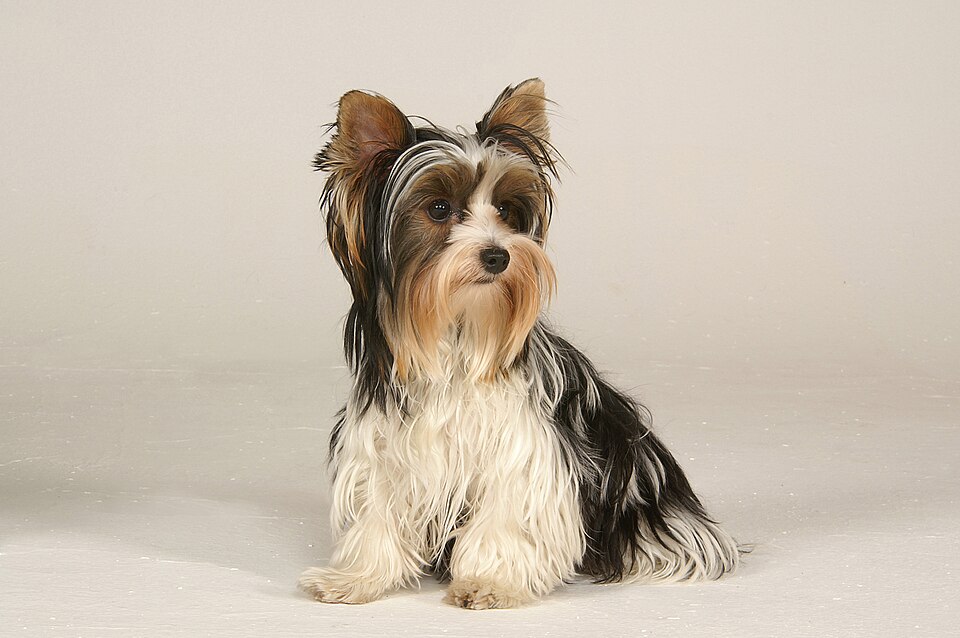
The Biewer Terrier's coat is what sets it apart. That flowing cascade of white, black, and gold silk is simultaneously the breed's most beautiful feature and its most misunderstood. Knowing how this coat works -- its structure, its growth patterns, its vulnerabilities -- transforms coat care from a mystery into a manageable routine.
Coat Structure: Living Silk
The Biewer Terrier has a single-layer coat with no undercoat:
Hair Type: Fine, silky, and straight. Each strand is similar in structure to human hair -- it grows continuously from the follicle rather than reaching a set length and falling out. This is why Biewer Terriers are considered "low-shedding" -- the hair stays in the follicle much longer than double-coated breeds.
Texture: The ideal Biewer coat feels like silk fabric. It should be smooth, glossy, and lightweight. It parts naturally down the center of the back and falls straight on either side of the body.
What It Is NOT: The correct Biewer coat is not cottony (too fluffy and prone to extreme matting), woolly (too dense and curly), or coarse (too thick and wiry). These incorrect textures, which can appear in some individuals, require different management than the ideal silk coat.
The AKC breed standard specifies: "Fine, silky, straight hair with no undercoat." Every grooming decision should support maintaining this texture.
The Tri-Color Pattern
The Biewer Terrier's color pattern is what originally distinguished it from the Yorkshire Terrier:
Head: White, black/blue, and gold in symmetrical patterns. A white blaze is highly desirable.
Body: Black/blue and white on the back and sides. The saddle can be predominantly one color or an even mix.
Belly, Chest, and Legs: White. This is the "piebald" factor that defines the breed.
Tail: White or predominantly white plume.
The colors should be vivid and clearly delineated. Gold areas should be rich and warm, not washed out. Black/blue areas should be deep and glossy. White areas should be bright and clean.
Coat color does not affect texture or care requirements. All three colors share the same fine, silky structure.
Growth Rate and Cycle
The Biewer Terrier coat grows continuously at approximately 0.5 to 0.75 inches per month. This means:
- From a short clip to a moderate length (3-4 inches): approximately 4-6 months
- From a short clip to full length (floor-touching): approximately 12-18 months
- Complete coat regrowth after a shave-down: 8-14 months depending on the individual
Hair growth rate is affected by nutrition, health, hormonal status, and age. Senior Biewer Terriers often have slower coat growth and slightly thinner hair. Puppies develop their full coat texture by approximately 12-18 months of age.
Shedding: The Low-Shed Reality
Biewer Terriers are genuinely low-shedding, but "low" does not mean "none":
- Individual hairs reach the end of their long growth cycle and detach from the follicle
- These hairs get trapped in the surrounding coat rather than falling to the floor
- Without regular brushing, trapped hairs tangle with living hairs, creating mats
- During brushing, you will find these loose hairs in the brush -- that is the "shedding" you are managing
The Five Enemies of the Biewer Coat
1. Friction
Anything that rubs against the coat creates tangles: collars, harnesses, sweaters, the dog's own sleeping position. The armpits, behind the ears, under the collar line, and the inner thighs are friction zones that mat first.Solution: Use a rolled leather collar or smooth collar instead of flat nylon (less friction). Remove sweaters when supervised indoors. Brush friction zones daily.
2. Moisture
Wet silk coat tangles immediately. Rain, snow, splashing water, even slobber from playing with another dog creates instant tangle conditions.Solution: Dry the coat promptly after any moisture exposure. Never let a wet Biewer air dry without brushing through the coat first.
3. Static
Dry environments (especially winter indoor heating) create static electricity that makes the fine hair cling to itself and tangle.Solution: Use a light leave-in conditioner spray before brushing. A humidifier in the home helps during dry months.
4. Neglect
Every day without brushing is another day for loose hairs to tangle with living hairs. By day three, small tangles form. By week two, those tangles become mats. By month one, the coat may be unsalvageable without shaving.Solution: Brush every day for full coats, every other day for moderate lengths. Five to ten minutes is sufficient.
5. Wrong Products
Heavy conditioners weigh the coat down and attract dirt. Human shampoo has the wrong pH. Cheap products leave residue that dulls the silk.Solution: Use products specifically designed for fine, silky canine coats. Lightweight formulas only.
The Brushing Technique That Works
Proper brushing technique for the Biewer Terrier:
Total time for a Biewer in moderate coat: 5-10 minutes daily.
Coat Styles and Their Care Requirements
| Style | Length | Brushing | Professional Grooming | |-------|--------|----------|----------------------| | Full show coat | Floor-length | Daily, 10-15 min | Every 2-3 weeks | | Long pet coat | 4-6 inches | Every other day, 5-10 min | Every 3-4 weeks | | Puppy clip | 1-3 inches | 2-3 times weekly, 5 min | Every 4-6 weeks | | Short clip | Under 1 inch | Weekly, 3 min | Every 6-8 weeks |
Most pet Biewer Terrier owners find the puppy clip to be the ideal balance of beauty and practicality.
When the Coat Tells You Something
Coat changes can indicate health issues:
- Dull, dry texture: Nutritional deficiency (especially fatty acids), dehydration, or thyroid issues
- Thinning: Hormonal changes, stress, or age-related hair loss
- Color changes: Fading can indicate sun damage or nutritional issues. Blue areas that turn silver may be normal aging in some lines
- Breakage: Over-brushing, wrong products, or nutritional deficiency causing brittle hair
- Sudden matting increase: May indicate the dog is scratching more due to allergies, parasites, or skin irritation
Love the Coat You Have
Every Biewer Terrier's coat is slightly different. Some have thicker, denser silk. Others have fine, airy hair that flows like spiderweb. Some grow coat quickly; others take their time. The color pattern is unique to each dog -- no two Biewers look exactly alike.
The goal is not to achieve a magazine image. The goal is to maintain whatever coat your Biewer naturally grows -- keeping it clean, free of tangles, and healthy. A well-maintained Biewer Terrier in a practical puppy clip is more beautiful than a show-length coat full of hidden mats. Honest grooming beats ambitious neglect every time.
---
Ready to streamline your grooming workflow? PawOps Board Manager helps salons track every Biewer Terrier from check-in to pickup with real-time visibility. Start your free 30-day trial →
Related Reading: