Understanding Your Bordoodle's Coat: The Most Variable Doodle Coat Explained
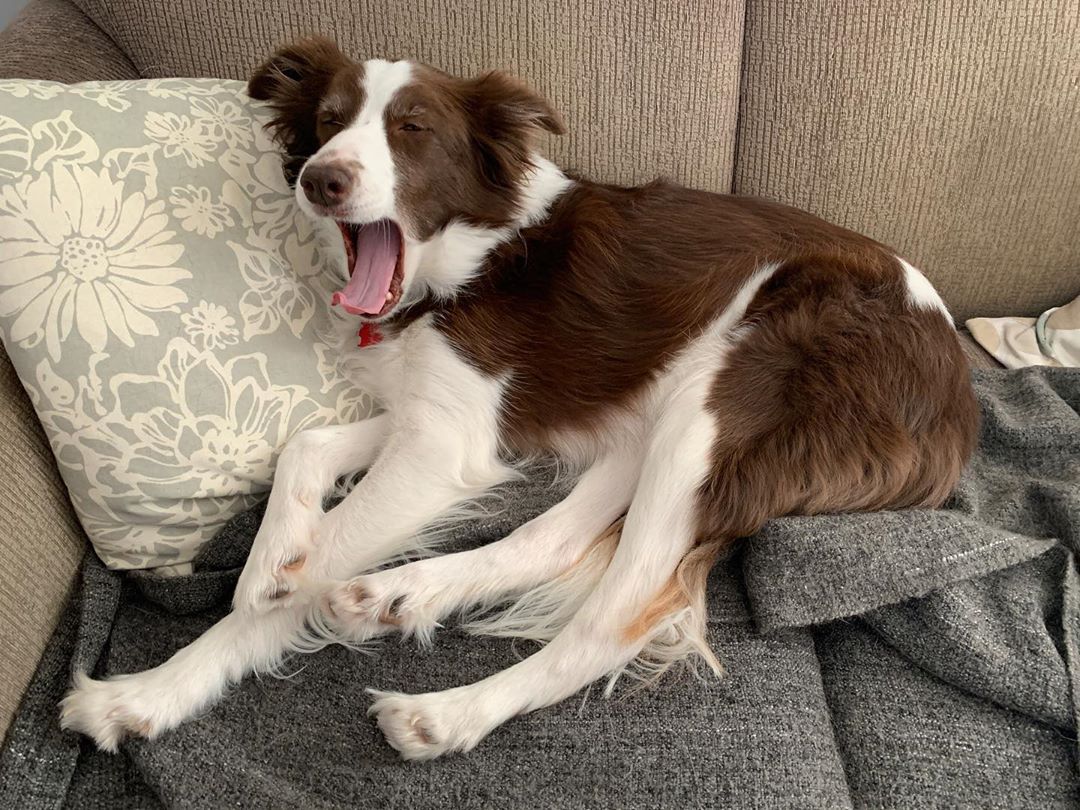
Understanding Your Bordoodle's Coat: The Most Variable Doodle Coat Explained
If you have spent any time in Bordoodle owner groups online, you have probably noticed something: no two Bordoodles seem to look alike. One has a shaggy, flowing coat while another is tightly curled. One sheds all over the couch while another barely drops a hair. This is not your imagination. The Bordoodle has arguably the most variable coat of any doodle breed, and understanding why -- and what it means for your specific dog -- is essential knowledge for every owner.
Why Bordoodle Coats Are So Unpredictable
The variability comes from the extreme genetic distance between the two parent breeds' coat types.
Border Collie coat genetics:
- Double coat: soft, insulating undercoat + weather-resistant outer coat
- Two varieties: rough (long) and smooth (short), both double-coated
- Sheds moderately year-round, heavily during seasonal blowouts
- Hair grows to a set length and then stops
- Face and lower legs have shorter, smoother hair (unfurnished)
- Single coat: dense, tightly curled hair throughout
- Grows continuously without stopping (like human hair)
- Barely sheds -- dead hair stays trapped in the curls
- Furnished face: long eyebrows, beard, and mustache
The Four Bordoodle Coat Types
While every Bordoodle is somewhat unique, most fall into one of four general categories:
1. Flat / Straight Coat (Border Collie Dominant)
This coat lies relatively flat, has a visible undercoat, and sheds. It most closely resembles the Border Collie parent. The hair grows to a natural length and stops rather than growing continuously. These Bordoodles look less like typical doodles and more like slightly fluffier Border Collies.
Maintenance profile: Lower matting risk, higher shedding. Needs regular deshedding and brushing two to three times per week. Less frequent haircuts but more frequent baths and brush-outs.
2. Wavy Coat (Balanced)
The crowd-pleaser. Loose, flowing waves with enough body to give that classic doodle look. Sheds lightly and has a moderate matting risk. Most owners find this coat type the best balance of appearance and manageability.
Maintenance profile: Moderate matting risk, light shedding. Brush every other day. Professional grooming every four to six weeks.
3. Curly Coat (Poodle Dominant)
Tight to medium curls throughout, closely resembling the Poodle parent. Very low shedding and the most hypoallergenic option, but also the highest matting risk. This coat grows continuously and needs regular trimming.
Maintenance profile: High matting risk, very low shedding. Daily brushing required. Professional grooming every four to five weeks.
4. Combination Coat (Mixed Zones)
Perhaps the most uniquely Bordoodle coat type. Different areas of the body have different textures -- curly behind the ears and neck, wavy on the body, flat on the legs. This happens because different coat genes can express differently across body regions.
Maintenance profile: Variable. Each zone needs attention appropriate to its texture. This is the most challenging coat type to groom and the one most likely to benefit from a groomer experienced with herding breed doodle crosses.
The Furnishing Gene: Why It Matters So Much
The furnishing gene (called the RSPO2 gene) is the single most important genetic factor in determining what your Bordoodle's face and legs look like.
- Furnished Bordoodle: Has the Poodle-style long facial hair -- eyebrows, beard, mustache, and longer leg hair. These dogs look like classic doodles.
- Unfurnished Bordoodle: Has the Border Collie-style smooth face with shorter hair on the muzzle and lower legs. These dogs look more like a fluffy Border Collie.
- Semi-furnished Bordoodle: Has some facial hair but less than a fully furnished dog. Somewhere in between.
- Furnished Bordoodles need regular face trimming to keep vision clear and prevent food buildup in the beard
- Unfurnished Bordoodles need minimal face grooming but tend to shed more overall
- The furnishing gene is linked to general coat texture, so unfurnished Bordoodles are more likely to have flatter, higher-shedding coats
The Puppy-to-Adult Coat Transition
Like all doodle breeds, Bordoodles go through a coat change between six and twelve months of age. But the Bordoodle coat change has a twist: because the coat outcome is so variable, the transition period is when you finally find out what coat type your adult dog will have.
During the change:
- The puppy coat loosens and begins shedding internally into the growing adult coat
- Texture often shifts: wavy puppies may become curlier, or slightly curly puppies may straighten out
- The undercoat (if present) becomes apparent for the first time
- Matting risk spikes dramatically during the four-to-six month transition period
The Border Collie Double Coat Factor
This is what sets Bordoodle coat care apart from most other doodle breeds.
Many Bordoodles inherit some degree of double-coat structure from the Border Collie parent. This means they have a soft, dense undercoat beneath their visible outer coat. In a purebred Border Collie, this undercoat sheds out seasonally -- those legendary "coat blowing" events where hair comes off in clumps.
In a Bordoodle with Poodle curl, the undercoat tries to shed but cannot escape through the outer coat. Instead, it tangles and compacts against the skin. This creates a specific type of matting called undercoat pelting that is invisible from the outside. You can run your hand over the topcoat and it feels smooth, while underneath, a layer of felted undercoat is forming against the skin.
Professional groomers detect this during the blow-dry by watching how the coat separates under airflow. If the coat lifts in clumps or reveals dense patches near the skin, undercoat compaction is present. This is why high-velocity drying is not just about getting the coat dry -- it is a diagnostic tool.
Daily and Weekly Maintenance by Coat Type
Curly Coat Protocol
- Brush daily with a slicker brush
- Steel comb check to the skin after every session
- Detangling spray before brushing
- Focus on ears, armpits, collar area, and rear
- Time: 15-20 minutes per session
Wavy Coat Protocol
- Brush every other day with a slicker brush
- Steel comb check every session
- Undercoat rake weekly if double-coat genetics are present
- Time: 10-15 minutes per session
Flat Coat Protocol
- Brush two to three times per week
- Undercoat rake weekly, daily during seasonal shedding
- Deshedding tool as needed
- Less focus on matting, more focus on loose hair removal
- Time: 10 minutes per session, plus vacuum time
Combination Coat Protocol
- Brush every other day minimum
- Address each zone with the appropriate tool and technique
- Curly zones get slicker brush + steel comb
- Flat zones get undercoat rake + pin brush
- Time: 15-20 minutes per session
A Surprising Fact About Bordoodle Coats
Here is something that shocks a lot of first-generation Bordoodle owners: breeding two Bordoodles together (creating an F2 Bordoodle) actually increases coat unpredictability rather than stabilizing it. In genetics, this is called segregation -- the recombination of parent genes produces even wider variation in the second generation. An F2 Bordoodle litter can produce puppies ranging from completely flat-coated and heavily shedding to ultra-curly and non-shedding, sometimes with puppies at both extremes in the same litter. This is why coat guarantees from breeders of multigenerational Bordoodles are generally unreliable -- the genetics simply have not stabilized the way they have in breeds with decades of selective coat breeding.
When Your Bordoodle Needs Professional Help
Professional grooming every four to six weeks is the baseline recommendation. See a groomer sooner if:
- Steel comb catches anywhere in the coat
- You notice the coat feels denser or heavier than usual (possible undercoat compaction)
- Your dog is scratching or biting at specific coat areas
- Facial hair is obstructing vision
- Post-swim coat is not drying properly or smells off
- You are finding more shed hair than usual (seasonal undercoat blow)
PawOps helps grooming salons assess variable-coat breeds like the Bordoodle using coat-type classification, zone-based condition scoring, and breed-specific difficulty ratings -- so every groom is tailored to the individual dog, not a generic doodle template.