Why Your Bordoodle Needs Professional Grooming (Smarter Dogs, Smarter Coat Care)
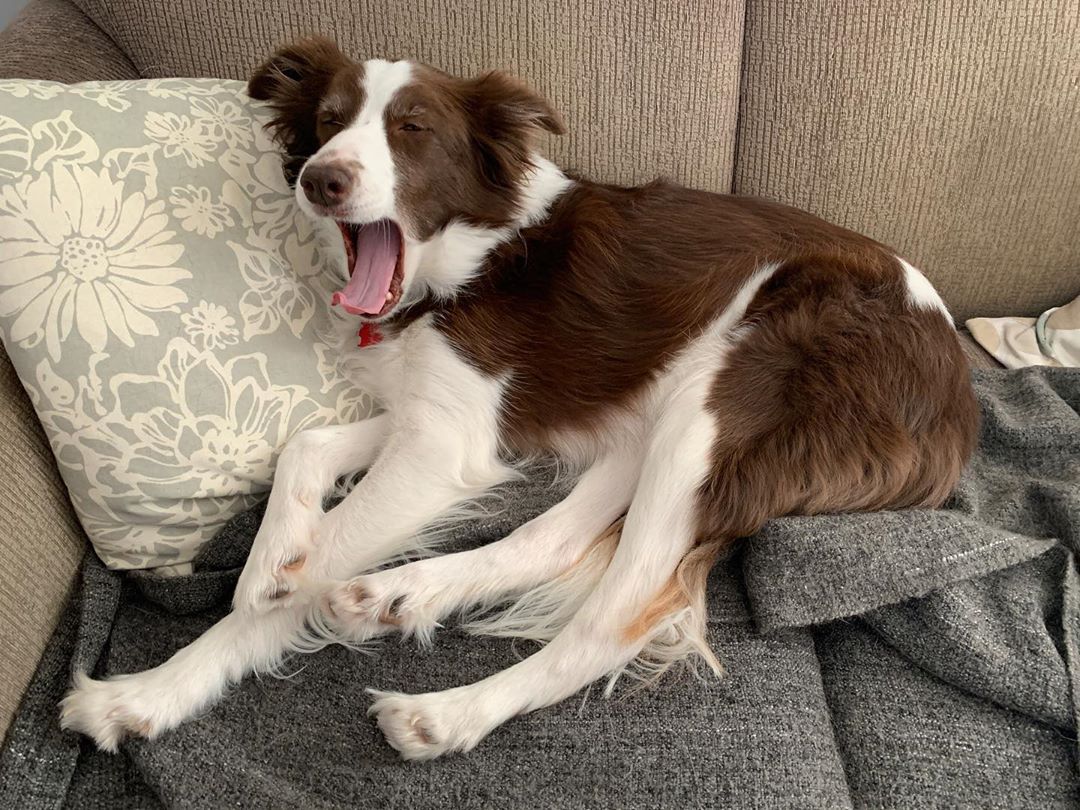
Why Your Bordoodle Needs Professional Grooming (Smarter Dogs, Smarter Coat Care)
Bordoodles are brilliant dogs. They inherited the intelligence of both the Border Collie -- widely considered the smartest dog breed -- and the Poodle, which is not far behind. That brainpower makes them incredible companions. But that same genetic combination also produced a coat that is, honestly, more complicated than most owners bargain for. Professional grooming is not just helpful for a Bordoodle. It is essential.
Let us get into the specifics.
The Bordoodle Coat Is a Wildcard
The Bordoodle is a cross between a Border Collie and a Poodle. These two breeds have fundamentally different coat types:
- Border Collie: Double coat with a soft undercoat and a weather-resistant outer coat. Can be rough (long, thick) or smooth (shorter, dense). Sheds moderately to heavily, with significant seasonal blowouts.
- Poodle: Single-layer, dense, tightly curled coat that grows continuously and barely sheds.
According to breeding data, first-generation Bordoodles (F1) show the widest coat variation, with roughly 40% landing in the wavy range, 30% curly, and 30% straight or flat. The straight-coated Bordoodles shed the most, while the curly ones mat the fastest. Every coat type has its challenges.
Why Professional Grooming Is Critical for Bordoodles
Bordoodles are not like Goldendoodles or Labradoodles. Their coat is often more complex because the Border Collie brings double-coat genetics that Labrador and Golden Retriever parent breeds do not have to the same degree. Here is what professional grooming addresses:
Multi-Texture Coat Management
Many Bordoodles have coats that are curly in some areas and wavy or straight in others. The chest might be dense and wooly while the back is flat and silky. Behind the ears could be tightly curled while the sides of the body are flowing waves. Each of these zones needs a different brushing approach, different blade length during trimming, and different products. A professional groomer experienced with variable-coat doodles adjusts their technique zone by zone -- something most owners do not have the tools or training to replicate.
Undercoat Complications
If your Bordoodle inherited the Border Collie's double coat (and many do to some degree), they have an undercoat that thickens seasonally. In a purebred Border Collie, this undercoat sheds out naturally. In a Bordoodle with Poodle curl on top, that undercoat gets trapped. The shed undercoat tangles with the outer coat and compresses into mats that start from the skin outward -- invisible on the surface until they are already tight. Professional groomers use high-velocity dryers and undercoat rakes to remove this trapped undercoat before it becomes a problem.
Ear and Eye Maintenance
Bordoodles often inherit the Border Collie's intense focus and forward-facing ear set along with the Poodle's ear canal hair growth. The ears may be semi-erect or floppy depending on the individual dog, and either way, they require regular cleaning and hair removal. Additionally, the facial hair on a Bordoodle grows quickly and can obstruct vision -- a real concern for an active, athletic breed that runs, jumps, and catches with precision.
Active Dog, Active Coat Problems
Bordoodles are not couch potatoes. They hike, swim, play fetch at full sprint, and tear through underbrush. All of this activity drives debris into the coat -- twigs, burrs, seeds, mud -- and creates friction that accelerates matting. A Border Collie's coat was designed to handle this because shed hair falls out and takes debris with it. A Bordoodle's coat traps everything. Professional grooming after outdoor adventures removes embedded debris that brushing alone cannot reach.
What Happens When Bordoodle Grooming Gets Neglected
The consequences depend on coat type, but they are never good:
- Curly-coated Bordoodles: Mats form within days of missed brushing. The curls act like velcro, grabbing dead hair and debris. Severe matting can develop in as little as two weeks without attention.
- Wavy-coated Bordoodles: More forgiving but not immune. Mats develop in friction areas within one to two weeks. The undercoat compacts gradually.
- Straight-coated Bordoodles: Less matting risk, but heavy shedding creates a different problem -- loose undercoat accumulates under the outer coat, trapping heat and moisture against the skin.
A Complete Bordoodle Grooming Session
A professional grooming appointment for a Bordoodle typically runs one and a half to two and a half hours, depending on size and coat type:
- Full brush-out and coat assessment -- identifying mat locations, coat type zones, and skin condition
- Bath -- shampoo selected for the dominant coat type (moisturizing for curly, clarifying for wavy)
- Conditioning treatment -- prevents post-bath tangling
- Blow dry -- high-velocity to remove trapped undercoat and debris
- Full body trim or haircut -- adjusted by coat zone
- Face and head trim -- critical for maintaining clear vision
- Ear cleaning and hair removal
- Nail trim -- active dogs wear nails down partially but still need professional attention
- Paw pad trim -- clearing hair between pads for traction
- Sanitary trim
How Often Should a Bordoodle Be Groomed
Every four to six weeks for curly and wavy coats. Straight-coated Bordoodles can sometimes stretch to six to eight weeks for full grooming but benefit from bath-and-brush sessions in between to manage shedding.
Between professional visits:
- Curly coats: brush daily
- Wavy coats: brush every other day
- Straight coats: brush two to three times per week (and vacuum frequently)
A Surprising Fact About Bordoodle Coats
Here is something that catches a lot of Bordoodle owners by surprise: the Border Collie side contributes something called a "furnishing gene" debate. In purebred Border Collies, the face and legs have shorter, smoother hair. Poodles have furnished faces -- the long facial hair including eyebrows, beard, and mustache. Whether your Bordoodle has a furnished or unfurnished face depends on the genetics of the specific cross, and it dramatically changes their grooming needs. An unfurnished Bordoodle -- smooth face, shorter leg hair -- is significantly easier to groom than a furnished one with a full Poodle-style beard and eyebrows. Many first-time Bordoodle owners do not realize this variation exists until they meet another Bordoodle that looks completely different from theirs.
Finding the Right Groomer for Your Bordoodle
Bordoodles benefit from a groomer who understands both herding breed coats and doodle coat management. Before booking, ask:
- Have they groomed Border Collie crosses before?
- Can they adjust their approach for different coat textures on the same dog?
- Do they assess coat condition before quoting a price?
PawOps helps grooming salons assess multi-texture doodle coats like the Bordoodle using zone-based condition scoring and coat type analysis -- ensuring every groom is tailored to the individual dog rather than a generic breed template.