Understanding Your Clumber Spaniel's Coat: What Every Owner Should Know
Understanding Your Clumber Spaniel's Coat: What Every Owner Should Know
The Clumber Spaniel's coat tells the story of what this breed was built to do. Every layer, every feathered edge, every dense tuft of undercoat exists because Clumbers were designed to push through heavy brush in English estates, flushing game birds in terrain that would shred a lighter-coated dog. Understanding your Clumber's coat means understanding a working tool that happens to also be beautiful.
And honestly, it means understanding why your lint roller budget is what it is.
The Architecture of a Clumber Coat
Clumber Spaniels have a double coat with two distinct layers that serve different purposes.
The Outer Coat
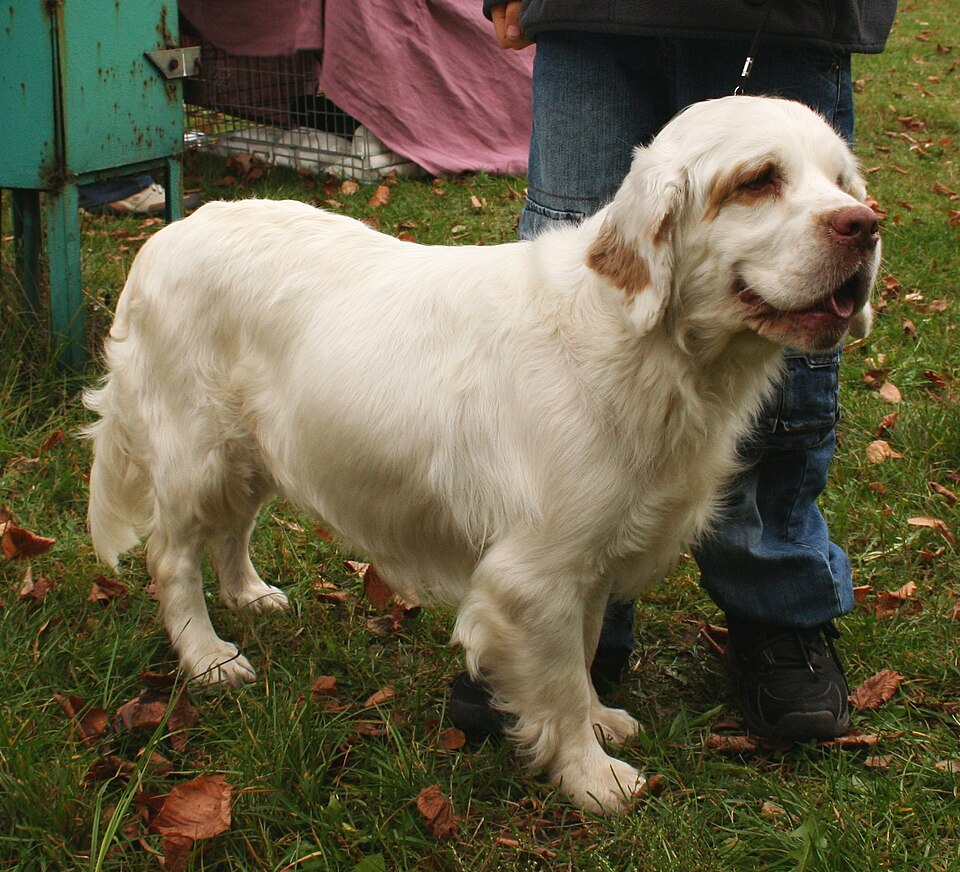
The topcoat is flat to slightly wavy, dense, and medium in length. It lies close to the body and has a somewhat silky texture that is softer than many other sporting breed coats. This outer layer serves as the first line of defense against brush, thorns, water, and weather. It is designed to let debris slide off rather than penetrate to the skin.
The Clumber's outer coat is predominantly white with markings in lemon or orange, typically concentrated around the eyes, ears, and base of the tail. That white coat is gorgeous but shows every bit of dirt, which is something to keep in mind if your Clumber enjoys rolling in questionable substances.
The Undercoat
Beneath the topcoat sits a dense, soft undercoat that provides insulation. This undercoat is the reason your Clumber sheds like a snowstorm and the reason their coat feels so plush when you run your hands through it. The undercoat grows, dies, and is replaced continuously, with two major shedding events in spring and fall when the entire undercoat turns over in response to changing daylight and temperature.
During these blowouts, the amount of fur a Clumber produces is genuinely staggering. Owners commonly describe finding enough loose undercoat in a single brushing session to build another small dog.
The Feathering
Clumber Spaniels grow longer, finer hair -- called feathering -- on several areas:
- Ears: Dense, soft feathering that adds to the breed's distinctive heavy-eared look
- Chest: A ruff of longer hair across the front
- Belly: Softer, longer fur along the underside
- Backs of legs: Feathering from the thighs down
- Feet: Fur grows between and around the toes and pads
Shedding: The Honest Truth
Let us not sugarcoat this. Clumber Spaniels are heavy shedders. The breed ranks among the highest-shedding sporting dogs, and there is no realistic way to eliminate shedding entirely.
Here is what shedding actually looks like on a seasonal basis:
| Period | Shedding Level | What Is Happening | |--------|---------------|-------------------| | Spring (March-May) | Extreme | Winter undercoat blowing out, replaced by lighter summer coat | | Summer (June-August) | Moderate | Steady background shedding, reduced undercoat | | Fall (September-November) | Heavy to extreme | Summer coat shedding, dense winter undercoat growing in | | Winter (December-February) | Moderate | Full undercoat in place, steady turnover |
A study published in the Journal of Veterinary Dermatology found that double-coated breeds shed approximately 60% of their undercoat volume during seasonal transitions, with the process taking three to six weeks to complete. For a Clumber, that is a lot of fur.
Common Coat Issues in Clumber Spaniels
Knowing what to watch for helps you catch problems early.
Matting in the Feathering
The ear, leg, and belly feathering mats when friction causes the finer hairs to tangle and knot. Common mat locations:
- Behind the ears where the feathering rubs against the ear leather
- Under the front legs in the armpit area
- Between the hind legs
- Around the collar area
- Between the toes
Hot Spots
Clumbers are prone to hot spots (acute moist dermatitis), particularly in warm or humid climates. The dense undercoat traps moisture against the skin, creating an environment where bacteria thrive. Hot spots often develop under matted areas or in spots where the dog has been licking or scratching.
Signs to watch for: a patch of red, oozing skin that seems to appear overnight. The hair around it may be damp and matted down. Hot spots can spread rapidly -- a quarter-sized spot in the morning can be palm-sized by evening.
Dry Skin and Flaking
Some Clumbers develop dry, flaky skin, especially in winter when indoor heating reduces humidity. You might notice dandruff-like flakes in the coat during brushing. A moisturizing shampoo and a diet supplemented with omega-3 fatty acids can help significantly.
Ear-Related Coat Issues
The heavy ear feathering creates a microclimate inside the ear. Moisture, warmth, and reduced airflow encourage yeast and bacterial growth. The feathering itself can trap water after swimming or bathing, keeping the ear canal damp for hours. Keeping the ear feathering trimmed and the ear canal clean is critical for Clumber health.
Your Home Care Toolkit
Every Clumber owner needs these tools:
- Slicker brush: Your primary tool for daily or every-other-day topcoat brushing
- Steel comb: For checking feathering areas for mats after brushing
- Undercoat rake: Essential during shedding season to pull dead undercoat without damaging the topcoat
- High-velocity dryer (optional but valuable): Blasts loose undercoat out between grooming appointments
- Ear cleaning solution: Veterinarian-recommended ear cleaner for weekly maintenance
- Detangling spray: Helps prevent breakage when working through tangles in the feathering
A Brushing Routine That Actually Works
Here is a practical weekly routine:
Monday, Wednesday, Friday (15-20 minutes each):
Weekly (5 minutes):
This routine, combined with professional grooming every six to eight weeks, keeps most Clumber coats in solid condition.
A Surprising Coat Fact
Here is something most Clumber owners do not realize: the Clumber Spaniel's coat actually has a slight natural resistance to water. Not fully waterproof like a Labrador's coat, but the combination of dense undercoat and flat-lying topcoat sheds water reasonably well. This was a functional trait for a breed that worked in damp English estates. It also means that bath time requires extra effort to fully saturate the coat -- water tends to bead and run off the outer layer. Groomers working with Clumbers often use a diluted shampoo application and spend additional time working lather through to the skin. If your Clumber never seems to get completely clean in a home bath, this water resistance is likely why.
When the Coat Signals a Health Problem
Your Clumber's coat is a health indicator. Watch for:
- Sudden increase in shedding outside normal seasonal patterns -- could indicate thyroid issues, stress, or nutritional deficiency
- Dull, dry coat that loses its natural sheen -- often a sign of dietary problems or skin conditions
- Patchy hair loss -- may indicate allergies, fungal infection, or hormonal imbalance
- Excessive dandruff -- could be dry skin, or could indicate sebaceous adenitis, a condition some spaniels are predisposed to
PawOps helps grooming salons assess sporting breed coats using condition scoring and coat type analysis, ensuring your Clumber Spaniel gets a grooming plan matched to their specific coat condition -- not a generic approach.
Related Reading: